

Become a supporter of this podcast: https://www.spreaker.com/podcast/astronomy-daily-space-news-updates--5648921/support.
Sponsor Details:
Ensure your online privacy by using NordVPN. To get our special listener deal and save a lot of money, visit www.bitesz.com/nordvpn. You'll be glad you did!
Become a supporter of Astronomy Daily by joining our Supporters Club. Commercial free episodes daily are only a click away... Click Here
Sponsor Details:
Ensure your online privacy by using NordVPN. To get our special listener deal and save a lot of money, visit www.astronomydaily.io/nordvpn. You'll be glad you did!
Get the best secure and private email on the planet. Stop your Government, google and who knows who else spying on every email you write. Do what we did and use ProtonMail. They beleive in privacy and there are no ads in their business model...yet they still provide a free forever service. Check them out and get out special deal at www.astronomydaily.io/protonmail
Become a supporter of Astronomy Daily by joining our Supporters Club. Commercial free episodes daily are only a click way... Click Here
This episode includes AI-generated content.
00:00:00 --> 00:00:02 Anna: Good morning and welcome to Astronomy Daily.
00:00:02 --> 00:00:03 I'm Anna.
00:00:03 --> 00:00:06 Avery: And I'm avery. It's Tuesday, June
00:00:06 --> 00:00:09 30, 2026, and today is
00:00:09 --> 00:00:09 launch day.
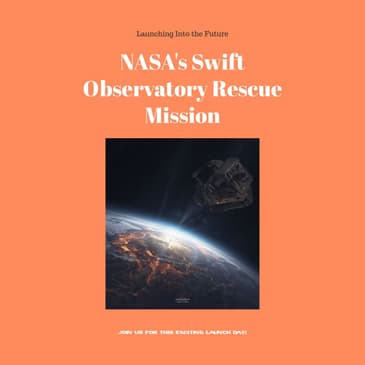
00:00:10 --> 00:00:12 Anna: After weeks of watching this story build, we
00:00:12 --> 00:00:15 finally get to say it. A rescue mission for
00:00:15 --> 00:00:18 NASA's Swift observatory is heading to the
00:00:18 --> 00:00:20 launch pad, or rather the launch aircraft
00:00:20 --> 00:00:21 today.
00:00:21 --> 00:00:24 Avery: Plus a spacewalk happening live on the iss.
00:00:24 --> 00:00:27 A galaxy cluster that's breaking cosmology's
00:00:27 --> 00:00:30 rulebook. A quiet nursery hidden in the most
00:00:30 --> 00:00:33 violent part of our galaxy. A newly
00:00:33 --> 00:00:35 confirmed fossil galaxy near Andromeda. And
00:00:35 --> 00:00:38 why today is Asteroid Day.
00:00:38 --> 00:00:41 Anna: Vic stories one very busy Tuesday.
00:00:41 --> 00:00:42 Let's get into it.
00:00:43 --> 00:00:45 We've been tracking this one for weeks. And
00:00:45 --> 00:00:47 Today's the day NASA's Neil Gerald
00:00:47 --> 00:00:50 Swift, observatory, 22 years old, still
00:00:50 --> 00:00:53 hunting gamma ray bursts, has been losing
00:00:53 --> 00:00:56 altitude faster than expected thanks to solar
00:00:56 --> 00:00:56 activity.
00:00:57 --> 00:01:00 Avery: Without help, Swift faced a real chance of an
00:01:00 --> 00:01:02 uncontrolled re entry by the end of this
00:01:02 --> 00:01:04 year. So NASA contracted a m small
00:01:04 --> 00:01:07 Arizona company, Catalyst Space Technologies,
00:01:07 --> 00:01:10 to build a robotic rescue spacecraft called
00:01:10 --> 00:01:13 Link in under nine months, a job that
00:01:13 --> 00:01:15 would normally take two years.
00:01:15 --> 00:01:17 Anna: Link is about the size of a, uh, fridge.
00:01:18 --> 00:01:21 Three robotic arms, lidar sensors, ion
00:01:21 --> 00:01:23 thrusters. Today it launches from Kwadrilin
00:01:23 --> 00:01:26 Atoll in the Marshall Islands. Carried under
00:01:26 --> 00:01:28 the belly of Stargazer, the last aircraft
00:01:29 --> 00:01:31 worthy Lockheed, Lockheed Tristar in the
00:01:31 --> 00:01:34 world been dropped and lit on a Northrop
00:01:34 --> 00:01:36 Grumman Pegasus xl, the very last
00:01:36 --> 00:01:39 Pegasus XL ever to fly.
00:01:39 --> 00:01:42 Avery: Launch window opened at 6:23am Eastern.
00:01:42 --> 00:01:45 That's this evening here in Australia. As of
00:01:45 --> 00:01:48 our recording, NASA and Northrop Grumman have
00:01:48 --> 00:01:50 the mission status listed as go.
00:01:50 --> 00:01:53 Anna: If it works, Link will spend months gently
00:01:53 --> 00:01:55 grappling and nudging Swift back up to a safe
00:01:55 --> 00:01:58 altitude. Swift was never built for being
00:01:58 --> 00:02:01 serviced. No docking port, no handholds.
00:02:01 --> 00:02:03 So this will be delicate historic work.
00:02:03 --> 00:02:06 Avery: Rat Kranko, the Swift principal Investigator
00:02:06 --> 00:02:09 at Goddard, put it Simply. Swift is
00:02:09 --> 00:02:11 NASA's multi tool for studying the cosmos.
00:02:12 --> 00:02:15 Today we find out if that multitool gets a
00:02:15 --> 00:02:15 second life.
00:02:16 --> 00:02:18 Anna: Fingers crossed for a clean release and a
00:02:18 --> 00:02:20 good first signal from Link. We'll keep you
00:02:20 --> 00:02:22 posted as uh, this story develops.
00:02:23 --> 00:02:25 Avery: Story two takes us to the International Space
00:02:25 --> 00:02:27 Station, where NASA astronauts Chris Williams
00:02:27 --> 00:02:30 and Jessica Meir are stepping outside today
00:02:30 --> 00:02:33 to fix a wrist joint on KANADRM2.
00:02:33 --> 00:02:36 Anna: KANADRM2 is the station's big robotic
00:02:36 --> 00:02:38 arm. It's been doing the heavy lifting,
00:02:38 --> 00:02:41 literally since 2001. Capturing
00:02:41 --> 00:02:44 cargo ships, repositioning modules, helping
00:02:44 --> 00:02:46 with spacewalks. But one of its wrist joints
00:02:46 --> 00:02:48 has been giving controllers trouble.
00:02:48 --> 00:02:51 Avery: The spacewalk kicked off at around 8:35am
00:02:51 --> 00:02:54 Eastern today. Williams and Meir will
00:02:54 --> 00:02:56 replace the faulty joint mechanism so the arm
00:02:56 --> 00:02:58 can keep operating with its full range of
00:02:58 --> 00:02:59 motion.
00:02:59 --> 00:03:02 Anna: It's not the flashiest of stories, but it
00:03:02 --> 00:03:04 matters enormously. Without a fully
00:03:04 --> 00:03:06 functioning Canat Arm 2, a lot of station
00:03:06 --> 00:03:09 operations get a lot harder, from cargo
00:03:09 --> 00:03:11 capture to external
00:03:11 --> 00:03:13 Avery: maintenance routine, and the sense that NASA
00:03:13 --> 00:03:15 has done dozens of these repairs over the
00:03:15 --> 00:03:18 decades. But every spacewalk still carries
00:03:18 --> 00:03:21 real risk, and this crew is doing
00:03:21 --> 00:03:23 precise, fiddly work in a pressurized
00:03:23 --> 00:03:26 suit 400km up.
00:03:26 --> 00:03:27 Good luck to them.
00:03:28 --> 00:03:30 Anna: Story three is a genuine cosmological
00:03:30 --> 00:03:33 puzzle. A team led by Kyle Finner at
00:03:33 --> 00:03:36 Caltech's IPEC has used the James Webb
00:03:36 --> 00:03:38 Space Telescope to study a, uh, galaxy
00:03:38 --> 00:03:39 cluster called
00:03:39 --> 00:03:41 XLSSC122.
00:03:42 --> 00:03:44 Avery: That distance puts it in an era astronomers
00:03:44 --> 00:03:47 call cosmic noon, when the universe was only
00:03:47 --> 00:03:50 about 3 billion years old and forming stars
00:03:50 --> 00:03:52 faster than at any point before or since.
00:03:53 --> 00:03:56 Galaxy clusters from that era are supposed to
00:03:56 --> 00:03:58 look young, loose, scattered, still pulling
00:03:58 --> 00:03:59 themselves together.
00:04:00 --> 00:04:02 Anna: XLSSC122 doesn't
00:04:02 --> 00:04:05 look like that. JWST caught it acting
00:04:05 --> 00:04:08 as a gravitational lens, bending the light of
00:04:08 --> 00:04:11 background galaxies into arcs, and it's now
00:04:11 --> 00:04:13 the most distant, strong lensing galaxy
00:04:13 --> 00:04:15 cluster ever found.
00:04:15 --> 00:04:18 Avery: When the team measured how concentrated the
00:04:18 --> 00:04:20 cluster's core mass is, the number
00:04:20 --> 00:04:23 came back higher than current cosmological
00:04:23 --> 00:04:26 models say it should be allowed to be. The
00:04:26 --> 00:04:29 visible matter stars gas barely
00:04:29 --> 00:04:32 accounts for any of it. The rest is
00:04:32 --> 00:04:34 dark matter, packed in tighter than expected
00:04:34 --> 00:04:37 for something this early in cosmic history.
00:04:37 --> 00:04:39 Anna: Laid researcher Fenner was refreshingly
00:04:39 --> 00:04:42 honest about it. This could just be one
00:04:42 --> 00:04:44 extreme outlier in a normal distribution.
00:04:45 --> 00:04:47 Or it could be a sign that something in our
00:04:47 --> 00:04:49 models of how structure formed in the early
00:04:49 --> 00:04:51 universe needs revising.
00:04:51 --> 00:04:54 Avery: Either way, it's a reminder of just how much
00:04:54 --> 00:04:57 JWST is rewriting the early chapters of
00:04:57 --> 00:05:00 cosmic history, one impossibly
00:05:00 --> 00:05:02 mature galaxy cluster at a time. From
00:05:02 --> 00:05:05 the very distant universe to our own
00:05:05 --> 00:05:08 backyard, the center of the Milky Way is one
00:05:08 --> 00:05:10 of the most violent neighborhoods in the
00:05:10 --> 00:05:12 galaxy, a churning storm of gas moving
00:05:12 --> 00:05:15 faster than the speed of sound. It's about
00:05:15 --> 00:05:17 the last place you'd expect to find a star
00:05:17 --> 00:05:19 quietly being born.
00:05:19 --> 00:05:22 Anna: And yet astronomers using the ALMA telescope
00:05:22 --> 00:05:24 array in Chile have mapped that chaos in
00:05:24 --> 00:05:27 detail and found exactly that a
00:05:27 --> 00:05:30 small, almost accidental pocket where the
00:05:30 --> 00:05:33 turbulent gas slows down, slowly settles, and
00:05:33 --> 00:05:36 begins gathering itself into the seeds of new
00:05:36 --> 00:05:36 stars.
00:05:36 --> 00:05:39 Avery: It's a small, almost accidental discovery
00:05:39 --> 00:05:42 with big implications. It suggests that
00:05:42 --> 00:05:45 stars might take their very first steps the
00:05:45 --> 00:05:47 same way everywhere in the galaxy, even in
00:05:47 --> 00:05:50 the most hostile environments imaginable.
00:05:50 --> 00:05:53 Anna: And that includes very possibly our own
00:05:53 --> 00:05:55 Sun. Billions of years ago, the sun may well
00:05:55 --> 00:05:58 have condensed out of just this kind of brief
00:05:58 --> 00:06:01 island of stillness somewhere in the swirling
00:06:01 --> 00:06:03 chaos of a young turbulent galaxy.
00:06:03 --> 00:06:05 Avery: A nice thought for your next coffee break.
00:06:05 --> 00:06:07 Somewhere in that storm at the galactic
00:06:07 --> 00:06:10 center right now, the next generation of
00:06:10 --> 00:06:13 stars may already be quietly getting started.
00:06:13 --> 00:06:16 Anna: Dory 5 is a lovely one. Equal parts
00:06:16 --> 00:06:18 cosmology and citizen science.
00:06:18 --> 00:06:21 Astronomers have just formally confirmed in
00:06:21 --> 00:06:23 the peer reviewed journal Astronomy and
00:06:23 --> 00:06:26 Astrophysics the discovery of Andromeda
00:06:26 --> 00:06:29 36, an ultra faint dwarf galaxy
00:06:29 --> 00:06:31 orbiting our giant neighbor, the Andromeda
00:06:31 --> 00:06:31 Galaxy.
00:06:32 --> 00:06:34 Avery: This one was actually first spotted back in
00:06:34 --> 00:06:37 March by an amateur astronomer, Giuseppe
00:06:37 --> 00:06:39 Donatellio, visually combing through public
00:06:39 --> 00:06:42 survey images. Not an algorithm, a person
00:06:42 --> 00:06:45 scanning pictures by eye. Now, after
00:06:45 --> 00:06:47 follow up observations with the Gran
00:06:47 --> 00:06:50 Telescopio Canaris, the team has nailed down
00:06:50 --> 00:06:50 the details.
00:06:51 --> 00:06:54 Anna: And what details? Andromeda 36th
00:06:54 --> 00:06:56 is roughly 12.5 billion years old,
00:06:57 --> 00:06:59 extremely metal poor, and one of the
00:06:59 --> 00:07:01 faintest, most compact dwarf satellites
00:07:01 --> 00:07:04 ever found around Andro. It's essentially a
00:07:04 --> 00:07:07 fossil from the universe's earliest stages.
00:07:07 --> 00:07:10 Avery: Astronomers think Andromeda did host close to
00:07:10 --> 00:07:13 a hundred of these tiny dwarf satellites, and
00:07:13 --> 00:07:16 only about half are currently known. Lead
00:07:16 --> 00:07:18 author Joanna Sakova made the point that even
00:07:18 --> 00:07:21 now, careful visual inspection by a trained
00:07:21 --> 00:07:23 eye is still finding things that automated
00:07:23 --> 00:07:24 machine learning searches miss.
00:07:25 --> 00:07:28 Anna: A nice reminder that in astronomy, sometimes
00:07:28 --> 00:07:30 the best discovery tool is still a patient
00:07:30 --> 00:07:32 human looking closely at the data.
00:07:33 --> 00:07:35 Avery: And finally today, June 30th is asteroid
00:07:35 --> 00:07:38 day. It's a UN sanctioned day of awareness
00:07:38 --> 00:07:41 around planetary defense. And the date isn't
00:07:41 --> 00:07:41 random.
00:07:41 --> 00:07:44 Anna: It marks the anniversary of the Tunguska
00:07:44 --> 00:07:47 event back in 1908, when an asteroid or
00:07:47 --> 00:07:49 comet fragment exploded in the atmosphere
00:07:49 --> 00:07:52 over Siberia, flattening more than 2
00:07:52 --> 00:07:55 square kilometers of forest. No crater,
00:07:55 --> 00:07:58 no warning. And to this day, it's the largest
00:07:58 --> 00:08:00 impact event in recorded history.
00:08:00 --> 00:08:02 Avery: Asteroid Day exists to make sure we don't
00:08:02 --> 00:08:04 have to learn that lesson the hard way again.
00:08:05 --> 00:08:07 Around the world today, observatories, space
00:08:07 --> 00:08:09 agencies and science communicators are
00:08:09 --> 00:08:12 running events on planetary defense, tracking
00:08:12 --> 00:08:14 near Earth objects, deflection technology,
00:08:15 --> 00:08:17 and what we'd actually do if something was
00:08:17 --> 00:08:18 heading our way.
00:08:18 --> 00:08:21 Anna: And we do have a real success story to point
00:08:21 --> 00:08:24 to. NASA's DART mission already proved
00:08:24 --> 00:08:26 by physically slamming into the asteroid
00:08:26 --> 00:08:28 Dimorphos that we can measurably change an
00:08:28 --> 00:08:31 asteroid's path. It's no longer just theory.
00:08:32 --> 00:08:34 Avery: So today's less about any single new
00:08:34 --> 00:08:36 discovery and, uh, more about the bigger
00:08:36 --> 00:08:39 picture. Thousands of astronomers, amateur
00:08:39 --> 00:08:42 and professional, quietly doing the
00:08:42 --> 00:08:44 unglamorous work of mapping the sky for the
00:08:44 --> 00:08:47 next Tunguska so that if it ever comes,
00:08:47 --> 00:08:50 we'll see it coming. And that wraps up a
00:08:50 --> 00:08:53 big Tuesday for Astronomy Daily. A rescue
00:08:53 --> 00:08:55 mission lighting up the Pacific sky, a
00:08:55 --> 00:08:58 spacewalk on the iss, and galaxies both
00:08:58 --> 00:09:00 impossibly old and impossibly young.
00:09:01 --> 00:09:03 Anna: If you enjoyed today's episode, please hit
00:09:03 --> 00:09:05 subscribe wherever you're listening and leave
00:09:05 --> 00:09:08 us a review. It genuinely helps new listeners
00:09:08 --> 00:09:09 find the show.
00:09:09 --> 00:09:12 Avery: We're Anna, uh, and Avery. This has been
00:09:12 --> 00:09:14 Astronomy Daily, and we'll see you back here
00:09:14 --> 00:09:16 tomorrow. Clear skies, everyone. And good
00:09:16 --> 00:09:18 luck to Swift and Link tonight.
00:09:21 --> 00:09:22 Mhm.
00:09:29 --> 00:09:30 Anna: The stories.
00:09:38 --> 00:09:39 Avery: Were told.