
NordVPN - Safeguard your online activity with our exclusive offer for Space Nuts listeners. Visit www.nordvpn.com/spacenuts for details.
From SpaceX Nuclear Experiments to Galactic Discoveries
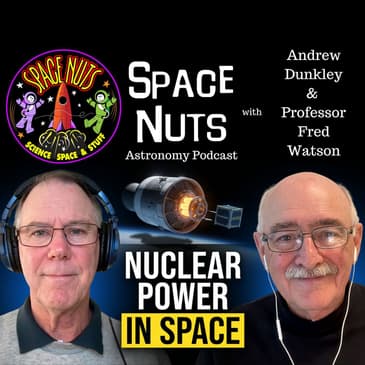
Join host Andrew Dunkley and astronomer Fred Watson as they explore some of the most fascinating topics in space science, from innovative nuclear power tests in space to the expanding boundaries of our galaxy. Whether you're an astrophotography enthusiast or a space policy advocate, this episode delivers insights that broaden your cosmic perspective.
In this episode:
SpaceX's recent CubeSat launch featuring a tritium-based nuclear power source for space applications
The potential and safety considerations of nuclear energy in space missions
The possibility of nuclear weapons detection in space using neutron sensors and passive radiation monitoring
The intriguing hypothesis of dark matter stars and their potential signatures
The mystery surrounding Earth's dust origins—cosmic spherules and their unknown sources
New research indicating our galaxy's spiral arms are about 10% longer than previous estimates, based on light echoes from gamma ray bursts
The rise of smart telescopes and their role in making astrophotography more accessible for amateurs
Timestamps:
(00:00) Introduction and overview of today's headlines
(02:00) SpaceX's CubeSat with tritium power source—what's happening?
(04:33) Nuclear power in space: Safety and future applications
(11:03) Detecting nuclear weapons in space: Challenges and innovations
(22:45) Earth's dust origins: Micro-meteorites and cosmic spherules explained
Resources & Links:
SpaceX's CubeSat nitrogen launch story
Beta-voltaic nuclear power technology
NASA's Chandra X-ray Observatory
Universe Today article on Milky Way mapping
James Webb Space Telescope and dark matter research
Science Advances publication on Earth's micrometeorites
Connect with Fred Watson:
Enjoying the show? Support us on Patreon and leave a review on your favorite podcast platform.
Thanks for tuning in and keep looking up!
Become a supporter of this podcast: https://www.spreaker.com/podcast/space-nuts-astronomy-insights-cosmic-discoveries--2631155/support.
00:00:00 --> 00:00:00 Professor Fred Watson: Hi there.
00:00:00 --> 00:00:02 Andrew Dunkley: Thanks again for joining us. This is Space
00:00:02 --> 00:00:05 Nuts. My name is Andrew Dunkley and every
00:00:05 --> 00:00:08 week we talk astronomy and space science
00:00:08 --> 00:00:10 and we answer audience questions in our
00:00:10 --> 00:00:13 alternative show, which, uh, happens,
00:00:13 --> 00:00:16 um, well, wherever you are. I mean, we
00:00:16 --> 00:00:17 release it on a Monday, but that doesn't mean
00:00:17 --> 00:00:20 you listen to it on a Monday. Uh, coming up
00:00:20 --> 00:00:23 today we've got, uh, a couple of
00:00:23 --> 00:00:26 nuclear explosive storeys. Uh,
00:00:26 --> 00:00:28 SpaceX is involved in one of those and
00:00:29 --> 00:00:31 the other storey is about, uh, blowing things
00:00:31 --> 00:00:33 up with atomic weapons from space.
00:00:34 --> 00:00:36 Yes, highly guaranteed. Very, very, uh,
00:00:36 --> 00:00:39 effective as well. Uh, but I think there's
00:00:39 --> 00:00:41 probably a reason not to. We'll look at all
00:00:41 --> 00:00:44 of that. Uh, we're also going to talk about
00:00:44 --> 00:00:47 where Earth's, uh, dust came from. Quite a
00:00:47 --> 00:00:48 bit of it, which might come as a bit of a
00:00:48 --> 00:00:50 surprise. Uh, you just have to look under
00:00:50 --> 00:00:53 just about every bed and kitchen table in the
00:00:53 --> 00:00:55 world to find as much dust as there is in the
00:00:55 --> 00:00:58 world. But we'll see where that, uh, is
00:00:58 --> 00:01:00 headed. And our galaxy, uh, reaches
00:01:00 --> 00:01:03 out further than we thought. Apparently, uh,
00:01:03 --> 00:01:05 there's some interesting science behind that.
00:01:05 --> 00:01:08 We'll talk about it all on this edition of
00:01:08 --> 00:01:08 space nuts.
00:01:09 --> 00:01:11 Professor Fred Watson: 15 seconds. Guidance is internal.
00:01:11 --> 00:01:14 10, 9. Ignition
00:01:14 --> 00:01:15 sequence start.
00:01:15 --> 00:01:16 Professor Fred Watson: Space nuts.
00:01:16 --> 00:01:19 Professor Fred Watson: 5, 4, 3, 2. 1, 2, 3, 4,
00:01:19 --> 00:01:21 5, 5, 4, 3, 2, 1.
00:01:21 --> 00:01:22 Andrew Dunkley: Space nuts.
00:01:22 --> 00:01:24 Professor Fred Watson: Astronauts report it feels good.
00:01:25 --> 00:01:27 Andrew Dunkley: And joining us again to talk about all of
00:01:27 --> 00:01:29 that and more is Professor Fred Watson
00:01:29 --> 00:01:31 Watson, astronomer at large. Hello,
00:01:31 --> 00:01:31 Fred Watson.
00:01:32 --> 00:01:34 Professor Fred Watson: Hello, Andrew. Good to see you. Good to see
00:01:34 --> 00:01:35 you. Yes.
00:01:35 --> 00:01:38 We sort of missed a few days, haven't we?
00:01:38 --> 00:01:39 Yes.
00:01:40 --> 00:01:41 Andrew Dunkley: Uh, you've been off conferencing.
00:01:41 --> 00:01:44 Professor Fred Watson: Yes. So the annual science meeting,
00:01:44 --> 00:01:47 as it's called, of the National Astronomy
00:01:47 --> 00:01:48 Society, the Astronomical Society of
00:01:48 --> 00:01:50 Australia, it's where all the professional
00:01:50 --> 00:01:53 astronomers get together and, uh, talk about
00:01:53 --> 00:01:55 what they've been doing, their research. Uh,
00:01:55 --> 00:01:58 it was a big meeting. There were, I would
00:01:58 --> 00:02:01 have guessed, maybe a couple of hundred
00:02:01 --> 00:02:03 people there altogether. Uh, that's quite big
00:02:03 --> 00:02:05 for astronomers in a country that's only got
00:02:05 --> 00:02:07 700 astronomers in it.
00:02:07 --> 00:02:07 Professor Fred Watson: Yeah.
00:02:08 --> 00:02:10 Professor Fred Watson: Uh, but, um, what was interesting and
00:02:10 --> 00:02:13 what was very, I think,
00:02:13 --> 00:02:15 heartening for me was the number of
00:02:16 --> 00:02:17 youngsters that were there. I call them
00:02:17 --> 00:02:19 youngsters, you know, people under 50
00:02:20 --> 00:02:23 people, um, the new generation of
00:02:23 --> 00:02:26 astronomers, uh, most of them whom I didn't
00:02:26 --> 00:02:28 know and they've no idea who I am, and that's
00:02:28 --> 00:02:31 fine. Uh, that all was okay. It
00:02:31 --> 00:02:33 just contrasts with a few years ago. So when
00:02:33 --> 00:02:35 I was the astronomer in charge of the
00:02:35 --> 00:02:38 observatory at, uh, Coonabarabran, uh,
00:02:39 --> 00:02:41 we were kind of the Shopkeepers. So all these
00:02:41 --> 00:02:43 astronomers used to come through, stay in the
00:02:43 --> 00:02:45 lodge and do their research using the
00:02:45 --> 00:02:48 telescope. So I knew a large fraction of
00:02:48 --> 00:02:50 the astronomical population of Australia. But
00:02:50 --> 00:02:53 that's changed, uh, because my job,
00:02:53 --> 00:02:56 that job is no longer mine. Uh,
00:02:56 --> 00:02:58 and so I don't see people the same way. But
00:02:59 --> 00:03:02 it was very nice to meet a lot of new faces
00:03:02 --> 00:03:04 and catch up with some very old faces as
00:03:04 --> 00:03:07 well, some even older than mine. Um, and we
00:03:07 --> 00:03:10 also discussed matters such as the future
00:03:10 --> 00:03:12 of Australian astronomy because that's
00:03:12 --> 00:03:15 uh, in a interesting
00:03:15 --> 00:03:17 state at the moment. With the government
00:03:17 --> 00:03:20 having declined, uh, to
00:03:20 --> 00:03:23 engage in membership with the European
00:03:23 --> 00:03:25 Southern Observatory. We are now working on
00:03:25 --> 00:03:27 plan B. Uh, and um. Well, it looks
00:03:27 --> 00:03:28 promising.
00:03:28 --> 00:03:31 Andrew Dunkley: Yes, fingers crossed. A lot going on.
00:03:31 --> 00:03:34 Okay, um, we should probably get
00:03:34 --> 00:03:36 stuck into these storeys because there's a
00:03:36 --> 00:03:38 lot to discuss. The first storey is a double
00:03:38 --> 00:03:41 banger about nuclear, um, energy and
00:03:41 --> 00:03:42 atomic weapons.
00:03:43 --> 00:03:45 Uh, we'll start off with the storey about
00:03:45 --> 00:03:47 SpaceX. And
00:03:48 --> 00:03:50 um, they're looking at nuclear power
00:03:50 --> 00:03:53 in space, nuclear powered satellites. What's
00:03:53 --> 00:03:54 the storey here?
00:03:54 --> 00:03:57 Professor Fred Watson: It's a test launch, really. A launch of
00:03:58 --> 00:04:01 a cubesat basically that um,
00:04:01 --> 00:04:03 has not a nuclear reactor inside but
00:04:04 --> 00:04:07 um, basically a capsule of something called
00:04:07 --> 00:04:09 tritium which is sometimes called heavy
00:04:09 --> 00:04:10 hydrogen. It's hydrogen with two
00:04:11 --> 00:04:14 electrons in it as well as the proton at uh,
00:04:14 --> 00:04:17 its centre. And it's radioactive. Uh,
00:04:17 --> 00:04:20 tritium is um, I suppose you'd call it
00:04:20 --> 00:04:22 mildly radioactive. Um, we used to
00:04:22 --> 00:04:25 use tritium standard lamps at the
00:04:25 --> 00:04:28 observatory when I was working there, which
00:04:28 --> 00:04:30 was a little capsule of tritium with some
00:04:30 --> 00:04:32 phosphor on it. Um, and
00:04:33 --> 00:04:36 um, basically the electrons released by the
00:04:36 --> 00:04:38 tritium lit up the phosphor and
00:04:38 --> 00:04:41 gave a very constant glow so we could use it
00:04:41 --> 00:04:43 to calibrate other, other instruments.
00:04:44 --> 00:04:47 So I've been close up and personal with um,
00:04:47 --> 00:04:49 a little nuclear power source a bit like
00:04:49 --> 00:04:51 that, but it was just making faint light.
00:04:52 --> 00:04:54 This one is one that's been uh,
00:04:54 --> 00:04:56 developed by a private company. Um,
00:04:57 --> 00:05:00 and it's uh, basically a
00:05:00 --> 00:05:03 company called City Labs, uh, in the United
00:05:03 --> 00:05:05 States. Uh, they've built
00:05:05 --> 00:05:08 um, a little, as I said, it's
00:05:08 --> 00:05:11 effectively a cubesat which has this um,
00:05:11 --> 00:05:14 little nuclear, not nuclear
00:05:14 --> 00:05:16 reactor, but nuclear power source inside a
00:05:16 --> 00:05:19 tritium, uh, source that I've just been
00:05:19 --> 00:05:21 talking about, which doesn't actually convert
00:05:21 --> 00:05:24 the electrons into light, it
00:05:24 --> 00:05:27 converts them directly into electricity.
00:05:27 --> 00:05:30 So they've got these panels on the side of it
00:05:30 --> 00:05:32 that take the electrons that come from the
00:05:32 --> 00:05:34 tritium and turn them straight into
00:05:35 --> 00:05:38 um, electricity. Ah, it's
00:05:38 --> 00:05:40 Called Bohr B O H R, uh, which is
00:05:40 --> 00:05:43 a bit of a play on words because Niels Bohr
00:05:43 --> 00:05:45 was one of the great founders of quantum
00:05:45 --> 00:05:47 theory. Same spelling, um
00:05:48 --> 00:05:50 Danish one, A uh, Danish uh
00:05:50 --> 00:05:53 scientist, uh and it stands for
00:05:53 --> 00:05:55 Beta Voltaic. And a
00:05:55 --> 00:05:58 Beta Voltaic is taking the beta particles,
00:05:58 --> 00:06:01 which are otherwise known as electrons, uh
00:06:01 --> 00:06:03 turning them into electricity. So it's Beta
00:06:03 --> 00:06:06 Voltaic orbital high reliability
00:06:06 --> 00:06:08 spacecraft. That's where you get the Bohr
00:06:08 --> 00:06:11 from and it's been launched. Uh,
00:06:11 --> 00:06:14 so SpaceX's part in this storey is just to
00:06:14 --> 00:06:17 provide the taxi, uh up into um, up
00:06:17 --> 00:06:18 into orbit. It's a transporter, uh
00:06:19 --> 00:06:22 mission, um, basically
00:06:22 --> 00:06:25 one of uh, SpaceX's taxi rides to get stuff
00:06:25 --> 00:06:28 up and down from uh, or up to orbit,
00:06:28 --> 00:06:30 coming down to different storey and most of
00:06:30 --> 00:06:31 them just burn up.
00:06:32 --> 00:06:32 Professor Fred Watson: Yes.
00:06:32 --> 00:06:34 Professor Fred Watson: Uh, but it is uh, probably the
00:06:34 --> 00:06:37 first CubeSat to include a nuclear
00:06:37 --> 00:06:40 power system. Uh and
00:06:40 --> 00:06:43 maybe, just maybe we'll sort of illuminate
00:06:43 --> 00:06:45 the way for a new generation of uh,
00:06:46 --> 00:06:48 spacecraft which are equipped with uh,
00:06:48 --> 00:06:50 these nuclear power sources.
00:06:50 --> 00:06:53 Andrew Dunkley: I suppose they have to look at alternatives
00:06:53 --> 00:06:55 because we've been reliant, fairly
00:06:55 --> 00:06:58 reliant anyway on solar energy in
00:06:58 --> 00:07:01 space, um particularly with our uh, orbiting
00:07:01 --> 00:07:04 satellites, but also with um, the
00:07:04 --> 00:07:07 International Space Station and others. Um,
00:07:07 --> 00:07:10 but the time will come where we are
00:07:10 --> 00:07:13 in places where there won't be that
00:07:13 --> 00:07:15 much sunlight and
00:07:16 --> 00:07:18 in some places there won't be any at all. And
00:07:18 --> 00:07:20 solar panels are going to be useless.
00:07:21 --> 00:07:23 Professor Fred Watson: Uh, that's correct. And we've seen already
00:07:23 --> 00:07:26 um, the use of these UH RTGs,
00:07:26 --> 00:07:29 radioisotope thermoelectric
00:07:29 --> 00:07:32 generators, uh which are carried by both
00:07:32 --> 00:07:34 the Curiosity and the uh
00:07:34 --> 00:07:37 Perseverance rovers, uh as well as
00:07:37 --> 00:07:40 spacecraft in deep space like uh,
00:07:40 --> 00:07:43 Voyager 1, Voyager 2, Pioneers. I think
00:07:43 --> 00:07:45 they've got them as well. And these are
00:07:45 --> 00:07:47 spacecraft that are so far from the sun that
00:07:47 --> 00:07:49 you get very little light from the sun,
00:07:50 --> 00:07:52 uh in terms of um, you know, using it to
00:07:52 --> 00:07:54 generate electricity. So they've, they've had
00:07:54 --> 00:07:56 their nuclear power sources for a long time.
00:07:57 --> 00:07:58 They are quite different though from what
00:07:58 --> 00:08:00 we're talking about here. There are, I think
00:08:00 --> 00:08:02 it's 13 kilogrammes if I remember rightly, is
00:08:02 --> 00:08:05 the amount in a canister of plutonium
00:08:05 --> 00:08:07 dioxide, uh which is
00:08:07 --> 00:08:10 decaying all the time and getting very hot as
00:08:10 --> 00:08:13 it does that and that heat is then used
00:08:13 --> 00:08:16 to generate electricity, uh and
00:08:17 --> 00:08:19 it actually dies away as time goes on. So
00:08:19 --> 00:08:22 these nuclear uh, RTGs, the
00:08:22 --> 00:08:24 radioisotope thermoelectric generators
00:08:25 --> 00:08:28 gradually lose their power, um, and that's
00:08:28 --> 00:08:30 why we hear from time to time and we usually
00:08:30 --> 00:08:33 report this on space nuts. We hear of
00:08:33 --> 00:08:36 uh, uh instruments on board Voyager 1
00:08:36 --> 00:08:39 being turned off to save the power.
00:08:39 --> 00:08:42 Andrew Dunkley: Yeah. And that happened again not so long
00:08:42 --> 00:08:42 ago.
00:08:42 --> 00:08:45 Professor Fred Watson: I think that's correct. Yes it did.
00:08:45 --> 00:08:47 There was one turned off uh quite recently
00:08:47 --> 00:08:49 but perhaps more to the point and
00:08:50 --> 00:08:52 uh, what you've just said about there being
00:08:52 --> 00:08:54 some places that have no sunlight whatsoever,
00:08:54 --> 00:08:57 uh that applies to uh, those deep
00:08:57 --> 00:09:00 craters near the moon's south pole
00:09:00 --> 00:09:03 and that's where we're thinking of exploring.
00:09:03 --> 00:09:06 So it may be that um, these
00:09:06 --> 00:09:08 beta voltaic arrays
00:09:09 --> 00:09:12 uh uh, or devices might well
00:09:12 --> 00:09:14 be the future of power generation
00:09:15 --> 00:09:17 near the moon's south pole because you're in
00:09:17 --> 00:09:20 places where there's no light whatsoever from
00:09:20 --> 00:09:20 the sun.
00:09:20 --> 00:09:23 Andrew Dunkley: That's absolutely true. Darn cold too. It is.
00:09:23 --> 00:09:26 Professor Fred Watson: It is always cold there. Yes, yes
00:09:26 --> 00:09:27 indeed.
00:09:27 --> 00:09:29 Andrew Dunkley: Uh, uh that's a really interesting storey and
00:09:30 --> 00:09:32 we're obviously in the early phases of
00:09:32 --> 00:09:34 finding these alternatives. Is um, tritium
00:09:35 --> 00:09:35 safe?
00:09:36 --> 00:09:39 Professor Fred Watson: Uh, it's probably something regarded
00:09:39 --> 00:09:41 uh, treated carefully.
00:09:43 --> 00:09:46 It is generally safe. I mean we never took
00:09:46 --> 00:09:48 any real precautions with the device that we
00:09:48 --> 00:09:51 had on the telescope. Maybe we should
00:09:51 --> 00:09:54 have done. Although uh, most of
00:09:54 --> 00:09:56 us are still around and in fairly good
00:09:56 --> 00:09:59 health. But um, yes they are
00:09:59 --> 00:10:02 releasing electrons, uh beta radiation,
00:10:02 --> 00:10:05 uh, it's um, uh if you had a
00:10:05 --> 00:10:07 high level though of tritium, if you had a
00:10:08 --> 00:10:10 significant amount of it then you would have
00:10:10 --> 00:10:12 to be careful about how you handled it and
00:10:12 --> 00:10:14 where it was put and if it needed shielding
00:10:14 --> 00:10:15 and things of that sort.
00:10:15 --> 00:10:17 Andrew Dunkley: Yeah. So uh, don't sprinkle it on your
00:10:17 --> 00:10:18 cornflakes or anything like that.
00:10:18 --> 00:10:20 Professor Fred Watson: Yes, that's right. It's best to avoid it if
00:10:20 --> 00:10:21 you can.
00:10:21 --> 00:10:24 Andrew Dunkley: Yeah. Sugar's damaging enough already.
00:10:25 --> 00:10:27 Professor Fred Watson: It is. Tell my dentist about it.
00:10:27 --> 00:10:30 Andrew Dunkley: If you'd like to um, read up on that storey
00:10:30 --> 00:10:32 about the uh, the launch of the cubesat with
00:10:32 --> 00:10:35 the tritium nuclear ah power device
00:10:35 --> 00:10:37 they're testing. Uh you can read about
00:10:37 --> 00:10:40 it@dailygalaxy.com.
00:10:41 --> 00:10:43 um, let's keep on this theme
00:10:43 --> 00:10:45 Fred Watson, because that's the good news.
00:10:45 --> 00:10:47 Uh the bad news is um,
00:10:49 --> 00:10:51 the the problem of exploding nuclear
00:10:51 --> 00:10:54 devices in space or firing nuclear
00:10:54 --> 00:10:56 devices from space to targets on Earth.
00:10:56 --> 00:10:59 That's, that's a real issue. I know.
00:10:59 --> 00:11:02 Um, was it back in the 80s the
00:11:02 --> 00:11:04 Star wars um
00:11:05 --> 00:11:08 um push was uh, all the rage in the news
00:11:08 --> 00:11:10 at the time and uh, that got shut down pretty
00:11:10 --> 00:11:11 quickly.
00:11:12 --> 00:11:14 Professor Fred Watson: Star wars was um, a
00:11:14 --> 00:11:17 Reagan era initiative. Yes, I think it was, I
00:11:17 --> 00:11:20 think it was um, uh basically
00:11:20 --> 00:11:22 electromagnetic Radiation to zap your
00:11:22 --> 00:11:24 satellites. It wasn't nuclear though, uh,
00:11:24 --> 00:11:27 because nuclear weapons are in space, are
00:11:27 --> 00:11:30 prohibited by the outer Space Treaty
00:11:30 --> 00:11:31 1967.
00:11:31 --> 00:11:32 Andrew Dunkley: So what's happening?
00:11:32 --> 00:11:34 Professor Fred Watson: They're not allowed. But,
00:11:35 --> 00:11:37 um, there may be some there
00:11:38 --> 00:11:41 launched by powers that
00:11:42 --> 00:11:44 stretch um, the envelope, if I can put it
00:11:44 --> 00:11:46 that way. Governments that stretch the
00:11:46 --> 00:11:49 envelope. And uh, we don't know. We don't
00:11:49 --> 00:11:51 know if there are any. You know, they're
00:11:51 --> 00:11:54 banned by the uh, Outer Space Treaty. So
00:11:54 --> 00:11:57 there shouldn't be any nuclear weapons in
00:11:57 --> 00:12:00 space. But that's all very well.
00:12:00 --> 00:12:00 Professor Fred Watson: Um.
00:12:01 --> 00:12:02 Professor Fred Watson: There's a lot of things that shouldn't happen
00:12:03 --> 00:12:05 but do happen. And um. So it may be
00:12:05 --> 00:12:07 that perhaps there are nuclear weapons in
00:12:07 --> 00:12:10 space. So the question is,
00:12:11 --> 00:12:13 um, how do you detect them if there are,
00:12:13 --> 00:12:16 ah, these weapons? Um,
00:12:16 --> 00:12:19 and um, that's
00:12:20 --> 00:12:23 where this piece of research, uh, from
00:12:23 --> 00:12:25 the Massachusetts Institute of Technology
00:12:26 --> 00:12:29 has come from. It's um, a um, person
00:12:29 --> 00:12:31 whose name is Areg Dana
00:12:31 --> 00:12:34 Gulian. Sounds uh, like an Armenian name.
00:12:34 --> 00:12:37 Does that usually I a n on the end. Armenian.
00:12:37 --> 00:12:39 An associate professor of nuclear science and
00:12:39 --> 00:12:42 engineering at the Massachusetts Institute of
00:12:42 --> 00:12:44 Technology. And he has
00:12:45 --> 00:12:47 um, essentially
00:12:47 --> 00:12:49 thought of a neat way,
00:12:52 --> 00:12:55 uh, of building a device that
00:12:55 --> 00:12:58 you could fly in the vicinity
00:12:58 --> 00:13:01 of a satellite to detect whether
00:13:01 --> 00:13:03 it is carrying nuclear weapons.
00:13:04 --> 00:13:07 Um, and it's all about the subatomic
00:13:07 --> 00:13:10 particles, uh, that um, you know,
00:13:10 --> 00:13:12 that, that nuclear um,
00:13:13 --> 00:13:16 weapons are all about. It's all about uh,
00:13:16 --> 00:13:18 neutrons and uh, you know, the nuclear
00:13:18 --> 00:13:20 nuclei of atoms. That's where it all comes
00:13:20 --> 00:13:23 from. Um, so
00:13:25 --> 00:13:27 what he has suggested, and I might
00:13:27 --> 00:13:29 quote, um,
00:13:30 --> 00:13:33 I might quote from uh, Dr. Dana
00:13:33 --> 00:13:35 Gulian's work. Uh
00:13:36 --> 00:13:39 the risk is that
00:13:39 --> 00:13:42 if you did explode a nuclear weapon in
00:13:42 --> 00:13:45 low Earth orbit, then you basically wreck low
00:13:45 --> 00:13:47 Earth orbit for everybody. It's not the
00:13:47 --> 00:13:50 blast, it's just the subatomic particles that
00:13:50 --> 00:13:53 do it. Uh, and so what he goes on to say
00:13:53 --> 00:13:56 is this danger is compounded by the lack
00:13:56 --> 00:13:58 of a verification mechanism for the Outer
00:13:58 --> 00:14:00 Space Treaty. Um,
00:14:01 --> 00:14:04 there's no detection methodologies that have
00:14:04 --> 00:14:06 been proposed in the scientific literature.
00:14:06 --> 00:14:09 So what he's saying is here's a concept and
00:14:09 --> 00:14:11 feasibility study, um, for
00:14:11 --> 00:14:14 verifying a satellite's compliance
00:14:14 --> 00:14:17 to the Outer Space Treaty by observing
00:14:17 --> 00:14:20 the neutrons induced by spallation
00:14:20 --> 00:14:21 from the approximately
00:14:23 --> 00:14:26 giga electron volt protons in the
00:14:26 --> 00:14:28 Innovant Allen radiation belts, which is
00:14:28 --> 00:14:31 a slightly complicated and technical way of
00:14:31 --> 00:14:34 saying, uh, you've already got subatomic
00:14:34 --> 00:14:36 particles in the radiation belts around
00:14:37 --> 00:14:40 our planet. Um, if you can,
00:14:41 --> 00:14:44 um, basically watch the way,
00:14:44 --> 00:14:47 um, a satellite responds
00:14:47 --> 00:14:50 to those protons that are in the radiation
00:14:50 --> 00:14:53 belts. Um, if for example that uh,
00:14:53 --> 00:14:55 bombardment of protons from the radiation
00:14:55 --> 00:14:57 belts causes neutron neutrons to be
00:14:58 --> 00:15:00 uh, emitted then you can
00:15:01 --> 00:15:02 have a fair degree of
00:15:04 --> 00:15:06 um, confidence that there might be a nuclear
00:15:06 --> 00:15:08 weapon on board or a lot of nuclear fissile
00:15:08 --> 00:15:11 material, heavy elements like uranium.
00:15:11 --> 00:15:14 That's the kind of thing that this is all
00:15:14 --> 00:15:16 about. And so um,
00:15:18 --> 00:15:21 uh, what this is all
00:15:21 --> 00:15:23 about is building uh, a
00:15:23 --> 00:15:25 satellite that can detect
00:15:26 --> 00:15:29 uh, neutrons uh, coming
00:15:29 --> 00:15:32 from radioactive material. And
00:15:33 --> 00:15:35 he's basically suggesting a
00:15:35 --> 00:15:38 detector, uh, uh, uh, what
00:15:38 --> 00:15:41 he calls an inspector satellite that flies
00:15:41 --> 00:15:44 by, uh, the satellite that you're
00:15:44 --> 00:15:46 interested in finding out whether it's got
00:15:46 --> 00:15:48 nuclear weapons. And it's got these detectors
00:15:49 --> 00:15:51 uh, which are almost like X ray detectors.
00:15:51 --> 00:15:54 The kind of things that you see now when you
00:15:54 --> 00:15:56 go for an X ray, a chest X ray. They're
00:15:56 --> 00:15:58 electronic, they're not photograph they used
00:15:58 --> 00:16:01 to be back in the day. Um, and they've got
00:16:01 --> 00:16:03 what are called neutron sensors, uh they're
00:16:03 --> 00:16:06 called scintillators. And uh, you
00:16:06 --> 00:16:09 put those in a special arrangement with
00:16:09 --> 00:16:11 other basically other detectors.
00:16:12 --> 00:16:15 Uh, and um, if you do that then
00:16:15 --> 00:16:18 you can apparently sort out the
00:16:18 --> 00:16:20 neutrons from the other natural
00:16:21 --> 00:16:23 subatomic particles that are floating around
00:16:23 --> 00:16:26 near the radiation belts. And the neutrons
00:16:26 --> 00:16:28 come from radioactive material and you can
00:16:28 --> 00:16:30 also see the direct direction that they're
00:16:30 --> 00:16:33 coming from. So you can sort of point this
00:16:33 --> 00:16:35 thing towards your target satellite, uh, the
00:16:35 --> 00:16:37 one that you suspect might have nuclear
00:16:37 --> 00:16:39 weapons and it will give you the direction of
00:16:39 --> 00:16:42 where it's coming from. Um, and
00:16:42 --> 00:16:45 so uh, just a quote,
00:16:45 --> 00:16:48 um again from Dr. Dana
00:16:48 --> 00:16:51 Gulian. Um, the calculations show
00:16:51 --> 00:16:54 that a nine unit cubesat size
00:16:54 --> 00:16:56 detection platform, that's something the size
00:16:56 --> 00:16:58 of, what's that, about three loaves of bread?
00:16:58 --> 00:17:00 Something of that sort size. It's quite
00:17:00 --> 00:17:03 small. Um, it can identify a
00:17:03 --> 00:17:06 thermonuclear weapon from a distance of
00:17:06 --> 00:17:09 four kilometres in approximately one
00:17:09 --> 00:17:12 week of observation. Now that's quite a long
00:17:12 --> 00:17:15 time but uh, apparently
00:17:15 --> 00:17:17 if you could get it to within one kilometre
00:17:17 --> 00:17:20 it would take you about an hour to detect a
00:17:20 --> 00:17:22 weapon. And that's
00:17:23 --> 00:17:26 promising. That's one flyby, that's you know,
00:17:26 --> 00:17:29 an hour of proximity, uh, you could do that
00:17:29 --> 00:17:32 as you go past the
00:17:32 --> 00:17:35 suspect satell. If you got an hour in
00:17:35 --> 00:17:37 close uh, contact with it or close uh,
00:17:38 --> 00:17:40 proximity to it within a
00:17:40 --> 00:17:43 kilometre, uh, then you might well
00:17:43 --> 00:17:45 detect a nuclear weapon on board. And of
00:17:45 --> 00:17:47 course you could improve that if you had more
00:17:47 --> 00:17:49 than one of these inspector satellites. If
00:17:49 --> 00:17:51 you multiplied them up, then you could get,
00:17:51 --> 00:17:53 uh, quite significant improvements in that
00:17:53 --> 00:17:56 performance. So it's really quite
00:17:56 --> 00:17:58 interesting. Um, uh, one
00:17:58 --> 00:18:01 quote that I really liked, um,
00:18:02 --> 00:18:04 and I'm going to read, uh,
00:18:04 --> 00:18:07 from, uh. Universe Today has a very nice
00:18:07 --> 00:18:09 article on this. The last sentence is, right
00:18:09 --> 00:18:12 now, nations like the USA and Russia rely on
00:18:12 --> 00:18:14 intelligence to know what the other is doing.
00:18:14 --> 00:18:17 And as we know from history, intelligence can
00:18:17 --> 00:18:20 get things wrong. You can fake intelligence,
00:18:20 --> 00:18:23 said Dr. Dana Gulian, but you can't fake
00:18:23 --> 00:18:25 physics. I like that. Yeah, it's true. So
00:18:26 --> 00:18:27 you could do it by physics. Yeah.
00:18:28 --> 00:18:31 Andrew Dunkley: They do, uh, mention in this particular
00:18:31 --> 00:18:33 article that there's one suspect satellite
00:18:33 --> 00:18:35 that seems to have been launched by Russia.
00:18:35 --> 00:18:38 And the bottom line is that it's
00:18:38 --> 00:18:41 been put in an orbit that is very strange
00:18:42 --> 00:18:45 and very hostile in terms
00:18:45 --> 00:18:47 of its radiation, uh, in that area.
00:18:47 --> 00:18:50 And the question is asked. Well, it says no
00:18:50 --> 00:18:52 one puts satellites there because it's highly
00:18:52 --> 00:18:55 radioactive. Why would you put a satellite in
00:18:55 --> 00:18:58 that orbit? So that's one they've already.
00:18:58 --> 00:19:01 They haven't identified as maybe carrying a
00:19:01 --> 00:19:02 nuclear weapon, but they've certainly
00:19:03 --> 00:19:04 identified it as suspicious.
00:19:05 --> 00:19:08 Professor Fred Watson: Yes, that's correct. And so, um.
00:19:08 --> 00:19:10 Yes, highlighting that, I think, you know,
00:19:10 --> 00:19:12 puts this article in context. It
00:19:12 --> 00:19:14 tells you that this is a real issue and, um,
00:19:14 --> 00:19:17 we kind of need to work on how you might
00:19:17 --> 00:19:19 detect, uh, nuclear weapons in space.
00:19:19 --> 00:19:22 Andrew Dunkley: Of course, the other side of it is if you do
00:19:22 --> 00:19:24 identify a satellite that's carrying a
00:19:24 --> 00:19:26 nuclear weapon, what do you do next?
00:19:27 --> 00:19:29 It's like trying to teach people not to
00:19:29 --> 00:19:31 overtake emerging lanes, isn't it?
00:19:31 --> 00:19:34 Professor Fred Watson: Uh, yes. Uh, but,
00:19:34 --> 00:19:37 uh, it's worse than that really, because. A
00:19:37 --> 00:19:39 little bit, yeah, you know, we have
00:19:39 --> 00:19:41 nations that completely disregard
00:19:41 --> 00:19:44 international law. They invade other
00:19:44 --> 00:19:47 countries without so much as a,
00:19:47 --> 00:19:49 you know, a sniff of the,
00:19:50 --> 00:19:53 um, um. Of the, um.
00:19:53 --> 00:19:55 All the international treaties, they just,
00:19:55 --> 00:19:57 Just run amok among them and away they go.
00:19:58 --> 00:20:01 Uh, and yes, so that's the possibility that,
00:20:01 --> 00:20:02 uh, we might already have them.
00:20:02 --> 00:20:04 There is a kind of
00:20:05 --> 00:20:07 corollary of this which I was thinking of
00:20:07 --> 00:20:10 when I read this, Storey. Um, and
00:20:10 --> 00:20:12 that is that back in the 70s,
00:20:13 --> 00:20:15 uh, gamma ray
00:20:16 --> 00:20:18 satellites were launched,
00:20:18 --> 00:20:21 satellites that detect gamma radiation. And
00:20:21 --> 00:20:23 that was to detect any in
00:20:23 --> 00:20:26 atmosphere nuclear tests, uh, conducted on,
00:20:27 --> 00:20:29 uh. Because there was a test ban treaty that
00:20:29 --> 00:20:32 was signed, uh, all the signatories
00:20:32 --> 00:20:34 said, no, we won't test nuclear, uh, weapons
00:20:34 --> 00:20:37 in the atmosphere. Uh, but they had to
00:20:37 --> 00:20:40 verify it. And so the verification process
00:20:40 --> 00:20:42 involved, uh, a number of satellites being
00:20:42 --> 00:20:44 launched that could detect gamma rays which
00:20:44 --> 00:20:46 would be emitted by a nuclear bomb being
00:20:46 --> 00:20:49 detonated in the atmosphere. Uh,
00:20:49 --> 00:20:52 now none were. But those
00:20:52 --> 00:20:54 satellites are what detected gamma ray
00:20:54 --> 00:20:57 bursts. These um, you know, fascinating
00:20:57 --> 00:21:00 pulses of radiation that come from, uh, from
00:21:00 --> 00:21:02 explosions deep in space. Yeah, of course,
00:21:03 --> 00:21:05 man made explosions, but natural ones. Yes.
00:21:05 --> 00:21:08 Andrew Dunkley: Because if they do start detecting nuclear,
00:21:08 --> 00:21:11 uh, weapons in space, then the
00:21:11 --> 00:21:14 parties involved, uh, they won't say, oh,
00:21:14 --> 00:21:15 sorry, sorry, we'll take them all down.
00:21:16 --> 00:21:17 They'll find ways of hiding them.
00:21:18 --> 00:21:20 Professor Fred Watson: Probably. Yes, that's probably right.
00:21:21 --> 00:21:22 Andrew Dunkley: Gosh, it's tough, isn't it?
00:21:23 --> 00:21:24 Professor Fred Watson: Uh, tough world we live in.
00:21:24 --> 00:21:27 Andrew Dunkley: Indeed. Uh, and beyond it in some
00:21:27 --> 00:21:29 respects. Uh, you can read that
00:21:29 --> 00:21:32 storey@universetoday.com. this
00:21:32 --> 00:21:34 is space Nuts with Andrew Dunkley and
00:21:34 --> 00:21:35 Professor Fred Watson Watson.
00:21:40 --> 00:21:41 Space Nuts.
00:21:42 --> 00:21:45 Uh, next storey, Fred Watson, uh, is
00:21:45 --> 00:21:48 looking at, uh, all the dust on Earth
00:21:48 --> 00:21:50 and where it might have come from. Now I was
00:21:50 --> 00:21:52 thinking cats because
00:21:53 --> 00:21:56 they do shed. Uh, but it's uh, a bit
00:21:56 --> 00:21:59 more involved than that. And what
00:21:59 --> 00:22:01 is really interesting about this storey is
00:22:01 --> 00:22:04 they think a heck of a lot of it came from
00:22:04 --> 00:22:05 one source.
00:22:07 --> 00:22:09 Professor Fred Watson: That's right. And it's a mysterious one as
00:22:09 --> 00:22:11 well. Um, so this is
00:22:12 --> 00:22:14 quite a nice storey, uh, from publishing, uh,
00:22:15 --> 00:22:18 Science Adventures. Um, it's
00:22:18 --> 00:22:20 about, uh, the
00:22:20 --> 00:22:23 micrometeorites that bombard the Earth.
00:22:24 --> 00:22:27 And it's a bit surprising, this
00:22:27 --> 00:22:29 stuff. Uh, you know, we think of meteorites
00:22:29 --> 00:22:32 as big chunks of rock that come through the
00:22:32 --> 00:22:34 atmosphere, they have a blaze of glory and
00:22:34 --> 00:22:36 then land on the Earth somewhere. And
00:22:38 --> 00:22:41 what we've got there is um, a
00:22:41 --> 00:22:43 free sample of extraterrestrial
00:22:43 --> 00:22:46 material. But there are also these
00:22:46 --> 00:22:48 micrometeorites which rain on the Earth's
00:22:48 --> 00:22:50 atmosphere and they're dust particles, as
00:22:50 --> 00:22:52 you've kind of hinted. Uh,
00:22:53 --> 00:22:56 um, and they're sort of always
00:22:56 --> 00:22:59 falling on Earth. Uh, and that,
00:22:59 --> 00:23:02 uh, is again, it's a free gift from space.
00:23:03 --> 00:23:05 Um, I think. So I was sort of
00:23:06 --> 00:23:09 vaguely involved with this stuff probably 50
00:23:09 --> 00:23:12 years ago, back in the 70s. I think they
00:23:12 --> 00:23:14 were then called Brownlee particles. Um.
00:23:14 --> 00:23:16 Oh, that sounds familiar. We're talking
00:23:16 --> 00:23:19 about. Yeah. Uh, but they're now,
00:23:19 --> 00:23:21 I think, called cosmic spherules. Uh, I
00:23:21 --> 00:23:23 should cheque whether Brownlee particles and
00:23:24 --> 00:23:26 cosmic spherules are the same thing, but
00:23:26 --> 00:23:29 basically what they are
00:23:29 --> 00:23:32 is bits of meteor that have
00:23:33 --> 00:23:35 melted as they come down through the
00:23:35 --> 00:23:36 Earth's atmosphere, but
00:23:38 --> 00:23:40 they actually survive into the inner
00:23:40 --> 00:23:43 atmosphere and they cool down and they form a
00:23:43 --> 00:23:46 little sphere because the um, basically the
00:23:46 --> 00:23:48 surface tension of molten material brings
00:23:48 --> 00:23:51 them into a sphere. Uh, and that
00:23:51 --> 00:23:54 uh, is the storey so far
00:23:54 --> 00:23:57 because that um, heating
00:23:57 --> 00:24:00 that you, that they experience as
00:24:00 --> 00:24:03 the sort of parent Body, the meteor. Meteor
00:24:03 --> 00:24:04 or meteorite, as it comes through the
00:24:04 --> 00:24:07 atmosphere, it, um,
00:24:07 --> 00:24:09 kind of destroys their chemical
00:24:10 --> 00:24:12 structure, you know, the minerals in it. It
00:24:12 --> 00:24:15 get metamorphosed, they get changed because
00:24:15 --> 00:24:16 they've been subject to very high
00:24:16 --> 00:24:19 temperatures. Um, but there is
00:24:19 --> 00:24:22 a technique, uh, that allows you
00:24:22 --> 00:24:25 to look at, uh, some
00:24:25 --> 00:24:27 of the characteristics of these
00:24:27 --> 00:24:30 objects that is not destroyed by
00:24:30 --> 00:24:33 heat. And it's the oxygen
00:24:33 --> 00:24:36 isotope signature, uh, which we've
00:24:36 --> 00:24:38 talked about before. We've talked about
00:24:38 --> 00:24:40 isotopes and how they, uh, you know, how we
00:24:40 --> 00:24:42 distinguish between heavy water and normal
00:24:42 --> 00:24:44 water and all of that sort, sort of thing.
00:24:45 --> 00:24:47 That's. So it's basically the. The number of,
00:24:47 --> 00:24:50 uh, neutrons in an atom. Um,
00:24:51 --> 00:24:53 so you've got these oxygen
00:24:53 --> 00:24:55 signatures, uh, that,
00:24:56 --> 00:24:58 um, essentially, uh, let you,
00:24:59 --> 00:25:02 ah, group these cosmic
00:25:02 --> 00:25:05 spherules, the Brownlee particles, if that's
00:25:05 --> 00:25:07 what they are. Um, and it turns out
00:25:08 --> 00:25:10 that so, so people do, you know, they do
00:25:10 --> 00:25:13 population census statistics on these objects
00:25:13 --> 00:25:16 to find out, uh, what
00:25:16 --> 00:25:18 relationships they bear with one another.
00:25:19 --> 00:25:22 About 10% of them of these
00:25:22 --> 00:25:24 ferals that have been identified and
00:25:24 --> 00:25:27 analysed collect in a group
00:25:27 --> 00:25:30 that has got the wonderful name of Group
00:25:30 --> 00:25:33 four, uh, which presumably means
00:25:33 --> 00:25:36 there's another three as well. Yeah. Um,
00:25:36 --> 00:25:39 and it's, uh, the. Again, what
00:25:39 --> 00:25:42 makes them stand out in this group is the
00:25:42 --> 00:25:45 oxygen isotope signature that I just
00:25:45 --> 00:25:48 mentioned before. It's depleted in, uh, an
00:25:48 --> 00:25:50 isotope called oxygen 16.
00:25:51 --> 00:25:54 But here's where the storey gets very
00:25:54 --> 00:25:56 interesting because, um,
00:25:57 --> 00:26:00 no known meteorites have
00:26:00 --> 00:26:03 that same oxygen isotope signature.
00:26:03 --> 00:26:06 And you'd expect, uh, if these
00:26:06 --> 00:26:09 things were common, that there would be
00:26:09 --> 00:26:12 meteorites, uh, that match them in their
00:26:12 --> 00:26:15 composition. Uh, and often with
00:26:15 --> 00:26:17 meteorites we can get an idea where they've
00:26:17 --> 00:26:19 come from. Uh, most of them come from the
00:26:19 --> 00:26:21 asteroid belt from collisions between
00:26:21 --> 00:26:23 asteroids. Uh, so, uh,
00:26:24 --> 00:26:27 um, that is a bit mysterious
00:26:27 --> 00:26:30 that we've got these subatomic, sorry, these
00:26:31 --> 00:26:34 small spherules of material that have come
00:26:34 --> 00:26:36 down through the atmosphere, uh, and got that
00:26:36 --> 00:26:39 globular shape. Um, it's
00:26:40 --> 00:26:42 mysterious that we don't know. We don't see
00:26:42 --> 00:26:45 any meteorites that match their
00:26:45 --> 00:26:46 composition.
00:26:46 --> 00:26:47 Andrew Dunkley: Weird.
00:26:47 --> 00:26:50 Professor Fred Watson: It is weird, yes. Uh, and so what
00:26:50 --> 00:26:53 they're suggesting is that, um,
00:26:53 --> 00:26:55 it's basically something that
00:26:55 --> 00:26:58 comes from an asteroid, uh,
00:26:58 --> 00:27:01 whose characteristics are unusual, uh,
00:27:01 --> 00:27:03 that we have not, uh, yet, um,
00:27:03 --> 00:27:04 identified it.
00:27:06 --> 00:27:09 Andrew Dunkley: Wow. Okay, so we're
00:27:09 --> 00:27:09 still looking.
00:27:10 --> 00:27:12 Professor Fred Watson: We're still looking. There's a sort of sub
00:27:12 --> 00:27:14 mystery as well because, um,
00:27:17 --> 00:27:19 a detailed analysis of this, you can break
00:27:19 --> 00:27:22 that Group 4 stuff down into other smaller
00:27:22 --> 00:27:24 groups. And, uh, some of them
00:27:25 --> 00:27:28 Basically show signs of having had two
00:27:28 --> 00:27:31 different, uh, minerals in
00:27:31 --> 00:27:33 them before they entered the Earth's
00:27:33 --> 00:27:35 atmosphere. And, um,
00:27:36 --> 00:27:37 one would be typical of,
00:27:39 --> 00:27:42 uh, well known types of asteroids. And the
00:27:42 --> 00:27:44 other, as I said, doesn't correspond to any
00:27:44 --> 00:27:47 kind of known, um, group of, uh,
00:27:49 --> 00:27:51 um, cosmic spherules or meteorites.
00:27:52 --> 00:27:54 Uh, and it's really quite
00:27:54 --> 00:27:57 remarkable that this, you know, we're being
00:27:57 --> 00:27:59 bombarded by dust particles that come from
00:27:59 --> 00:28:01 somewhere which we haven't identified.
00:28:02 --> 00:28:02 Professor Fred Watson: Yeah.
00:28:02 --> 00:28:05 Andrew Dunkley: Wow. Um, could that mean they're from
00:28:05 --> 00:28:08 beyond our system or it's just a part of the
00:28:08 --> 00:28:09 system that we.
00:28:11 --> 00:28:11 Professor Fred Watson: I think it's.
00:28:11 --> 00:28:12 Andrew Dunkley: I don't know.
00:28:13 --> 00:28:15 Professor Fred Watson: Yeah, I think it's the other way around. Um,
00:28:15 --> 00:28:18 because the m. The team who've done the
00:28:18 --> 00:28:19 research on this, a very, very thorough piece
00:28:19 --> 00:28:22 of research, they've basically,
00:28:23 --> 00:28:25 um, as you would, you've used, uh,
00:28:25 --> 00:28:28 simulations, computer simulations
00:28:28 --> 00:28:30 to, to essentially work out
00:28:31 --> 00:28:33 what conditions these things formed in when
00:28:33 --> 00:28:36 they, um, melted coming through the Earth's
00:28:36 --> 00:28:39 atmosphere. And it suggested that the best
00:28:39 --> 00:28:42 fit they get to what they see, the sort of
00:28:42 --> 00:28:45 textures that are in the material fit
00:28:45 --> 00:28:47 with relatively low
00:28:47 --> 00:28:50 velocities, uh, 14 to 17 kilometres
00:28:50 --> 00:28:52 per second. Uh, which is
00:28:53 --> 00:28:55 pretty speedy when you think of it on Earth.
00:28:55 --> 00:28:58 But, um, uh, in space, that's a
00:28:58 --> 00:29:00 fairly modest, uh, space speed for a
00:29:00 --> 00:29:02 meteorite that typically will be more like 30
00:29:03 --> 00:29:05 kilometres per second. And so that
00:29:05 --> 00:29:08 low value, uh, suggests
00:29:08 --> 00:29:10 that possibly those
00:29:11 --> 00:29:13 particles originated in near
00:29:13 --> 00:29:16 Earth asteroids, um, ones
00:29:16 --> 00:29:19 that are, um, following a similar path
00:29:19 --> 00:29:22 through space to the Earth. And that
00:29:22 --> 00:29:25 might mean that we've got some sort of,
00:29:26 --> 00:29:28 um, in the Earth's environment, some
00:29:28 --> 00:29:31 sort of unusual asteroid
00:29:31 --> 00:29:34 that is not, not matched by all the ones that
00:29:34 --> 00:29:34 we know already.
00:29:35 --> 00:29:35 Professor Fred Watson: Wow.
00:29:35 --> 00:29:37 Andrew Dunkley: That'd be something, uh, that's probably
00:29:37 --> 00:29:39 gonna be hard to track down though.
00:29:39 --> 00:29:41 Professor Fred Watson: Yes, yes, that's probably right. And
00:29:41 --> 00:29:43 especially since it might not exist anymore,
00:29:43 --> 00:29:45 it may have collided and formed little bits
00:29:45 --> 00:29:47 that have basically rained down on the Earth.
00:29:47 --> 00:29:50 Andrew Dunkley: Yeah. Now, it wasn't Thea. Rusty just.
00:29:51 --> 00:29:52 Professor Fred Watson: No, it wasn't Thea. That's right. Yeah.
00:29:52 --> 00:29:54 Thanks, Rusty. It's not Thea.
00:29:55 --> 00:29:57 Andrew Dunkley: Um, for the record, Brownlee particles and
00:29:57 --> 00:29:59 cosmic spherules are closely related, but
00:29:59 --> 00:30:01 they are not exactly the same thing.
00:30:01 --> 00:30:02 Professor Fred Watson: Okay.
00:30:02 --> 00:30:05 Andrew Dunkley: They represent two different ages or types
00:30:05 --> 00:30:06 of micrometeorites.
00:30:07 --> 00:30:09 Professor Fred Watson: There you go. Thank you for checking that.
00:30:10 --> 00:30:11 Yes, that's all right.
00:30:11 --> 00:30:13 Andrew Dunkley: Um, yeah, they're very close, but they're
00:30:13 --> 00:30:14 not, not the same.
00:30:14 --> 00:30:15 Professor Fred Watson: So I was on the right track.
00:30:15 --> 00:30:16 Andrew Dunkley: You were, yes.
00:30:17 --> 00:30:20 And you can read all about that at, uh,
00:30:20 --> 00:30:23 the AstroDailyPod Galaxy website. Um, and
00:30:23 --> 00:30:25 the article Was published where,
00:30:25 --> 00:30:27 Fred Watson, I've lost the science advances.
00:30:29 --> 00:30:31 That's right, yes. Want to read the whole
00:30:31 --> 00:30:32 thing before bed so you sleep well?
00:30:34 --> 00:30:35 Professor Fred Watson: Yep.
00:30:35 --> 00:30:35 Professor Fred Watson: Yeah.
00:30:35 --> 00:30:37 Andrew Dunkley: This is Space Nuts with Andrew Dunkley and
00:30:37 --> 00:30:38 Professor Fred Watson Watson.
00:30:40 --> 00:30:43 Professor Fred Watson: We choose to go to the moon in this decade
00:30:43 --> 00:30:46 and do the other things, not because they are
00:30:46 --> 00:30:49 easy, but because they are hard, these nuts.
00:30:50 --> 00:30:53 Andrew Dunkley: Our, ah, final storey today takes us
00:30:53 --> 00:30:56 to the edge of our galaxy. Well, it takes us
00:30:56 --> 00:30:58 from the centre of our galaxy right out to
00:30:58 --> 00:30:59 the edge of our galaxy because we're talking
00:30:59 --> 00:31:01 about the whole thing lock, stock and barrel.
00:31:02 --> 00:31:04 And it appears, Fred Watson, with some very
00:31:04 --> 00:31:07 clever scientific brains in action,
00:31:07 --> 00:31:10 that, uh, our galaxy stretches out further
00:31:10 --> 00:31:11 than we thought.
00:31:13 --> 00:31:15 Professor Fred Watson: Uh, it does. It looks as though the spiral
00:31:15 --> 00:31:17 arms are longer than we thought they were.
00:31:18 --> 00:31:21 And I think this is a very nice piece of
00:31:21 --> 00:31:23 work, uh, as, uh, I hinted before,
00:31:24 --> 00:31:27 uh, partly because it uses a technique that I
00:31:27 --> 00:31:29 think is really extraordinary. It's a very
00:31:29 --> 00:31:31 powerful technique, uh, using what we call
00:31:31 --> 00:31:34 light echoes. Um,
00:31:35 --> 00:31:37 so the storey, basically, to set this in
00:31:37 --> 00:31:40 context, it's very hard for us to
00:31:40 --> 00:31:42 produce a map of what our own galaxy looks
00:31:42 --> 00:31:45 like. And that's because we're embedded in
00:31:45 --> 00:31:48 one of the spiral arms. Uh, the
00:31:48 --> 00:31:50 stars that we see when we look at the Milky
00:31:50 --> 00:31:53 Way. They're stars that, uh, fellow
00:31:53 --> 00:31:55 travellers in the spiral arms with our, uh,
00:31:55 --> 00:31:57 sun and solar system. But they only go out to
00:31:57 --> 00:32:00 1000 light years or so because the spiral
00:32:00 --> 00:32:02 arms are so dusty that you can't really
00:32:02 --> 00:32:05 penetrate much beyond that. Um,
00:32:05 --> 00:32:07 and if you were relying only on visible
00:32:07 --> 00:32:10 light, uh, it would be
00:32:10 --> 00:32:13 like trying to draw a map
00:32:13 --> 00:32:16 of the whole of Dubbo from
00:32:16 --> 00:32:19 standing outside Dubbo jail there on, um,
00:32:20 --> 00:32:22 uh, forgotten. Is that Macquarie Street?
00:32:22 --> 00:32:23 Andrew Dunkley: Macquarie street, yeah.
00:32:23 --> 00:32:24 Professor Fred Watson: Yes, yes.
00:32:24 --> 00:32:26 Andrew Dunkley: Oh, for the record, they're putting a, um,
00:32:27 --> 00:32:28 they've taken down the public building in
00:32:28 --> 00:32:30 front of the old Dubbo jail.
00:32:30 --> 00:32:30 Professor Fred Watson: Oh, there you go.
00:32:30 --> 00:32:33 Andrew Dunkley: Now they're turning it into a public
00:32:33 --> 00:32:34 common. Common.
00:32:35 --> 00:32:36 Professor Fred Watson: I, uh, like that idea.
00:32:36 --> 00:32:38 Andrew Dunkley: That's going to look very nice when it's
00:32:38 --> 00:32:38 done.
00:32:39 --> 00:32:41 Professor Fred Watson: So that would improve your view of the city
00:32:41 --> 00:32:43 of Dubbo, but it still might not let you make
00:32:43 --> 00:32:46 a map of Dubbo from just there. Uh,
00:32:46 --> 00:32:48 and that's how we are in our galaxy. If
00:32:48 --> 00:32:51 you're relying on visible light observations,
00:32:52 --> 00:32:54 uh, all you're seeing when you look
00:32:55 --> 00:32:57 is the neighbourhood of, uh, our
00:32:57 --> 00:32:59 spiral arm, a local spiral arm. You don't get
00:32:59 --> 00:33:02 any hint or inclination of the structure of
00:33:02 --> 00:33:05 the galaxy, uh, beyond that. And in
00:33:05 --> 00:33:08 particular, you know, if we see
00:33:08 --> 00:33:11 a thousand light years or so, there's another
00:33:11 --> 00:33:12 Hundred thousand that we're not seeing
00:33:12 --> 00:33:14 because that's about the diameter of, ah, our
00:33:14 --> 00:33:17 galaxy. So, um, ah, the
00:33:17 --> 00:33:19 situation improves when you use infrared, uh,
00:33:20 --> 00:33:22 radiation. You can sort of penetrate, uh,
00:33:23 --> 00:33:25 through the dust and see actually the centre,
00:33:25 --> 00:33:27 towards the centre of our galaxy. That's how
00:33:27 --> 00:33:30 we know about the black hole in the centre of
00:33:30 --> 00:33:31 our galaxy, because we could see stars
00:33:31 --> 00:33:34 orbiting around it. Um, but
00:33:34 --> 00:33:37 it improves even more on a broader scale if
00:33:37 --> 00:33:39 you can use radio telescopes, because you can
00:33:39 --> 00:33:42 plot, um, where the clouds of
00:33:42 --> 00:33:45 hydrogen gas called hydrogen, uh, which
00:33:45 --> 00:33:48 radiates in, uh, radio waves, uh, with a
00:33:48 --> 00:33:51 wavelength of 21 centimetres, uh, that you
00:33:51 --> 00:33:53 can plot out. But if you're going to try and
00:33:53 --> 00:33:55 draw a map, you do need to do some modelling
00:33:55 --> 00:33:57 with that. You've got to assume things about
00:33:57 --> 00:33:59 the rotation of the galaxy so it doesn't just
00:33:59 --> 00:34:02 give you a direct map, map. And that could
00:34:02 --> 00:34:04 be wrong. We could have that little bit of it
00:34:04 --> 00:34:07 wrong, uh, you know, uh, the stuff that comes
00:34:07 --> 00:34:10 from the radio observations. So
00:34:10 --> 00:34:13 what's happened now is it's a
00:34:13 --> 00:34:16 team, uh, I think they're based in Italy,
00:34:16 --> 00:34:19 uh, and what they've done
00:34:19 --> 00:34:22 is used, um,
00:34:23 --> 00:34:26 a direct method of kind of
00:34:26 --> 00:34:29 setting up a standard ruler. Uh, because if
00:34:29 --> 00:34:30 you've got a standard ruler and you can see
00:34:30 --> 00:34:32 it in deep space, then you know how far away
00:34:32 --> 00:34:34 it is because you can measure how long it
00:34:34 --> 00:34:37 appears to be. And if you know how long it
00:34:37 --> 00:34:39 is, which is what a standard ruler is, then
00:34:39 --> 00:34:42 you know how far away it is. And that's
00:34:42 --> 00:34:45 what they're doing. They have. And it goes
00:34:45 --> 00:34:47 back to something we mentioned earlier in the
00:34:47 --> 00:34:49 show, gamma ray bursts. These bursts of gamma
00:34:49 --> 00:34:52 radiation, those
00:34:52 --> 00:34:55 bursts, uh, don't just directly come to
00:34:55 --> 00:34:57 us, they also bounce off or are
00:34:57 --> 00:35:00 reflected by clouds of dust in our
00:35:00 --> 00:35:03 spiral arms. And, uh, so
00:35:04 --> 00:35:07 by timing how long,
00:35:07 --> 00:35:10 uh, it takes for these echoes, as
00:35:10 --> 00:35:12 they're called, light echoes, even though
00:35:12 --> 00:35:15 it's gamma radiation, uh, to what
00:35:15 --> 00:35:18 the delay is between a light
00:35:18 --> 00:35:21 echo and the, uh, source itself,
00:35:21 --> 00:35:22 which is the gamma ray burst, I should say
00:35:22 --> 00:35:24 they probably come from collapsing
00:35:25 --> 00:35:27 massive stars or merger of neutron
00:35:27 --> 00:35:30 stars, uh, very energetic events
00:35:31 --> 00:35:32 because they're bright in gamma radiation.
00:35:33 --> 00:35:36 But if you look at a light echo from a gamma
00:35:36 --> 00:35:38 ray burst, it gives you a scale to this,
00:35:39 --> 00:35:41 you know, um, how far.
00:35:42 --> 00:35:44 Basically, uh, it gives you a standard ruler,
00:35:44 --> 00:35:47 um, because you can time it accurately, you
00:35:47 --> 00:35:50 know that 300 kilometres per second is
00:35:50 --> 00:35:52 the speed of gamma rays through space. And,
00:35:52 --> 00:35:54 you know, if you know how far away it's gone
00:35:54 --> 00:35:56 in that time, then that gives you a distance
00:35:56 --> 00:35:59 measure. So you've got a standard ruler. Uh,
00:35:59 --> 00:36:01 it's a very, very nice way of doing this.
00:36:01 --> 00:36:04 And, um, using that, uh, these,
00:36:04 --> 00:36:07 uh, scientists, um, as I
00:36:07 --> 00:36:10 said, uh, at least the lead author is, uh,
00:36:10 --> 00:36:12 certainly in Italy at ENAF in Milano,
00:36:13 --> 00:36:16 uh, uh, they've done this work
00:36:16 --> 00:36:18 looking at these gamma ray bursts with their
00:36:18 --> 00:36:20 light echoes, and that allows them to
00:36:20 --> 00:36:23 calculate basically the size of our, uh,
00:36:23 --> 00:36:26 spiral arms without relying on any kind of
00:36:26 --> 00:36:28 modelling. And so
00:36:28 --> 00:36:31 they think that the new
00:36:31 --> 00:36:34 observations indicate that, uh, our spiral
00:36:34 --> 00:36:36 arms are something like 10%
00:36:37 --> 00:36:39 longer than we thought they were. Wow,
00:36:39 --> 00:36:39 that's, uh.
00:36:39 --> 00:36:40 Professor Fred Watson: A lot.
00:36:40 --> 00:36:42 Professor Fred Watson: Yes. That's significant, isn't it? It's
00:36:42 --> 00:36:45 really, um. You know, this is. As I said,
00:36:45 --> 00:36:47 this is very nice, uh, nice astronomy.
00:36:48 --> 00:36:50 Andrew Dunkley: It is indeed. Yeah. Um, of
00:36:50 --> 00:36:53 course, as you say, we can't really look at
00:36:53 --> 00:36:55 our galaxy. We don't know exactly what it
00:36:55 --> 00:36:57 looks like. Um, there's a lot of science that
00:36:57 --> 00:37:00 they've put together to try and create
00:37:00 --> 00:37:02 the image of it. And even in this particular
00:37:03 --> 00:37:05 storey, uh, which is in the Universe Today
00:37:05 --> 00:37:07 dot com, they've got an artist's impression
00:37:07 --> 00:37:10 of what this new, uh, look is like.
00:37:10 --> 00:37:11 Professor Fred Watson: Yes. That's all you can do.
00:37:11 --> 00:37:14 Andrew Dunkley: Reminds me of an upside down snail.
00:37:15 --> 00:37:18 Professor Fred Watson: It does, yes, that's right. I see what you
00:37:18 --> 00:37:19 mean. Yes, yes.
00:37:22 --> 00:37:24 Andrew Dunkley: Or a squid. Could be a squid.
00:37:24 --> 00:37:25 Professor Fred Watson: Could be a squid, yeah.
00:37:26 --> 00:37:29 Andrew Dunkley: Uh, but in real terms we just have
00:37:29 --> 00:37:32 to. It's an edge. Very, very educated
00:37:32 --> 00:37:33 guess, I suppose.
00:37:33 --> 00:37:36 Professor Fred Watson: Um, yes, it is. It's a measurement.
00:37:37 --> 00:37:40 So you're right,
00:37:40 --> 00:37:41 it's an artist's impression. That's really
00:37:41 --> 00:37:43 the only way we can depict the Milky Way.
00:37:43 --> 00:37:45 Some of the depictions are very, very good
00:37:45 --> 00:37:47 and they rely on the very best radio and
00:37:47 --> 00:37:50 infrared observations that have been made.
00:37:50 --> 00:37:52 But this is going to modify it a little bit
00:37:52 --> 00:37:55 by our new knowledge of the spiral arms. And
00:37:55 --> 00:37:58 I should say, um, this, the, um.
00:37:58 --> 00:38:01 It's the Chandra satellite, uh, which is a,
00:38:01 --> 00:38:04 ah, an X ray observatory, um,
00:38:04 --> 00:38:07 by. Operated by NASA, uh,
00:38:07 --> 00:38:09 that has been used to make the measurements.
00:38:10 --> 00:38:13 And I do like the headline on a little, uh,
00:38:13 --> 00:38:15 NASA video that there is Here, which is
00:38:15 --> 00:38:17 NASA's Chandra examines Milky Way at
00:38:17 --> 00:38:18 Arm's Length.
00:38:18 --> 00:38:21 Andrew Dunkley: Yeah, nice. Um, very
00:38:21 --> 00:38:22 well done.
00:38:22 --> 00:38:25 Professor Fred Watson: Clever, clever. Yeah, they are.
00:38:25 --> 00:38:26 There's some good people there.
00:38:26 --> 00:38:28 Andrew Dunkley: Uh, so the articles in Universe Today, but
00:38:28 --> 00:38:31 you can read it in a deeper form
00:38:31 --> 00:38:34 through the NASA website or the, uh,
00:38:35 --> 00:38:37 Astronomy and Astrophysics Journal, I think,
00:38:37 --> 00:38:39 has published, uh, the full paper, which is.
00:38:40 --> 00:38:42 Professor Fred Watson: Yeah, that's the European journal.
00:38:43 --> 00:38:45 Andrew Dunkley: Lots of numbers in it. Yeah, lots and
00:38:45 --> 00:38:48 lots of numbers. Numbers that are too big
00:38:48 --> 00:38:49 for my brain.
00:38:51 --> 00:38:54 All right, uh, that's where we end the show.
00:38:54 --> 00:38:55 Fred Watson, thank you very much.
00:38:55 --> 00:38:56 Professor Fred Watson: Much.
00:38:56 --> 00:38:58 Professor Fred Watson: Oh, a pleasure. Uh, as you said at the
00:38:58 --> 00:38:59 beginning, some nice storeys there.
00:38:59 --> 00:39:01 Andrew Dunkley: Yeah. I'm very glad to be able to
00:39:01 --> 00:39:02 Professor Fred Watson: share them with you.
00:39:02 --> 00:39:04 Andrew Dunkley: Indeed. Uh, we'll catch you real soon. Thank
00:39:04 --> 00:39:05 you, Fred Watson.
00:39:05 --> 00:39:06 Professor Fred Watson: No worries. Thanks, Andrew.
00:39:06 --> 00:39:08 Andrew Dunkley: Professor Fred Watson Watson, astronomer at
00:39:08 --> 00:39:10 large, and, uh, as I say, between episodes,
00:39:10 --> 00:39:13 Visit our website, spacenutspodcast.com or
00:39:13 --> 00:39:16 spacenuts IO if you're a lazy
00:39:16 --> 00:39:18 typist and you can have a look around,
00:39:18 --> 00:39:21 visit our shop. Uh, sign up for the Astronomy
00:39:21 --> 00:39:23 AstroDailyPod feed. Send us some questions or
00:39:23 --> 00:39:25 comments through the Ask me anything button
00:39:25 --> 00:39:28 at the top. Ama. Uh, you might want to become
00:39:28 --> 00:39:30 a supporter. You can do that too. And don't
00:39:30 --> 00:39:33 forget to leave reviews of Space Nuts, your
00:39:33 --> 00:39:35 favourite podcasting platform. And thanks to
00:39:35 --> 00:39:37 Huw in the studio because he didn't turn up
00:39:37 --> 00:39:40 today. And from me, Andrew Duckling. Whoops.
00:39:40 --> 00:39:42 Uh, thanks for your company. We'll catch you
00:39:42 --> 00:39:44 on the next episode of Space Nuts. Bye. Bye.
00:39:45 --> 00:39:48 You've been listening to the Space Nuts
00:39:48 --> 00:39:51 podcast, available at
00:39:51 --> 00:39:53 Apple Podcasts, Spotify,
00:39:53 --> 00:39:56 iHeartRadio or your favourite podcast player.
00:39:56 --> 00:39:59 You can also stream on demand@bytes.um.com.
00:39:59 --> 00:40:01 Professor Fred Watson: this has been another quality podcast
00:40:01 --> 00:40:03 production from bytes.um.com.