


To check out our special NordVPN deal with big savings and 4 extra months free, visit nordvpn.com/spacenuts
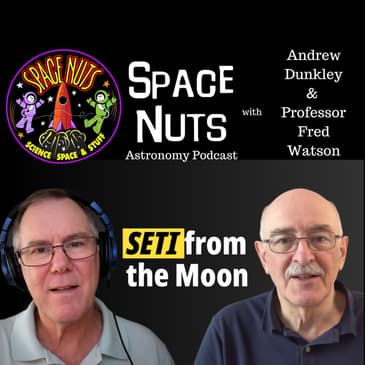
Nuclear Space Policies, SETI from the Moon, and the Hubble Tension In this riveting episode of Space Nuts, hosts Andrew Dunkley and Professor Fred Watson delve into a range of fascinating topics that are shaping the future of space exploration. From the Pentagon's new nuclear energy policy for space missions to the exciting potential of searching for extraterrestrial intelligence from the far side of the Moon, this episode is packed with insights that will leave you pondering the cosmos.
Episode Highlights:
- Nuclear Energy in Space: Andrew and Fred Watson discuss the recent directive from the Pentagon to NASA for the development of nuclear power stations in space, exploring the implications for lunar and orbital power supply systems. They examine the benefits and challenges of using nuclear energy in space, addressing public concerns and the potential for collaboration among government agencies.
- SETI from the Far Side of the Moon: The hosts explore the advantages of conducting the Search for Extraterrestrial Intelligence (SETI) from the Moon's far side, where Earthly radio noise is absent. They discuss the capabilities of China's Chang'e 4 mission and its low-frequency radio spectrometer, which is attempting to detect technosignatures that could indicate the presence of alien life.
- The Hubble Tension Debate: Andrew and Fred Watson unpack the ongoing debate surrounding the Hubble constant, highlighting the discrepancies between measurements obtained through different methods. They discuss new research that aims to refine our understanding of the universe's expansion rate and its implications for our grasp of dark matter and dark energy.
For more Space Nuts, including our continuously updating newsfeed and to listen to all our episodes, visit our website. Follow us on social media at SpaceNutsPod on Facebook, Instagram, and more. We love engaging with our community, so be sure to drop us a message or comment on your favourite platform.
If you’d like to help support Space Nuts and join our growing family of insiders for commercial-free episodes and more, visit spacenutspodcast.com/about.
Stay curious, keep looking up, and join us next time for more stellar insights and cosmic wonders. Until then, clear skies and happy stargazing.
Become a supporter of this podcast: https://www.spreaker.com/podcast/space-nuts-astronomy-insights-cosmic-discoveries--2631155/support.
00:00:00 --> 00:00:02 Andrew Dunkley: Hello again. Thank you for joining us. This
00:00:02 --> 00:00:05 is Space Nuts. My name is Andrew
00:00:05 --> 00:00:07 Dunkley. If you've never heard of Space Nuts,
00:00:07 --> 00:00:08 where have you been for the last 10 years?
00:00:09 --> 00:00:11 Good, uh, to have you along if you're a first
00:00:11 --> 00:00:13 timer. And everybody else who's been with us
00:00:13 --> 00:00:16 for aeons. Uh, today
00:00:16 --> 00:00:18 on the show we will be talking about,
00:00:18 --> 00:00:21 uh, a. Ah, really interesting and some
00:00:21 --> 00:00:24 might think scary development, nuclear
00:00:24 --> 00:00:27 space policies. I don't think they're talking
00:00:27 --> 00:00:30 about, you know, weapons of mass destruction,
00:00:30 --> 00:00:32 but they are talking about power supply
00:00:32 --> 00:00:34 systems. We're, uh, also going to look at
00:00:34 --> 00:00:37 SETI from the far side of the moon because,
00:00:37 --> 00:00:40 uh, that's the best place to listen for alien
00:00:40 --> 00:00:43 civilizations because, well, Earth is very
00:00:43 --> 00:00:46 noisy. But the far side of the moon,
00:00:46 --> 00:00:48 you can't hear a thing. Except the aliens,
00:00:49 --> 00:00:52 apparently. And. Oh, uh, no. The
00:00:52 --> 00:00:54 Hubble tension debate is simmering
00:00:54 --> 00:00:56 again. We'll get into all of that on, on
00:00:56 --> 00:00:59 this, uh, this episode of space
00:00:59 --> 00:01:00 nuts.
00:01:00 --> 00:01:03 Generic: 15 seconds. Guidance is internal.
00:01:03 --> 00:01:06 10, 9. Ignition
00:01:06 --> 00:01:07 sequence start.
00:01:07 --> 00:01:07 Professor Fred Watson: Space nuts.
00:01:08 --> 00:01:10 Generic: 5, 4, 3, 2. 1. 2, 3, 4,
00:01:10 --> 00:01:12 5, 5, 4, 3, 2, 1.
00:01:13 --> 00:01:14 Andrew Dunkley: Space nuts.
00:01:14 --> 00:01:16 Generic: Astronauts report it feels good.
00:01:17 --> 00:01:19 Andrew Dunkley: And joining us to nuke a few storeys is
00:01:19 --> 00:01:21 Professor Fred Watson Watson, uh, astronomer
00:01:21 --> 00:01:22 at large. Hello, Fred Watson.
00:01:23 --> 00:01:26 Professor Fred Watson: Hello, Andrew. Lovely to hear, uh, your
00:01:26 --> 00:01:28 voice and see your face.
00:01:28 --> 00:01:30 Andrew Dunkley: Yes, my voice is still a little bit down
00:01:31 --> 00:01:33 like that. Could do an Elvis song as a
00:01:33 --> 00:01:34 backing.
00:01:34 --> 00:01:36 Professor Fred Watson: Oh, you could, yeah, yeah, Way on, just down.
00:01:37 --> 00:01:39 Well, we. So at the end of the show, you
00:01:39 --> 00:01:42 definitely need to say thank you very much.
00:01:42 --> 00:01:44 Andrew Dunkley: Thank you very much. Uh, yes,
00:01:44 --> 00:01:46 that's what happens when I get a cold. My
00:01:46 --> 00:01:49 voice just goes down deep. When I first
00:01:49 --> 00:01:51 started in radio, I did midnight to dawns. In
00:01:51 --> 00:01:53 the days where they didn't automate it,
00:01:53 --> 00:01:55 everything, everything was live.
00:01:56 --> 00:01:58 And around four in the morning when I used to
00:01:58 --> 00:02:01 get really, really tired, my voice would just
00:02:01 --> 00:02:04 naturally go down there and.
00:02:05 --> 00:02:07 And it was really weird because, um,
00:02:07 --> 00:02:10 it wasn't my natural voice. But,
00:02:10 --> 00:02:12 um, at the moment it's. It's enjoying that
00:02:12 --> 00:02:14 part of the spectrum.
00:02:14 --> 00:02:16 Professor Fred Watson: So, m. Yes.
00:02:16 --> 00:02:18 Andrew Dunkley: Hopefully it'll get better soon. I don't like
00:02:18 --> 00:02:19 the feeling, I must say.
00:02:19 --> 00:02:20 Professor Fred Watson: No, you wouldn't.
00:02:20 --> 00:02:22 Andrew Dunkley: Anyway, we battle on, don't we?
00:02:22 --> 00:02:25 Professor Fred Watson: No point getting all that's. You know,
00:02:25 --> 00:02:28 we do in Space Nuts. We come rain or shine
00:02:28 --> 00:02:31 or absence or whatever, we keep going. We do.
00:02:31 --> 00:02:34 Andrew Dunkley: Speaking of battling on nuclear energy,
00:02:36 --> 00:02:39 uh, this. This is a policy that's just been
00:02:39 --> 00:02:42 announced by the Pentagon and the Department
00:02:42 --> 00:02:44 of Energy and they've kind of dragged NASA
00:02:44 --> 00:02:47 into it. They said, hey, NASA,
00:02:47 --> 00:02:49 we want you to build us a couple of power
00:02:49 --> 00:02:50 stations and they've got to be nuclear and
00:02:50 --> 00:02:53 they've got to be ready by 2028. How about
00:02:53 --> 00:02:53 it?
00:02:54 --> 00:02:56 Professor Fred Watson: Yeah, that's more or less it.
00:02:57 --> 00:03:00 It's a six page policy document.
00:03:00 --> 00:03:03 Uh, its title is NSTM
00:03:03 --> 00:03:06 M3. Uh, which is
00:03:06 --> 00:03:09 to direct a parallel and mutually
00:03:09 --> 00:03:11 reinforcing design, uh, set of design
00:03:11 --> 00:03:14 competitions by NASA and the Defence
00:03:14 --> 00:03:16 Department to enable, and I'm quoting here,
00:03:16 --> 00:03:18 to enable near term demonstration and use of
00:03:19 --> 00:03:22 mid power space reactors in orbit and on the
00:03:22 --> 00:03:24 lunar surface and prepare to deploy
00:03:25 --> 00:03:27 high power reactors in the 2000 and 30s.
00:03:28 --> 00:03:31 Uh, I'm quoting here from uh,
00:03:31 --> 00:03:33 people who are closely involved with this.
00:03:33 --> 00:03:36 For this to work it has to be a collaboration
00:03:36 --> 00:03:38 between multiple government agencies. Well
00:03:39 --> 00:03:41 that's a novel idea, isn't it? Yeah,
00:03:41 --> 00:03:43 um, that's the way that work.
00:03:44 --> 00:03:47 Yeah, that's the way that we do the right R
00:03:47 --> 00:03:49 D and get the right tools in place for these
00:03:49 --> 00:03:51 events to unfold over the next few years.
00:03:51 --> 00:03:54 Yeah. Yes. So um, that's right. So the
00:03:54 --> 00:03:57 bottom line is NASA is
00:03:57 --> 00:03:59 directed to start work within
00:03:59 --> 00:04:02 30 days on a mid power space
00:04:02 --> 00:04:05 reactor generating at least 20 kilowatts of
00:04:05 --> 00:04:07 power with a variant that can operate on the
00:04:07 --> 00:04:09 lunar surface. He calls for the
00:04:09 --> 00:04:11 agency to work with multiple companies on
00:04:11 --> 00:04:13 reactor designs including for a low power
00:04:13 --> 00:04:16 system that produces as little as 1 kilowatt
00:04:16 --> 00:04:19 if doing so offers lower cost and schedule
00:04:19 --> 00:04:21 risk. And this is um, it's a White House
00:04:22 --> 00:04:24 release, uh, that I'm quot from here. So
00:04:24 --> 00:04:26 it's, it's definitely the official thing.
00:04:26 --> 00:04:27 Yeah. Wow.
00:04:27 --> 00:04:29 Andrew Dunkley: Should we be surprised by this though?
00:04:29 --> 00:04:32 Professor Fred Watson: Uh no, no we shouldn't. I mean actually
00:04:32 --> 00:04:35 we did get um. Was it Jared Isaacman, the
00:04:35 --> 00:04:38 uh, the new, relatively new head of
00:04:38 --> 00:04:41 NASA, who I think we covered this uh,
00:04:41 --> 00:04:44 quite a few months ago, talked about the idea
00:04:44 --> 00:04:46 of uh, using a uh, 100 kilowatt
00:04:47 --> 00:04:49 nuclear reactor on the lunar surface. Because
00:04:49 --> 00:04:51 that raises a few eyebrows. Uh, but it looks
00:04:51 --> 00:04:54 as though this is the first step in, in
00:04:55 --> 00:04:58 expediting that uh, to start small,
00:04:58 --> 00:05:01 maybe even the smallest 1kW it'll run an
00:05:01 --> 00:05:03 electric fire and uh,
00:05:04 --> 00:05:07 keep um, going upwards. Uh, there's an
00:05:07 --> 00:05:09 interesting uh, disparity in
00:05:10 --> 00:05:12 the sort of urgency of this though because
00:05:12 --> 00:05:15 um, the next paragraph of the White House
00:05:15 --> 00:05:17 release says the policy calls on the Defence
00:05:17 --> 00:05:20 Department to provide a briefing to the
00:05:20 --> 00:05:23 White House in 90 days on um, potential
00:05:23 --> 00:05:26 uses and payloads for space nuclear systems
00:05:26 --> 00:05:28 of varying power levels. The Pentagon will in
00:05:28 --> 00:05:30 the first year of the policy use its space
00:05:30 --> 00:05:33 nuclear funding to support NASA's efforts,
00:05:33 --> 00:05:35 then conduct its own competition for space
00:05:35 --> 00:05:38 nuclear power systems. I get the feeling here
00:05:38 --> 00:05:40 that there's going to be too many fingers in
00:05:40 --> 00:05:43 the pie and too many people deciding which
00:05:43 --> 00:05:45 companies are going to get the, you know,
00:05:45 --> 00:05:47 going to get the contracts to do this.
00:05:48 --> 00:05:51 Andrew Dunkley: The options for nuclear power these days
00:05:51 --> 00:05:53 are so much more,
00:05:54 --> 00:05:56 uh, available and simple. Like
00:05:56 --> 00:05:59 you can make very small nuclear power
00:05:59 --> 00:06:02 stations now. You can, you can build one
00:06:03 --> 00:06:05 that's, that's small enough just to service a
00:06:05 --> 00:06:08 town these days. You don't need these big
00:06:08 --> 00:06:11 complex setups anymore.
00:06:11 --> 00:06:14 So it probably is the logical way to go.
00:06:14 --> 00:06:16 Even though when you say the word nuclear,
00:06:16 --> 00:06:18 everybody sort of runs for the hills. Not
00:06:18 --> 00:06:21 that that would save them, but um,
00:06:21 --> 00:06:24 it's not, ah, as big and scary as people
00:06:25 --> 00:06:28 envisage. But um, it's, it's got bad
00:06:28 --> 00:06:30 press for a long, long time. So whenever you
00:06:30 --> 00:06:32 talk about nuclear power station or look what
00:06:32 --> 00:06:35 happened in Australia, um, we're so
00:06:35 --> 00:06:36 scared of it. We've never done it.
00:06:38 --> 00:06:40 Professor Fred Watson: And people think of Three Mile, Three Mile
00:06:40 --> 00:06:42 island in Chernobyl.
00:06:43 --> 00:06:46 Uh, and uh, yes. And the bottom line
00:06:46 --> 00:06:48 is that if things go wrong, you have a very
00:06:48 --> 00:06:51 big environmental problem. And uh, that would
00:06:51 --> 00:06:52 be the case.
00:06:52 --> 00:06:53 Andrew Dunkley: It's fukush.
00:06:53 --> 00:06:53 Professor Fred Watson: Yeah.
00:06:53 --> 00:06:56 Andrew Dunkley: With the earthquake and the tide and the
00:06:56 --> 00:06:59 tsunami. Yeah, that's so mess.
00:06:59 --> 00:07:02 Professor Fred Watson: Yes. So, uh, it is scary, I
00:07:02 --> 00:07:05 think. Um, but, but
00:07:05 --> 00:07:08 well, so I grew up in a country that, uh,
00:07:08 --> 00:07:10 pioneered nuclear power with the US
00:07:11 --> 00:07:13 and there are several nuclear power stations.
00:07:14 --> 00:07:15 Uh, I used to live not very far from one
00:07:15 --> 00:07:18 actually at uh, Torness in Scotland.
00:07:20 --> 00:07:22 Yes, I think it's Taunus. Uh, and
00:07:23 --> 00:07:26 look, everybody just regarded it as
00:07:26 --> 00:07:29 a normal power station. It was very much a
00:07:29 --> 00:07:31 low key thing. Uh, and you
00:07:32 --> 00:07:35 see statistics like there's more
00:07:35 --> 00:07:38 radiation comes from the natural emissions
00:07:38 --> 00:07:40 from rocks in the uk. If you go down to
00:07:40 --> 00:07:43 Cornwall, the rocks are basically radioactive
00:07:43 --> 00:07:43 there.
00:07:43 --> 00:07:44 Andrew Dunkley: Oh wow.
00:07:44 --> 00:07:47 Professor Fred Watson: There's radon in the atmosphere. Um, but it's
00:07:47 --> 00:07:49 at a level that humans can tolerate. Humans
00:07:49 --> 00:07:52 have been tolerating it for hundreds of
00:07:52 --> 00:07:54 thousands of years. And uh, that's.
00:07:54 --> 00:07:57 Andrew Dunkley: Yeah, you're exposed to radiation every time
00:07:57 --> 00:07:58 you walk outside.
00:07:58 --> 00:08:01 Professor Fred Watson: Well, that's right, you are. Yes. So, um, so
00:08:01 --> 00:08:04 it, it's got to be treated with respect.
00:08:04 --> 00:08:07 Um, I, I think what freaks people out
00:08:07 --> 00:08:10 though as well is the idea of sticking a
00:08:10 --> 00:08:13 nuclear reactor on top of a rocket and then
00:08:13 --> 00:08:15 sending it into space. And there was an
00:08:15 --> 00:08:18 accident, uh, with a. So just
00:08:18 --> 00:08:21 stepping back, uh, NAS, their
00:08:21 --> 00:08:24 RTGs, radioisotope
00:08:24 --> 00:08:27 thermal generator, thermoelectric generators,
00:08:27 --> 00:08:29 I think that's what it stands for. Uh, on
00:08:29 --> 00:08:31 several spacecraft, including the two
00:08:31 --> 00:08:34 Voyagers, I think the pioneers have got it as
00:08:34 --> 00:08:36 well. Um, the Curiosity, um,
00:08:38 --> 00:08:40 and um, Perseverance.
00:08:40 --> 00:08:43 Both have RTG power supplies. Uh,
00:08:43 --> 00:08:46 so that's uh, uh,
00:08:46 --> 00:08:49 a well trodden path. But there was an
00:08:49 --> 00:08:50 accident, I think it might have been in the
00:08:50 --> 00:08:52 80s with a spacecraft that was launched with
00:08:53 --> 00:08:55 something like an RTG on board and it did,
00:08:56 --> 00:08:59 uh, it went wrong. I can't remember
00:08:59 --> 00:09:01 the details but I think it was Canada that
00:09:01 --> 00:09:03 took the punch. And there was a lot of
00:09:04 --> 00:09:06 radioactive debris that got spread over
00:09:07 --> 00:09:09 very, very sparsely, uh,
00:09:10 --> 00:09:12 populated regions. Uh,
00:09:12 --> 00:09:15 literal fallout. Yes, that's right. Yes,
00:09:15 --> 00:09:18 exactly. Flaws out the sky. If I remember
00:09:18 --> 00:09:20 rightly. I'm digging up things from the past
00:09:20 --> 00:09:22 year, but I think that's the case and that
00:09:22 --> 00:09:24 clearly freaks people out. If you've got a
00:09:24 --> 00:09:27 launch that doesn't work, uh, what's going to
00:09:27 --> 00:09:27 happen?
00:09:28 --> 00:09:31 Andrew Dunkley: I imagine so. But uh, it certainly does ramp
00:09:31 --> 00:09:33 up the space race between the US and China.
00:09:33 --> 00:09:35 And you know, China's probably going to fall
00:09:35 --> 00:09:37 a bit behind here because I think they were
00:09:37 --> 00:09:39 trying to set up a coal fired power station
00:09:39 --> 00:09:40 on the moon. You know, it
00:09:40 --> 00:09:43 um, might m, might
00:09:43 --> 00:09:44 slow them down a bit.
00:09:44 --> 00:09:46 Professor Fred Watson: Yeah, China's doing pretty well. They are
00:09:46 --> 00:09:49 doing sustainability. Yeah, yeah, they are.
00:09:49 --> 00:09:51 Ah, but yeah, they do use a lot of coal
00:09:51 --> 00:09:51 still.
00:09:51 --> 00:09:54 Andrew Dunkley: Yeah, they do, they do. So this is probably
00:09:54 --> 00:09:57 going to happen and what other
00:09:57 --> 00:09:59 option would there be? That's the thing. I
00:09:59 --> 00:10:01 mean some people will say no, put up solar
00:10:01 --> 00:10:04 energy systems, but um,
00:10:04 --> 00:10:06 nuclear is probably a much more
00:10:06 --> 00:10:08 efficient way of doing it.
00:10:08 --> 00:10:10 Professor Fred Watson: Yeah, well for a start, you've got the
00:10:10 --> 00:10:12 baseline load. You're not worried about where
00:10:12 --> 00:10:15 the sun is in the sky. The idea
00:10:15 --> 00:10:18 of being at the south pole of the moon,
00:10:19 --> 00:10:21 which is where the focus is in terms
00:10:21 --> 00:10:24 of our uh, exploration of the moon.
00:10:24 --> 00:10:27 Uh, it puts a different slant
00:10:27 --> 00:10:30 on it because it means that you are looking
00:10:30 --> 00:10:33 at a very low sun altitude in the
00:10:33 --> 00:10:35 sky. Uh, the sun's coming in nearly
00:10:35 --> 00:10:37 horizontally. The sunlight, now that's not
00:10:38 --> 00:10:41 uh, as bad a thing on the moon as it would be
00:10:41 --> 00:10:43 on the Earth. The Earth, as the sun gets
00:10:43 --> 00:10:44 lower, it's going through a thicker and
00:10:44 --> 00:10:47 thicker layer of atmosphere. So its uh, power
00:10:47 --> 00:10:50 is attenuated. On the moon that doesn't
00:10:50 --> 00:10:52 happen because there ain't no atmosphere. But
00:10:52 --> 00:10:55 it does bring challenges for your solar
00:10:55 --> 00:10:56 panels. You know, you've got to build arrays
00:10:56 --> 00:10:58 that are almost vertical and if you're
00:10:58 --> 00:11:01 looking for a big structure, uh, then
00:11:01 --> 00:11:04 uh, it becomes different slightly different
00:11:04 --> 00:11:07 engineering, um, issue. Plus you've got to
00:11:07 --> 00:11:09 take all that stuff up there as well. You
00:11:09 --> 00:11:12 know, going up to the moon with arrays of
00:11:12 --> 00:11:14 solar panels in the spacecraft might not
00:11:14 --> 00:11:16 leave room for much else. Whereas a nuclear
00:11:16 --> 00:11:18 reactor of the kind that people are talking
00:11:18 --> 00:11:20 about would be relatively compact. I m mean,
00:11:20 --> 00:11:23 the RTG devices are, I think
00:11:23 --> 00:11:26 it's, is it 13 kilogrammes of, uh,
00:11:26 --> 00:11:29 plutonium that they have in them.
00:11:29 --> 00:11:32 They're about the size of a, you know,
00:11:32 --> 00:11:35 a tea urn or something like that. Or a drink
00:11:35 --> 00:11:37 serum. Yeah, yeah.
00:11:37 --> 00:11:40 Andrew Dunkley: It's much simpler than it was 20, 30,
00:11:40 --> 00:11:43 40, 50 years ago. And of course they're
00:11:43 --> 00:11:45 talking not only about the moon, but people,
00:11:45 --> 00:11:48 uh, on Mars, uh, they'll need power as well.
00:11:48 --> 00:11:50 Um, I know in the movie the Martian they used
00:11:50 --> 00:11:52 solar panels, but that Mars is a bit further
00:11:52 --> 00:11:54 away, so the solar panels probably wouldn't
00:11:54 --> 00:11:55 be as efficient.
00:11:55 --> 00:11:56 Professor Fred Watson: Exactly.
00:11:57 --> 00:11:59 Andrew Dunkley: Nuclear, um, power makes, Makes perfect
00:11:59 --> 00:12:02 sense. Uh, although, you know, solar energy
00:12:02 --> 00:12:05 is quite, um, well used
00:12:05 --> 00:12:08 in space. Artemis 2 used it.
00:12:09 --> 00:12:11 Professor Fred Watson: Um, that's correct, yes. Uh, and
00:12:11 --> 00:12:13 um, you know, thinking of the different
00:12:13 --> 00:12:15 spacecraft, the one that's got perhaps the
00:12:15 --> 00:12:17 most spectacular solar panels is Lucy, uh,
00:12:18 --> 00:12:20 spacecraft which is on its way to the Trojan
00:12:20 --> 00:12:23 asteroids. Uh, and that's got
00:12:23 --> 00:12:26 solar panels which are huge. And that's
00:12:26 --> 00:12:28 because you're going out to the asteroid belt
00:12:28 --> 00:12:30 and beyond. Actually you go into the orbit of
00:12:30 --> 00:12:32 Jupiter, which is where the Trojan asteroids
00:12:32 --> 00:12:35 hang out. Uh, so you need big solar
00:12:35 --> 00:12:37 panels to collect all the energy. Yeah.
00:12:37 --> 00:12:39 Andrew Dunkley: The other problem with solar panels on Mars
00:12:39 --> 00:12:42 would be dust, because it's
00:12:42 --> 00:12:43 a pretty grubby place.
00:12:43 --> 00:12:46 Professor Fred Watson: Yeah, that's what, um, probably brought an
00:12:46 --> 00:12:49 end to. Uh, so Spirit and Opportunity both
00:12:49 --> 00:12:52 had solar panels. Uh, and there were
00:12:52 --> 00:12:55 certainly times when the amount of dust was
00:12:55 --> 00:12:57 stopping the power generation. And uh, that
00:12:57 --> 00:13:00 was cleared by, uh, Willy Willies, as they're
00:13:00 --> 00:13:03 called. Uh, the um, dust
00:13:03 --> 00:13:05 devils. That's right. On Mars. Yeah.
00:13:05 --> 00:13:05 Andrew Dunkley: Fascinating.
00:13:05 --> 00:13:08 All right, so the um, the directive has
00:13:08 --> 00:13:11 been put to NASA to start working on this,
00:13:11 --> 00:13:14 uh, and it comes from the White House. So,
00:13:14 --> 00:13:16 um, it's all systems go and they hope to have
00:13:16 --> 00:13:19 something operational as soon as 20,
00:13:19 --> 00:13:22 28. So they're not mucking around. In fact, I
00:13:22 --> 00:13:24 think NASA, after this was released, were
00:13:24 --> 00:13:25 given one month to it.
00:13:26 --> 00:13:28 Professor Fred Watson: Uh, that's, uh, exactly right. That's the 30
00:13:28 --> 00:13:29 days that I mentioned.
00:13:29 --> 00:13:30 Andrew Dunkley: No mucking around.
00:13:30 --> 00:13:31 Professor Fred Watson: Get going.
00:13:31 --> 00:13:33 Andrew Dunkley: Yep. Uh, you can read all about
00:13:33 --> 00:13:35 it@spacenews.com.
00:13:36 --> 00:13:38 this is Space Nuts with Andrew Dunkley and
00:13:38 --> 00:13:40 Professor Fred Watson Watson.
00:13:44 --> 00:13:45 Space Nuts.
00:13:46 --> 00:13:48 Well, we mentioned the moon. We'll stick with
00:13:48 --> 00:13:51 the moon. This storey though has nothing to
00:13:51 --> 00:13:53 do with people on the moon. It's got uh,
00:13:53 --> 00:13:56 everything to do with people that are not on
00:13:56 --> 00:13:58 Earth or the Moon or, or Mars for that
00:13:58 --> 00:14:00 matter. Uh, they're out there somewhere.
00:14:00 --> 00:14:02 We're looking for them. We're talking about
00:14:02 --> 00:14:05 the search for extraterrestrial intelligence
00:14:05 --> 00:14:07 and the dark side of the moon. The far side
00:14:07 --> 00:14:10 of the moon is um, the best place
00:14:10 --> 00:14:11 to start looking.
00:14:13 --> 00:14:15 Professor Fred Watson: Uh, that's right. So we've been looking for
00:14:15 --> 00:14:16 this for 60 years
00:14:18 --> 00:14:20 and using ground, uh, based
00:14:21 --> 00:14:24 antennas here on planet Earth, uh,
00:14:24 --> 00:14:26 which are very, uh, very capable.
00:14:28 --> 00:14:30 Um, once the Square Kilometre Array
00:14:30 --> 00:14:32 Observatory comes on stream towards the end
00:14:32 --> 00:14:34 of the decade, uh, we'll have the
00:14:34 --> 00:14:37 finest, most capable radio
00:14:37 --> 00:14:40 telescope in the world, uh, which will not
00:14:40 --> 00:14:43 directly engage with SETI programmes, but
00:14:43 --> 00:14:46 it will uh, have the
00:14:46 --> 00:14:49 sensitivity to detect. Well the thing that
00:14:49 --> 00:14:51 my colleagues tell me is it'll detect an
00:14:51 --> 00:14:53 airport radar at 50 light years.
00:14:54 --> 00:14:56 So that's the kind of sensitivity
00:14:57 --> 00:14:59 uh, that you're talking about. Um, but
00:15:00 --> 00:15:02 the main problem with ground based, with
00:15:02 --> 00:15:05 Earth based uh, radio telescopes
00:15:05 --> 00:15:07 is that they're compromised by all the
00:15:07 --> 00:15:10 cacophony of radio signals that
00:15:10 --> 00:15:12 surrounds us. From your mobile phones, from
00:15:12 --> 00:15:15 broadcasts from people like you and
00:15:15 --> 00:15:17 me doing this, going out into the ether,
00:15:18 --> 00:15:21 WI fi routers, WI fi, uh, the whole thing,
00:15:21 --> 00:15:23 microwave ovens, it all provides this
00:15:23 --> 00:15:26 noisy radio background and that's not getting
00:15:26 --> 00:15:29 any better with the um, satellite mega
00:15:29 --> 00:15:32 constellations. Uh, I was in uh, a meeting
00:15:32 --> 00:15:35 yesterday. It's
00:15:35 --> 00:15:37 a meeting of the um, International
00:15:37 --> 00:15:40 Astronomical Union Centre, uh, for the
00:15:40 --> 00:15:43 protection of the dark and quiet sky from
00:15:43 --> 00:15:45 satellite interference. Uh, and it
00:15:45 --> 00:15:48 was um, you know one of the things that's
00:15:48 --> 00:15:51 raising anxiety is the idea of uh, Elon
00:15:51 --> 00:15:52 Musk's million satellites for
00:15:55 --> 00:15:57 um, orbital data centres and
00:15:57 --> 00:16:00 this mirror in the sky idea, sunlight on
00:16:00 --> 00:16:02 demand, that also has a million satel mirrors
00:16:02 --> 00:16:05 on it. So that's more for the optical
00:16:05 --> 00:16:07 astronomers. But it's all a concern,
00:16:07 --> 00:16:10 uh, and it basically is eroding our
00:16:10 --> 00:16:13 capability slowly but surely to
00:16:13 --> 00:16:16 detect uh, faint extraterrestrial
00:16:16 --> 00:16:18 signals. Uh, so that
00:16:18 --> 00:16:21 brings us to currently possibly
00:16:21 --> 00:16:24 the best place to do this sort of thing from
00:16:25 --> 00:16:27 which is the far side of the moon.
00:16:28 --> 00:16:31 Uh, and um, uh,
00:16:31 --> 00:16:34 we have one uh, spacecraft.
00:16:34 --> 00:16:36 By we, I mean humankind have one
00:16:36 --> 00:16:39 spacecraft on the far side of the moon. Uh,
00:16:39 --> 00:16:41 it is China's Chang' e 4,
00:16:41 --> 00:16:44 uh, which soft landed on the far side of the
00:16:44 --> 00:16:47 moon back in 2019. Can you believe it?
00:16:47 --> 00:16:50 It's been there uh, seven
00:16:50 --> 00:16:53 years. It's quite Extraordinary. Um,
00:16:53 --> 00:16:55 but uh, now that, that
00:16:56 --> 00:16:58 um. Spacecraft was not set up
00:16:58 --> 00:17:01 uh specifically for uh,
00:17:01 --> 00:17:04 looking for um, SETI search for
00:17:04 --> 00:17:07 extraterrestrial intelligence but
00:17:07 --> 00:17:09 it's got a low frequency radio
00:17:09 --> 00:17:12 spectrometer on board um that
00:17:12 --> 00:17:15 actually has been used to conduct the first
00:17:15 --> 00:17:18 ever SETI search from the lunar far
00:17:18 --> 00:17:21 side. Um and so the
00:17:21 --> 00:17:23 goal, uh, the idea
00:17:24 --> 00:17:26 is to use that equipment which is
00:17:26 --> 00:17:29 designed to do natural sciences
00:17:29 --> 00:17:32 but to look for those
00:17:32 --> 00:17:35 ah, technosignatures, uh
00:17:35 --> 00:17:38 technomarkers they're sometimes called, uh,
00:17:38 --> 00:17:40 which might suggest that you're getting a
00:17:40 --> 00:17:43 signal from an artificially generated
00:17:43 --> 00:17:45 source. And what you're really looking for
00:17:46 --> 00:17:48 are ah, periodic
00:17:49 --> 00:17:52 um, bursts of radiation with perhaps
00:17:52 --> 00:17:53 regular intervals
00:17:54 --> 00:17:57 um, that are not easily explained
00:17:57 --> 00:18:00 by natural processes. And you've got to
00:18:00 --> 00:18:03 think back to Jocelyn Bell Burnell and her
00:18:04 --> 00:18:06 discovery uh, of the first pulsar because
00:18:06 --> 00:18:08 that's what she saw. Narrow um, band.
00:18:09 --> 00:18:12 Um. Sorry, narrow uh, band
00:18:12 --> 00:18:14 in time signatures, uh, or
00:18:14 --> 00:18:17 bursts of radiation which we now know is the
00:18:17 --> 00:18:19 pulsar, the kind of light ass beam of
00:18:19 --> 00:18:22 radiation from the pulsar sweeping around and
00:18:22 --> 00:18:25 passing the earth. Um, she didn't know that
00:18:25 --> 00:18:27 then. So she wrote little green men in her
00:18:27 --> 00:18:30 uh. On her chart record of very,
00:18:30 --> 00:18:33 very famous words. Um,
00:18:33 --> 00:18:36 so that's what basically uh, the uh,
00:18:36 --> 00:18:39 Chang', E, um Low Frequency Radio
00:18:39 --> 00:18:41 Spectrometer has been looking for. Uh, and
00:18:41 --> 00:18:44 it's things that um, you know, that speak
00:18:44 --> 00:18:47 of an artificial generated source.
00:18:47 --> 00:18:50 And so um, what they've
00:18:50 --> 00:18:52 done, uh the scientists working on this,
00:18:52 --> 00:18:55 uh basically they built an algorithm
00:18:56 --> 00:18:58 uh that ah, uh trawled through the data
00:18:59 --> 00:19:02 looking for anything that might
00:19:02 --> 00:19:05 be artificial. With no
00:19:05 --> 00:19:08 credible candidates revealed,
00:19:08 --> 00:19:11 uh, nothing that couldn't be explained either
00:19:11 --> 00:19:14 by you know, natural phenomena or by
00:19:14 --> 00:19:16 instrument, uh, issues.
00:19:17 --> 00:19:20 Um, there's a nice comment though
00:19:20 --> 00:19:22 from uh, phys.org who is carrying this
00:19:22 --> 00:19:25 storey. Uh, this is,
00:19:25 --> 00:19:28 I'll quote this. This is not a failure, it is
00:19:28 --> 00:19:30 a beginning. As Carl Sagan once put it,
00:19:30 --> 00:19:33 absence of evidence is not evidence of
00:19:33 --> 00:19:35 absence. Brilliant. Really good point.
00:19:36 --> 00:19:39 Andrew Dunkley: I had a lot of time for Carl Sagan, uh, very
00:19:39 --> 00:19:42 wise man and um. Yeah, he uh, he did a lot
00:19:42 --> 00:19:45 for astronomy during his time. But um,
00:19:45 --> 00:19:48 that's a valid point and, and I suppose you
00:19:48 --> 00:19:50 and I have spoken about it in the past. The
00:19:50 --> 00:19:52 big problem is distance. There might,
00:19:53 --> 00:19:55 there might be civilizations out there that
00:19:55 --> 00:19:58 are advanced and capable of communication but
00:19:58 --> 00:20:00 they're so far away we will never hear from
00:20:00 --> 00:20:01 them. Maybe that.
00:20:02 --> 00:20:04 Professor Fred Watson: Yeah, um, that's right. Uh,
00:20:04 --> 00:20:07 and you know, and time is the other issue.
00:20:07 --> 00:20:09 It's a needle in A haystack both in distance
00:20:09 --> 00:20:11 and in time because you've got to hit your
00:20:11 --> 00:20:14 civil station just at the right time. Yes.
00:20:15 --> 00:20:17 Uh, when uh, they are uh, technologically
00:20:17 --> 00:20:19 enough to have airport radar, uh, for
00:20:19 --> 00:20:22 example, but haven't wiped themselves out
00:20:22 --> 00:20:23 because of the loonies that they've
00:20:23 --> 00:20:24 generated.
00:20:24 --> 00:20:26 Andrew Dunkley: Yeah, you're more, you're more likely to get
00:20:26 --> 00:20:29 a um, a tick tock of some
00:20:29 --> 00:20:31 kid doing a stupid raps hole. That's
00:20:31 --> 00:20:34 probably, that's what you'll get from,
00:20:35 --> 00:20:38 from an extraterrestrial intelligence, um.
00:20:38 --> 00:20:40 What, what, what I wonder
00:20:40 --> 00:20:43 is with the far side of the moon? Yes, it's
00:20:43 --> 00:20:45 radio silent, but does it cover enough
00:20:45 --> 00:20:48 of the spectrum of the universe to
00:20:48 --> 00:20:51 pick up something or is it fairly
00:20:51 --> 00:20:53 narrow in its scope?
00:20:53 --> 00:20:56 Professor Fred Watson: Do you mean in terms of direction or.
00:20:56 --> 00:20:58 Andrew Dunkley: Yeah, being able to pick something up.
00:20:58 --> 00:21:00 Professor Fred Watson: Has it got like a wide array? Yeah, I mean
00:21:00 --> 00:21:03 the far side of the moon, um, you know,
00:21:03 --> 00:21:06 if you plunk something on the equator of the
00:21:06 --> 00:21:08 moon on the far side over a month
00:21:08 --> 00:21:11 you cover the entire sky. If you're,
00:21:11 --> 00:21:14 yeah, if you're um, if your
00:21:14 --> 00:21:17 uh, equipment is broadband enough
00:21:17 --> 00:21:20 and all the SETI stuff is, it's got a very
00:21:20 --> 00:21:22 wide range of spectral, of uh, frequencies
00:21:22 --> 00:21:25 although they do tend to concentrate on
00:21:26 --> 00:21:29 what uh, we call the 21 centimetre line. This
00:21:29 --> 00:21:32 is the frequency, the specific frequency
00:21:32 --> 00:21:34 that's radiated by called hydrogen.
00:21:34 --> 00:21:37 Uh and they do tend to concentrate on that
00:21:37 --> 00:21:39 because everybody in the universe will be
00:21:39 --> 00:21:41 aware of that 21 centimetre
00:21:42 --> 00:21:44 uh, wavelength because
00:21:44 --> 00:21:47 that's called hydrogen. Which is the same
00:21:47 --> 00:21:48 everywhere.
00:21:48 --> 00:21:51 Andrew Dunkley: Yeah, makes sense. All right,
00:21:51 --> 00:21:54 fascinating. Um, storey, um, nothing yet.
00:21:54 --> 00:21:56 But that doesn't mean, that doesn't mean
00:21:56 --> 00:21:57 it'll always be nothing.
00:21:57 --> 00:22:00 Professor Fred Watson: So it's not evidence of
00:22:00 --> 00:22:01 absence. That's right.
00:22:01 --> 00:22:04 Andrew Dunkley: M exactly. You can read all about it as
00:22:04 --> 00:22:05 Fred Watson said at the phys
00:22:06 --> 00:22:08 phys.org website,
00:22:08 --> 00:22:11 this is Space Nuts Andrew Dunkley here with
00:22:11 --> 00:22:12 Professor Fred Watson Watson.
00:22:15 --> 00:22:17 Professor Fred Watson: Okay, we checked all four systems and
00:22:17 --> 00:22:19 Andrew Dunkley: being with a go, Space Nuts, our uh,
00:22:19 --> 00:22:22 final storey. Fred Watson brings uh, us back
00:22:22 --> 00:22:25 to that old debate about the Hubble
00:22:25 --> 00:22:28 tension. Now the Hubble tension is measured
00:22:28 --> 00:22:30 in two different ways and they come up with
00:22:30 --> 00:22:33 two different answers. And that's troubled
00:22:33 --> 00:22:36 people for a while. Although we did a storey
00:22:36 --> 00:22:38 not so long ago that suggested. Hang on a
00:22:38 --> 00:22:40 minute, the differences aren't uh, that
00:22:40 --> 00:22:43 significant. So they're probably both right
00:22:43 --> 00:22:46 if you allow for the um, you know, the, the
00:22:46 --> 00:22:49 variables. But this storey is saying.
00:22:49 --> 00:22:51 Hang on a minute, we, we think there's a
00:22:51 --> 00:22:52 better way.
00:22:53 --> 00:22:56 Professor Fred Watson: Yes, that's right. Uh, in
00:22:56 --> 00:22:58 Exactly. That it's all about. So
00:22:59 --> 00:23:02 let's just, uh, backtrack. What is the Hubble
00:23:02 --> 00:23:05 tension? Uh, so the
00:23:05 --> 00:23:07 expansion rate of the universe, uh,
00:23:07 --> 00:23:10 basically is a number that we was
00:23:10 --> 00:23:13 first measured by Edwin hubble back in 1929.
00:23:13 --> 00:23:15 Um, he got the wrong answer because he was
00:23:15 --> 00:23:17 only looking at a very small number of
00:23:17 --> 00:23:20 galaxies. But it comes about because, as
00:23:20 --> 00:23:23 you look at galaxies, ah, in the
00:23:23 --> 00:23:26 wider universe, uh, they get,
00:23:26 --> 00:23:29 um. Their velocity away from us
00:23:29 --> 00:23:31 is bigger the further away they are.
00:23:32 --> 00:23:34 And that comes about when you've got a
00:23:34 --> 00:23:36 universe that's expanding. That's the natural
00:23:36 --> 00:23:39 assumption and we've believed that ever
00:23:39 --> 00:23:41 since. Yeah. Excuse me. So.
00:23:42 --> 00:23:44 So, um, I've got a bit of Hubble tension in
00:23:44 --> 00:23:47 my chest there. Um, so that's how
00:23:47 --> 00:23:50 it's normally measured, measured the Hubble
00:23:50 --> 00:23:52 constant, this number,
00:23:53 --> 00:23:56 which is in slightly bizarre units, it's
00:23:56 --> 00:23:58 in megapas, uh, kilometres per second per
00:23:58 --> 00:24:01 megaparsec. Kilometres per second is
00:24:01 --> 00:24:04 the recession speed of a galaxy.
00:24:04 --> 00:24:06 A megaparsec is,
00:24:07 --> 00:24:09 uh, it 3.26. I can never remember the
00:24:09 --> 00:24:11 name. Million light years.
00:24:12 --> 00:24:14 It's the units that astronomers use for
00:24:14 --> 00:24:17 measuring distance parsecs. And it's a
00:24:17 --> 00:24:20 million parsecs. So, um, kilometres
00:24:20 --> 00:24:23 per second per megaparsec tells you how
00:24:23 --> 00:24:25 the velocity of a galaxy
00:24:25 --> 00:24:28 increases with distance and that's the
00:24:28 --> 00:24:30 result of the expansion of the universe. So
00:24:30 --> 00:24:33 the Hubble constant tells you how fast the
00:24:33 --> 00:24:35 universe is expanding. Now,
00:24:35 --> 00:24:38 now you can. The normal way of
00:24:38 --> 00:24:41 doing this is, uh. And it's actually why the
00:24:41 --> 00:24:44 Hubble telescope was created and why it got
00:24:44 --> 00:24:47 its name. Uh, we. Excuse me, we
00:24:47 --> 00:24:50 measure the brightness. Sorry, I've
00:24:50 --> 00:24:52 got my. Got my tension back there.
00:24:53 --> 00:24:55 If you want to cut this bit out, Huw, you're
00:24:55 --> 00:24:56 more than welcome to,
00:24:58 --> 00:25:01 um. It's fine now, uh,
00:25:02 --> 00:25:05 uh, the tension comes about. So, no, let me
00:25:05 --> 00:25:07 step back again. The measure, uh, where
00:25:07 --> 00:25:10 it's measured is you build up a sort of
00:25:10 --> 00:25:12 distance scale ladder. So the direct
00:25:12 --> 00:25:15 measurement of star distances in outer
00:25:15 --> 00:25:18 space comes about by the parallax
00:25:18 --> 00:25:21 method. As the Earth goes around the sun, we
00:25:21 --> 00:25:24 see stars, uh, apparently changing their
00:25:24 --> 00:25:26 position relative to very distant
00:25:26 --> 00:25:29 background stars. And that changing position
00:25:29 --> 00:25:31 you can measure. Uh, and in fact
00:25:31 --> 00:25:34 it's that. That gives the parsec its name.
00:25:34 --> 00:25:37 It's a parallax of 1/ arc second is what
00:25:37 --> 00:25:39 it's short for. And so that's a direct
00:25:39 --> 00:25:42 geometrical way of measuring the distance to
00:25:42 --> 00:25:44 certain stars. If you can do that to
00:25:44 --> 00:25:47 stars whose intrinsic brightness, you know,
00:25:47 --> 00:25:49 and these are typically, uh, Cepheid variable
00:25:49 --> 00:25:52 stars, then you can extend it because you
00:25:52 --> 00:25:54 know their brightness, uh, their intrinsic
00:25:54 --> 00:25:57 brightness, how much uh, light they radiate,
00:25:57 --> 00:25:59 then you can look at how faint they are
00:25:59 --> 00:26:02 further and further on. Um, and that's the,
00:26:02 --> 00:26:04 that's how we started off because Hubble
00:26:05 --> 00:26:08 measured um, um. In fact in
00:26:08 --> 00:26:11 1923 used these variable stars to
00:26:11 --> 00:26:12 measure the distance of the Andromeda, um,
00:26:12 --> 00:26:15 galaxy. Once again, he got it a bit wrong by
00:26:15 --> 00:26:17 today's standards. But that uh, was when we
00:26:17 --> 00:26:19 realised that galaxies weren't little things
00:26:19 --> 00:26:22 frutaling around in our own Milky Way. They
00:26:22 --> 00:26:25 are very distant objects. So, so that's the
00:26:25 --> 00:26:27 basic process and that has now been
00:26:28 --> 00:26:31 uh, basically elaborated by
00:26:31 --> 00:26:34 additional things which involve supernovae,
00:26:34 --> 00:26:37 the exploding stars, all sorts of other
00:26:37 --> 00:26:40 uh, cosmic phenomena. And that's the
00:26:40 --> 00:26:43 basis of what this storey is about
00:26:43 --> 00:26:46 because uh, that
00:26:46 --> 00:26:48 technology has now been
00:26:49 --> 00:26:51 absolutely refined to the nth degree,
00:26:52 --> 00:26:55 uh, by the scientists who are uh,
00:26:55 --> 00:26:57 uh, who are um, um,
00:26:57 --> 00:27:00 basically reporting this work. It's
00:27:00 --> 00:27:03 a study in astronomy and astrophysics, one of
00:27:03 --> 00:27:05 the leading journals, actually a European
00:27:05 --> 00:27:08 journal. Uh, and these scientists
00:27:08 --> 00:27:10 have spent a lot of time
00:27:11 --> 00:27:14 getting uh, the answer right from
00:27:14 --> 00:27:16 this method, what we call the distance ladder
00:27:16 --> 00:27:19 or the distance scale, by invoking
00:27:19 --> 00:27:22 objects of all kinds. And so they
00:27:22 --> 00:27:24 have produced a number for the Hubble
00:27:24 --> 00:27:27 constant which has a very, very
00:27:28 --> 00:27:30 small error. In fact they quote it as Ah,
00:27:30 --> 00:27:32 73.50
00:27:33 --> 00:27:36 kilometres per second per megaparsec
00:27:36 --> 00:27:39 plus or minus point zero, sorry,
00:27:39 --> 00:27:42 0.81 kilometres per
00:27:42 --> 00:27:44 second per megaset parsec. So they're talking
00:27:44 --> 00:27:47 about something that's either somewhere
00:27:47 --> 00:27:50 between 72.0 and 74. Sorry,
00:27:50 --> 00:27:52 72.5 and 74. 4.5
00:27:52 --> 00:27:55 thereabouts, which is a very, very
00:27:55 --> 00:27:57 tight uh, estimate of this
00:27:57 --> 00:28:00 velocity. Uh, so what's
00:28:00 --> 00:28:03 the tension about until somebody debunks
00:28:03 --> 00:28:06 them? Yeah, uh,
00:28:06 --> 00:28:09 well, it's true. Um, I do remember,
00:28:09 --> 00:28:11 um, back in the 70s, and I've told you this
00:28:11 --> 00:28:14 before, Andrew, there were two schools of
00:28:14 --> 00:28:17 thought, both offering measurements with very
00:28:17 --> 00:28:19 tight error limits, one of which said that
00:28:19 --> 00:28:22 the number was 50 and the other which said
00:28:22 --> 00:28:25 the number was 100. And lo and behold, when
00:28:25 --> 00:28:26 the Hubble telescope gave us the right
00:28:26 --> 00:28:28 answer, it was basically the average of those
00:28:28 --> 00:28:31 two around about 75. And it's now been
00:28:31 --> 00:28:31 refined.
00:28:31 --> 00:28:33 Andrew Dunkley: It's kind of what they're doing with this,
00:28:33 --> 00:28:33 isn't it?
00:28:34 --> 00:28:37 Professor Fred Watson: A little bit. Although they're really giving
00:28:37 --> 00:28:39 tight, very tight
00:28:39 --> 00:28:42 um, estimates based on everything that
00:28:42 --> 00:28:45 we can observe. Uh, whereas the previous
00:28:45 --> 00:28:47 this with the difference between 50 and 100
00:28:47 --> 00:28:49 and that was a kind of Hubble tension. We
00:28:49 --> 00:28:51 didn't call it the ah, that but that's sort
00:28:51 --> 00:28:54 of what it was. That was uh, based on
00:28:54 --> 00:28:57 uh, just individual, individual measurements
00:28:57 --> 00:29:00 from you know, their own particular school of
00:29:00 --> 00:29:02 thought. One was galaxies, one was supernovae
00:29:02 --> 00:29:04 or something. I can't remember how it worked,
00:29:04 --> 00:29:06 I can't remember the details. Probably could
00:29:06 --> 00:29:08 if I thought about it. Uh, but this brings
00:29:08 --> 00:29:11 them all together to get this super accurate
00:29:11 --> 00:29:14 so called value of 73.5.
00:29:14 --> 00:29:17 So the tension is that there is another way
00:29:18 --> 00:29:21 of determining uh, the Hubble
00:29:21 --> 00:29:23 constant and it involves uh, observing
00:29:23 --> 00:29:26 the cosmic microwave background radiation.
00:29:26 --> 00:29:28 That's the radiation that we see from the Big
00:29:28 --> 00:29:31 Bang. We're looking back 13.8 billion years
00:29:31 --> 00:29:33 to see that. What's sometimes called the
00:29:33 --> 00:29:35 afterglow of the Big Bang. It's really still
00:29:35 --> 00:29:37 the light of the Big Bang that you can see
00:29:37 --> 00:29:39 because you're looking so far back in time.
00:29:40 --> 00:29:43 And that gives us a different number. You
00:29:43 --> 00:29:46 can look at the, the, it's what's
00:29:46 --> 00:29:47 called the power spectrum. The cosmic
00:29:47 --> 00:29:49 microwave background radiation has these
00:29:49 --> 00:29:52 tiny, tiny fluctuations and by tiny
00:29:52 --> 00:29:54 I mean the amount fluctuations in
00:29:54 --> 00:29:56 temperature. You can measure the temperature
00:29:56 --> 00:29:59 of the radiation and they form in little
00:29:59 --> 00:30:02 blobs and we think that's where the galaxies
00:30:02 --> 00:30:04 came from. The cooler parts were where
00:30:04 --> 00:30:07 galaxies formed, the warmer parts were not.
00:30:07 --> 00:30:10 Uh, and so the microwave
00:30:10 --> 00:30:12 background radiation when you look at,
00:30:13 --> 00:30:16 looks like a wallpaper, uh, which is
00:30:16 --> 00:30:18 why I sometimes call it the cosmic wallpaper.
00:30:18 --> 00:30:20 Partly because it's behind everything else.
00:30:20 --> 00:30:22 Just like the wallpaper in a room is behind
00:30:22 --> 00:30:25 everything. But it's also got these patterns.
00:30:25 --> 00:30:27 So you can use those patterns to make another
00:30:27 --> 00:30:30 estimate of the uh, Hubble
00:30:30 --> 00:30:30 constant.
00:30:30 --> 00:30:33 And the answer that you get is 67
00:30:33 --> 00:30:36 kilometres per second per megaparsec, which
00:30:36 --> 00:30:39 is well outside the error
00:30:39 --> 00:30:41 band of the sort of traditional method.
00:30:41 --> 00:30:44 Method. And so I think
00:30:44 --> 00:30:47 what the direction this is going
00:30:47 --> 00:30:50 in is. So uh, as you and I have
00:30:50 --> 00:30:53 spoken about before, people have done a lot
00:30:53 --> 00:30:56 of work to try and look for where we've
00:30:56 --> 00:30:58 gone wrong here because these two numbers
00:30:58 --> 00:30:59 should give you the same answer. But they
00:30:59 --> 00:31:02 don't. But they don't. So
00:31:02 --> 00:31:04 now people are turning it upside down and
00:31:04 --> 00:31:06 saying maybe the fact that they don't give
00:31:06 --> 00:31:08 the same answer is telling us something
00:31:08 --> 00:31:10 about, about the physics of the universe that
00:31:10 --> 00:31:11 we don't know
00:31:12 --> 00:31:14 Andrew Dunkley: or we're just not accounting for everything
00:31:14 --> 00:31:16 we need to put into the formula.
00:31:16 --> 00:31:19 Professor Fred Watson: Yeah, yeah there's that too. And, but I think
00:31:19 --> 00:31:22 that's. So as time goes on people are ticking
00:31:22 --> 00:31:24 off all those things uh, simply because
00:31:24 --> 00:31:27 there's a lot more work being done on this
00:31:27 --> 00:31:29 topic. So the Hubble tension could turn out
00:31:29 --> 00:31:32 to be, uh, the gateway
00:31:32 --> 00:31:35 into new physics. That might tell us about
00:31:35 --> 00:31:38 dark matter and dark energy and all the other
00:31:38 --> 00:31:41 dark stuff that we think about. Yeah.
00:31:41 --> 00:31:44 So it's potentially, uh, something
00:31:44 --> 00:31:46 that I think, uh, scientists everywhere will
00:31:46 --> 00:31:49 keep an eye on. But, uh, it is really, um,
00:31:49 --> 00:31:51 really, uh, in many ways getting quite
00:31:51 --> 00:31:53 exciting that this Hubble tension is not
00:31:53 --> 00:31:55 going away. No, definitely not.
00:31:55 --> 00:31:57 Andrew Dunkley: It's come up a few times in the last 10 years
00:31:57 --> 00:31:59 that we've been doing this. So they keep
00:31:59 --> 00:32:01 looking at it and that's. And very good
00:32:01 --> 00:32:04 reasons to do so. Uh, for the record, a
00:32:04 --> 00:32:07 megaparsec is approximately 3.0 million light
00:32:07 --> 00:32:08 years. I think that's what you said.
00:32:08 --> 00:32:10 Professor Fred Watson: It is what I said. Yeah. I could never
00:32:10 --> 00:32:12 remember. I think it's 3.26.
00:32:12 --> 00:32:14 Andrew Dunkley: I thought that's what I found. Yes.
00:32:14 --> 00:32:15 Professor Fred Watson: Yeah. Very good.
00:32:16 --> 00:32:18 Andrew Dunkley: All right, uh, hopefully they've finally
00:32:18 --> 00:32:20 cracked the Hubble tension debate. Uh, I
00:32:20 --> 00:32:22 guess we'll find out if they keep coming up
00:32:22 --> 00:32:24 with different numbers in, in the future.
00:32:24 --> 00:32:26 But, uh, you can look it up@, uh,
00:32:26 --> 00:32:28 dailygalaxy.com or you can read the
00:32:28 --> 00:32:30 published paper at Astronomy and
00:32:30 --> 00:32:31 Astrophysics.
00:32:32 --> 00:32:34 Fred Watson, that brings us to the end of the
00:32:34 --> 00:32:35 programme. Thank you so much.
00:32:36 --> 00:32:38 Professor Fred Watson: A great pleasure, Andrew. Uh, we've covered
00:32:38 --> 00:32:41 some great topics today and, uh, it's always
00:32:41 --> 00:32:42 a delight.
00:32:42 --> 00:32:45 Andrew Dunkley: Yeah, it's very. A few different types of
00:32:45 --> 00:32:47 storeys this time around, which we like.
00:32:48 --> 00:32:49 We'll catch you on the next one, Fred Watson.
00:32:50 --> 00:32:52 Professor Fred Watson: I guess we will. Yes. Sounds good.
00:32:52 --> 00:32:54 Andrew Dunkley: Professor Fred Watson Watson, astronomer at
00:32:54 --> 00:32:56 large. And thanks to Huw in the studio. He
00:32:56 --> 00:32:58 couldn't be with us today because he caused a
00:32:58 --> 00:33:01 bit of, of hubby tension at home
00:33:03 --> 00:33:04 and he's been sent to the naughty corner.
00:33:05 --> 00:33:08 Don't, uh, forget to visit us online or, um,
00:33:08 --> 00:33:10 visit, uh, us on social media. And don't
00:33:10 --> 00:33:12 forget to send us your comments and questions
00:33:12 --> 00:33:13 via, uh, our website, space
00:33:13 --> 00:33:16 nutspodcast.com or
00:33:16 --> 00:33:19 spacenuts IO and, uh, leave
00:33:19 --> 00:33:21 reviews from your favourite podcasting
00:33:21 --> 00:33:23 platform in the meantime, from me, Andrew
00:33:23 --> 00:33:24 Dunkley. Thanks for your company. We'll see
00:33:24 --> 00:33:27 you on the very next episode of Space Nuts.
00:33:27 --> 00:33:27 Professor Fred Watson: Bye. Bye.
00:33:28 --> 00:33:31 Andrew Dunkley: You've been listening to the Space Nuts
00:33:31 --> 00:33:34 podcast, available at
00:33:34 --> 00:33:36 Apple Podcasts, Spotify,
00:33:36 --> 00:33:38 iHeartRadio or your favourite podcast
00:33:38 --> 00:33:40 player. You can also stream on
00:33:40 --> 00:33:42 demand@bytes.com.
00:33:42 --> 00:33:44 Professor Fred Watson: this has been another quality podcast
00:33:44 --> 00:33:46 production from bytes.com.