

Cosmic Mysteries: Little Red Dots and Astronomical Achievements
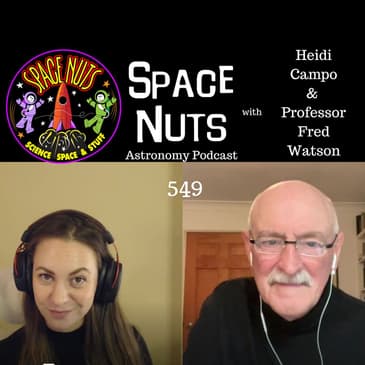
In this exciting episode of Space Nuts, hosts Heidi Campo and Professor Fred Watson explore the latest discoveries and breakthroughs in astronomy. From the intriguing mystery of the "little red dots" observed by the James Webb Space Telescope to the historic appointment of the first female Astronomer Royal, this episode is packed with cosmic insights and fascinating stories.
Episode Highlights:
- The Mystery of the Little Red Dots: Fred delves into the enigma surrounding the bright, red galaxies identified by the James Webb Space Telescope. He explains their significance, formation theories, and how they might provide a glimpse into the early universe, dating back nearly 12 billion years.
- Celebrating Michelle Doherty: The hosts proudly announce the appointment of Michelle Doherty as the first female Astronomer Royal in over 300 years. Fred highlights her groundbreaking contributions to planetary science and her pivotal role in major NASA missions, including the Cassini mission to Saturn.
- Detecting Life on Mars: A groundbreaking new test developed by researchers in the UK shows promise for detecting signs of life on Mars using existing rover technology. Fred discusses how this test could revolutionize our search for extraterrestrial life by analyzing chemical bonds in cell membranes.
- SpaceX's Starship Launches: The episode wraps up with an update on SpaceX's ambitious Starship program, discussing the challenges and successes of recent launches. Fred reflects on the engineering feats and the importance of these missions for future lunar exploration.
For more Space Nuts, including our continuously updating newsfeed and to listen to all our episodes, visit our website. Follow us on social media at SpaceNutsPod on Facebook, X, YouTube Music Music, Tumblr, Instagram, and TikTok. We love engaging with our community, so be sure to drop us a message or comment on your favorite platform.
If you’d like to help support Space Nuts and join our growing family of insiders for commercial-free episodes and more, visit spacenutspodcast.com/about
Stay curious, keep looking up, and join us next time for more stellar insights and cosmic wonders. Until then, clear skies and happy stargazing.
Got a question for our Q&A episode? https://spacenutspodcast.com/ama
Become a supporter of this podcast: https://www.spreaker.com/podcast/space-nuts-astronomy-insights-cosmic-discoveries--2631155/support.
00:00:00 --> 00:00:03 Heidi Campo: Welcome back to another episode of Space
00:00:03 --> 00:00:06 Nuts, the podcast that is out
00:00:06 --> 00:00:09 of this world. And I am your host for
00:00:09 --> 00:00:12 this show. My name is Heidi Campo. I'm
00:00:12 --> 00:00:13 filling in for Andrew Dunkley.
00:00:14 --> 00:00:16 Generic: 15 seconds. Guidance is internal.
00:00:16 --> 00:00:19 10, 9. Ignition
00:00:19 --> 00:00:20 sequence start.
00:00:20 --> 00:00:21 Professor Fred Watson: Space nuts.
00:00:21 --> 00:00:24 Generic: 5, 4, 3, 2. 1, 2, 3, 4,
00:00:24 --> 00:00:26 5, 5, 4, 3, 2, 1. Space
00:00:26 --> 00:00:29 nuts astronauts report it feels good.
00:00:30 --> 00:00:33 Heidi Campo: And joining us today, matching we are
00:00:33 --> 00:00:35 both in black turtlenecks in case you guys
00:00:35 --> 00:00:37 are wondering, but is the uh,
00:00:37 --> 00:00:40 wonderful professor Fred Watson, astronomer
00:00:40 --> 00:00:42 at large. How are you doing today, Fred?
00:00:43 --> 00:00:46 Professor Fred Watson: I'm very good. I'm uh, basking in
00:00:46 --> 00:00:48 my black turtleneck. Yeah, it's, it's kind of
00:00:48 --> 00:00:50 my preferred um, garment is this,
00:00:51 --> 00:00:54 um, because it is so easy to put
00:00:54 --> 00:00:56 them off and take them off, no ironing.
00:00:57 --> 00:00:59 But they kind of get a bit too
00:01:00 --> 00:01:03 cozy when summer comes. So I have to
00:01:03 --> 00:01:05 shed my turtlenecks in some Sorry
00:01:05 --> 00:01:08 turtlenecks in summertime,
00:01:09 --> 00:01:11 uh, and go back to more conventional attire.
00:01:11 --> 00:01:13 So anyway, let's um, let's
00:01:13 --> 00:01:16 um, relish uh, the thought that we're
00:01:16 --> 00:01:19 both from the same garment. So keep going.
00:01:19 --> 00:01:21 Heidi Campo: Well, something that is uh, not a black
00:01:21 --> 00:01:24 turtleneck but is the black of space
00:01:25 --> 00:01:28 can roll into our first story of the day.
00:01:28 --> 00:01:30 And we do have a lot of really good stories
00:01:30 --> 00:01:32 for you today. If you're new joining us, we
00:01:33 --> 00:01:35 have two episodes every week. One of them is
00:01:35 --> 00:01:38 the wonderful Fred tells, uh, us all
00:01:38 --> 00:01:40 about the amazing new science that's
00:01:40 --> 00:01:42 happening in space. A lot of discoveries,
00:01:42 --> 00:01:44 there's amazing things happening all the
00:01:44 --> 00:01:47 time. And Fred tells us all about it. And
00:01:47 --> 00:01:49 then the other episode that we do every week
00:01:49 --> 00:01:51 as the listener questions. So you can write
00:01:51 --> 00:01:53 in your own question questions and Fred will
00:01:53 --> 00:01:56 answer them. And so yes, the black
00:01:56 --> 00:01:59 of space is what we are starting off with.
00:01:59 --> 00:02:01 And not just the black of space, but what's
00:02:01 --> 00:02:04 in it. And there's a mystery. Our first story
00:02:04 --> 00:02:07 is talking about the little red dots. And
00:02:07 --> 00:02:10 this mystery might finally be
00:02:10 --> 00:02:11 solved.
00:02:13 --> 00:02:15 Professor Fred Watson: Yeah, this is, it's a great story because
00:02:15 --> 00:02:18 it's got lots of twists and turns. Um, and
00:02:18 --> 00:02:20 one of the things I really like about it is
00:02:20 --> 00:02:23 that one of the co authors of this story
00:02:24 --> 00:02:27 is professor, ah, Avi Loeb,
00:02:27 --> 00:02:30 um, who is the uh,
00:02:30 --> 00:02:32 well, basically director of Harvard
00:02:32 --> 00:02:34 Smithsonian uh, Center for Astrophysics.
00:02:35 --> 00:02:38 His name usually crops up. Heidi, as you
00:02:38 --> 00:02:40 will remember, uh, in
00:02:40 --> 00:02:42 contexts like uh,
00:02:43 --> 00:02:45 speculating that interstellar
00:02:46 --> 00:02:48 comets and asteroids are uh, in fact
00:02:49 --> 00:02:51 uh, essentially alien spaceships,
00:02:52 --> 00:02:54 he opens our mind to these
00:02:54 --> 00:02:57 issues. Um, and uh,
00:02:57 --> 00:03:00 clearly a man with an extremely
00:03:00 --> 00:03:03 fertile mind. Uh, because this is
00:03:03 --> 00:03:06 one of the stories that is about a puzzle
00:03:06 --> 00:03:09 in the early universe. And sure enough,
00:03:09 --> 00:03:12 uh, R.V. loeb is one of the, uh, one
00:03:12 --> 00:03:14 of the, basically one of the co authors.
00:03:15 --> 00:03:17 Uh, so um, we have a uh,
00:03:17 --> 00:03:20 situation where the James Webb
00:03:20 --> 00:03:22 telescope has revealed a large number
00:03:23 --> 00:03:26 of uh, what astronomers call little red
00:03:26 --> 00:03:28 dots. Uh and they are,
00:03:29 --> 00:03:31 they're galaxies. Uh,
00:03:32 --> 00:03:35 but they are and we're seeing them so
00:03:35 --> 00:03:38 far back in time because of the
00:03:38 --> 00:03:40 look back time. The James Webb is capable of
00:03:40 --> 00:03:42 looking back something like 12 billion
00:03:43 --> 00:03:46 years, uh, almost to the dark
00:03:46 --> 00:03:49 ages before the first galaxies existed. Um,
00:03:49 --> 00:03:51 and so these red dots appear red. Uh, that's
00:03:51 --> 00:03:54 partly because they're red shifted the light
00:03:54 --> 00:03:56 of them has been traveling for so long that
00:03:56 --> 00:03:58 the expansion of the universe has stretched
00:03:58 --> 00:04:00 the light waves and turned them from
00:04:00 --> 00:04:03 brilliant white into red. Uh,
00:04:03 --> 00:04:05 because of the. Yes, because of the redshift
00:04:05 --> 00:04:08 and the expansion of the universe. So um,
00:04:09 --> 00:04:12 uh, the galaxies we're talking about actually
00:04:12 --> 00:04:15 do date from that period, perhaps 12.8 or
00:04:15 --> 00:04:18 thereabouts billion years ago when the
00:04:18 --> 00:04:20 universe itself was still in its infancy.
00:04:21 --> 00:04:23 Uh, and they're tiny, they're small, which is
00:04:23 --> 00:04:25 why they're called little red dots. But
00:04:26 --> 00:04:29 the curious thing about them is that
00:04:29 --> 00:04:31 they are unusually bright. Uh,
00:04:33 --> 00:04:35 they're very faint because we see them so far
00:04:35 --> 00:04:38 away. But intrinsically they are
00:04:39 --> 00:04:41 unusually uh, bright. And
00:04:42 --> 00:04:44 uh, that is a problem
00:04:45 --> 00:04:47 for the astronomers who
00:04:48 --> 00:04:50 observe them. Uh, why are they
00:04:51 --> 00:04:54 brighter than you'd expect? Uh,
00:04:54 --> 00:04:56 well. And why are they red? Uh, one of the
00:04:56 --> 00:04:59 suggestions is it's more than
00:04:59 --> 00:05:02 just the redshift that they might be
00:05:03 --> 00:05:05 shrouded in dust. That's one possibility
00:05:06 --> 00:05:08 because as light passes through dust it gets
00:05:08 --> 00:05:11 reddened. Uh and that could
00:05:11 --> 00:05:14 account for that. But because they're
00:05:14 --> 00:05:17 bright, uh, it suggests that they're not
00:05:17 --> 00:05:19 shrouded in dust. There must be some other
00:05:19 --> 00:05:21 reason. Um, and
00:05:22 --> 00:05:25 you know, uh,
00:05:25 --> 00:05:28 uh, there's several other conundrums
00:05:28 --> 00:05:30 uh, that relate to this issue.
00:05:31 --> 00:05:34 Uh, and so what these authors have
00:05:34 --> 00:05:36 done is looked at
00:05:37 --> 00:05:40 um, perhaps the way that galaxies form in
00:05:40 --> 00:05:43 the first place. And we believe that this,
00:05:43 --> 00:05:46 the early universe had a kind of
00:05:46 --> 00:05:49 scaffolding, uh if you can put it that
00:05:49 --> 00:05:51 way, of dark matter, the
00:05:51 --> 00:05:54 mysterious stuff that we cannot detect other
00:05:54 --> 00:05:56 than by its gravitational pull. Uh, we call
00:05:56 --> 00:05:59 that the cosmic web, this scaffolding. Uh,
00:05:59 --> 00:06:02 and we think it's where galaxies form because
00:06:02 --> 00:06:04 the dark matter itself had this almost
00:06:04 --> 00:06:07 foam like structure. Um, and the dark
00:06:07 --> 00:06:10 matter acted as a kind of kernel, a
00:06:10 --> 00:06:13 seed for the, the hydrogen of the
00:06:13 --> 00:06:15 universe because that's what the universe was
00:06:15 --> 00:06:17 mostly made of back then, apart from dark
00:06:17 --> 00:06:19 matter, the hydrogen of the universe, um,
00:06:20 --> 00:06:22 sort of congealed, if I can put it that way,
00:06:22 --> 00:06:25 gravitationally along these, uh, structural
00:06:25 --> 00:06:27 lines in the cosmic web. Uh,
00:06:27 --> 00:06:30 and uh, basically that's how the galaxies
00:06:30 --> 00:06:32 formed. But what they're suggesting
00:06:33 --> 00:06:35 is that, um, the
00:06:35 --> 00:06:38 galaxies formed within what we call dark
00:06:38 --> 00:06:41 matter halos, the halo around
00:06:41 --> 00:06:44 a galaxy. That is the dark matter structure.
00:06:44 --> 00:06:47 And those halos may well have been
00:06:47 --> 00:06:50 rotating. And it turns out
00:06:50 --> 00:06:53 that if you, uh, form a galaxy
00:06:53 --> 00:06:55 inside a rotating
00:06:55 --> 00:06:58 halo that is spinning relatively
00:06:58 --> 00:07:01 slowly, what it does is
00:07:01 --> 00:07:04 it compresses everything in
00:07:04 --> 00:07:07 the middle. The, the um, press
00:07:07 --> 00:07:09 release that I've read actually draws the
00:07:09 --> 00:07:12 analogy, uh, sorry, analogy of
00:07:12 --> 00:07:15 a fairground swing ride where you've got a,
00:07:16 --> 00:07:18 you know, a fairground roundabout
00:07:19 --> 00:07:22 carousel, uh, with chairs on
00:07:22 --> 00:07:24 it that swing outwards as the carousel
00:07:24 --> 00:07:27 rotates. Uh, the faster it goes, the more
00:07:27 --> 00:07:30 the, uh, carousel chairs swing outwards.
00:07:30 --> 00:07:32 And so what they're saying is if you've got
00:07:32 --> 00:07:35 a, you know, the uh, analogy is that if
00:07:35 --> 00:07:38 you've got spinning halo, then
00:07:38 --> 00:07:41 the faster it spins, the more space
00:07:41 --> 00:07:44 you've got for the stars to form within it.
00:07:44 --> 00:07:47 But the slower it spins, uh, the
00:07:47 --> 00:07:50 less in the, you know, the carousel, uh,
00:07:50 --> 00:07:52 analog. The, um,
00:07:53 --> 00:07:56 chairs are inwards. And for the
00:07:56 --> 00:07:59 story of the dark matter halos, it means that
00:07:59 --> 00:08:02 the slower they spin, the more compressed the
00:08:02 --> 00:08:05 region of space within them is. And
00:08:05 --> 00:08:07 so it takes the. It keeps the
00:08:07 --> 00:08:10 stars much more closely tied up
00:08:10 --> 00:08:12 together, the stars that are forming within
00:08:12 --> 00:08:15 the galaxy. And that is what they
00:08:15 --> 00:08:18 say is a possible mechanism for
00:08:18 --> 00:08:21 giving you these really compact little red
00:08:21 --> 00:08:24 dots. Um, I'll quote from
00:08:24 --> 00:08:26 this. Uh, the researchers discovered that the
00:08:26 --> 00:08:29 little red dots likely formed in dark matter
00:08:29 --> 00:08:31 halos. Spinning so slowly, they
00:08:31 --> 00:08:34 represent less than 1% of all halos in
00:08:34 --> 00:08:37 the universe. Their slow spin
00:08:37 --> 00:08:40 halos would naturally create extremely
00:08:40 --> 00:08:43 compact galaxies. In a hypothesis that
00:08:43 --> 00:08:46 elegantly explains several mysteries about
00:08:46 --> 00:08:48 the little red dots, and I'm quoting there
00:08:48 --> 00:08:50 from Mark Thompson's article in
00:08:50 --> 00:08:53 Universe Today. Um,
00:08:53 --> 00:08:55 so, yes, uh, it looks as though these
00:08:56 --> 00:08:59 little red dots that have so far been one of
00:08:59 --> 00:09:01 the big mysteries, uh, uncovered by the James
00:09:01 --> 00:09:04 Webb Space Telescope. It looks as though, uh,
00:09:04 --> 00:09:07 here's a step, uh, in the right direction to
00:09:07 --> 00:09:09 try and prove, uh, uh,
00:09:10 --> 00:09:13 what the reason for this is that they are,
00:09:13 --> 00:09:16 um, as the same article
00:09:16 --> 00:09:19 describes, wonderful natural time capsules.
00:09:20 --> 00:09:23 And perhaps, uh, there's a possibility that
00:09:23 --> 00:09:25 they might tell us more as we study them in
00:09:25 --> 00:09:27 greater detail. They might tell us more about
00:09:27 --> 00:09:30 this time in the universe when the first
00:09:30 --> 00:09:32 galaxies were forming. Uh,
00:09:33 --> 00:09:36 the end of what we call the Dark Ages. Really
00:09:36 --> 00:09:38 interesting time that we don't really
00:09:38 --> 00:09:41 understand all that well at present. So
00:09:41 --> 00:09:42 I, uh, think it's a step in the right
00:09:42 --> 00:09:44 direction, Heidi.
00:09:44 --> 00:09:45 Heidi Campo: Yeah, but I mean, well, that's why I love
00:09:45 --> 00:09:48 James Webb Telescope. It's really, you
00:09:48 --> 00:09:51 know, it's such a feat of engineering and
00:09:51 --> 00:09:54 it's discovering. Like, I feel like
00:09:54 --> 00:09:56 every, almost every week we could have a
00:09:56 --> 00:09:59 story with James Webb and going on with it,
00:09:59 --> 00:10:02 and that's really, really
00:10:02 --> 00:10:03 remarkable.
00:10:07 --> 00:10:08 Professor Fred Watson: Space nuts.
00:10:08 --> 00:10:11 Heidi Campo: And speaking of remarkable, there has been,
00:10:11 --> 00:10:14 um, another, Another amazing story
00:10:15 --> 00:10:18 about, um, kind of a breakthrough.
00:10:18 --> 00:10:20 But before we say that, I, uh,
00:10:20 --> 00:10:23 forgot to make a very special announcement.
00:10:23 --> 00:10:26 And Fred knows what it is, Andrew knows what
00:10:26 --> 00:10:29 it is, Huw knows what it is. But do you
00:10:29 --> 00:10:31 guys know that because of you,
00:10:32 --> 00:10:35 we have been ranked the seventh
00:10:36 --> 00:10:39 astronomy podcast? And Fred,
00:10:39 --> 00:10:40 that was worldwide.
00:10:41 --> 00:10:44 Professor Fred Watson: Yeah, that's right. It's um, in the top 50.
00:10:44 --> 00:10:47 So we're number seven in the top 50 of
00:10:47 --> 00:10:49 astronomy podcasts. Yeah, I'd forgotten that.
00:10:50 --> 00:10:52 Heidi Campo: I know I should have said it first thing. Um,
00:10:53 --> 00:10:55 so I just, I was thinking of amazing,
00:10:55 --> 00:10:56 incredible things and I was like, we should
00:10:56 --> 00:10:58 bring that up. So thank you so much, so much
00:10:58 --> 00:11:01 everybody for listening and telling your
00:11:01 --> 00:11:03 friends and telling your co workers and
00:11:03 --> 00:11:05 telling your pets and dogs and your in laws
00:11:05 --> 00:11:08 to listen to the nuttiest
00:11:08 --> 00:11:11 space podcast that there is. So
00:11:11 --> 00:11:13 thank you guys, really, we really appreciate
00:11:13 --> 00:11:16 that. We should do, um, maybe Fred, we should
00:11:16 --> 00:11:19 do like a special listener episode where we,
00:11:19 --> 00:11:22 I don't know, maybe just we jazz it
00:11:22 --> 00:11:24 up a little bit as a little thank you to
00:11:24 --> 00:11:26 everyone for putting us on that list.
00:11:26 --> 00:11:29 But our next story is also an incredible
00:11:29 --> 00:11:31 breakthrough. Um, for the very, very
00:11:32 --> 00:11:34 first time ever, we have the first
00:11:35 --> 00:11:38 female Astronomer Royal. And that is
00:11:38 --> 00:11:41 Michelle Docherty. And that
00:11:41 --> 00:11:43 is quite the accomplishment.
00:11:44 --> 00:11:46 Professor Fred Watson: Oh yes, it's a great story. Um,
00:11:47 --> 00:11:50 um, and congratulations to Michelle Doherty,
00:11:50 --> 00:11:53 um, uh, a, uh, scientist
00:11:53 --> 00:11:55 of great note. Um, she
00:11:55 --> 00:11:57 is somebody who has made,
00:11:59 --> 00:12:01 uh, basically astronomical, uh, advances
00:12:01 --> 00:12:04 across quite a large number of fields
00:12:04 --> 00:12:07 of study. She's um, actually
00:12:07 --> 00:12:10 principally, um, a planetary scientist
00:12:10 --> 00:12:13 and works on some of the NASA
00:12:13 --> 00:12:16 spacecraft missions, uh, and is
00:12:16 --> 00:12:19 very interested in going back to Saturn,
00:12:19 --> 00:12:22 uh, with robotic spacecraft. She was, um,
00:12:22 --> 00:12:25 principal, uh, investigator for the
00:12:25 --> 00:12:27 magnetometer, which was on the Cassini
00:12:27 --> 00:12:30 mission, which I always think is one of the
00:12:30 --> 00:12:32 most accomplished, uh,
00:12:33 --> 00:12:36 um, remote, uh, sensing missions
00:12:36 --> 00:12:39 ever mounted. Uh, NASA and
00:12:39 --> 00:12:42 ESA combined on that, uh, mission. Sadly,
00:12:42 --> 00:12:44 2017 marked the end of it. But we learned so
00:12:44 --> 00:12:47 much about the planet Saturn, uh, and its
00:12:47 --> 00:12:49 moons and its rings, uh, that we're still
00:12:50 --> 00:12:52 analyzing the data. And Michelle is also
00:12:53 --> 00:12:56 principal Investigator of the magnetometer
00:12:56 --> 00:12:58 instrument for the JUICE mission, the
00:12:58 --> 00:13:01 European Space Agency's Jupiter Icy Moons
00:13:01 --> 00:13:01 Explorer.
00:13:02 --> 00:13:04 So lots of um, amazing
00:13:04 --> 00:13:07 accolades uh, for Michelle, Uh,
00:13:07 --> 00:13:10 um, just to put her achievement
00:13:10 --> 00:13:13 in context, um, she is the 16th
00:13:13 --> 00:13:16 Astronomer Royal in the United Kingdom.
00:13:17 --> 00:13:19 Uh, this is a post that ah had its first
00:13:19 --> 00:13:22 astronomer royal in 1675 when John
00:13:22 --> 00:13:25 Flamsteed was appointed by King Charles
00:13:25 --> 00:13:27 II was the astronomer Royal who was going to
00:13:27 --> 00:13:29 sort out the problem of longitude which was
00:13:29 --> 00:13:32 that then the big issue. And he did,
00:13:32 --> 00:13:35 he did quite a good job with it. There's lots
00:13:35 --> 00:13:37 of stories about Flamsteed, but since then
00:13:37 --> 00:13:39 There have been 16 Astronomers Royal.
00:13:41 --> 00:13:44 Um, until 1972 the
00:13:44 --> 00:13:47 Astronomy Royal was also the
00:13:47 --> 00:13:50 uh, director of the Royal Observatory at
00:13:50 --> 00:13:52 Greenwich and that was founded by
00:13:52 --> 00:13:55 Charles II in 1675. Uh, I
00:13:55 --> 00:13:58 worked there twice in fact. Um,
00:13:58 --> 00:14:01 uh it was at a little tiny
00:14:01 --> 00:14:04 village called Hersmondsu in Sussex. It had
00:14:04 --> 00:14:07 moved away from Greenwich which is a suburb
00:14:07 --> 00:14:09 of the city of London. No chance of doing
00:14:09 --> 00:14:11 astronomical observations there. They moved
00:14:11 --> 00:14:14 to Sussex after the Second World War. I
00:14:14 --> 00:14:16 worked there for a while in the early 70s, uh
00:14:16 --> 00:14:19 and then I went back there in the ninet work
00:14:19 --> 00:14:21 uh when, by which time it had moved to
00:14:21 --> 00:14:23 Cambridge, uh in eastern England.
00:14:23 --> 00:14:26 Um but until 1972 the director was also
00:14:26 --> 00:14:29 the Astronomer Royal. After 1972 the
00:14:29 --> 00:14:32 two positions were separated. The Director of
00:14:32 --> 00:14:34 the Royal Observatory was not necessarily the
00:14:34 --> 00:14:36 Astronomer Royal. Uh the most recent
00:14:37 --> 00:14:39 Astronomer Royal and the person who Michel
00:14:39 --> 00:14:42 succeeds is um, well he
00:14:42 --> 00:14:44 was Sir Martin Rees. He's now Lord Rees of
00:14:44 --> 00:14:47 the Ludlow, um, uh,
00:14:47 --> 00:14:50 gentleman, uh, based in Cambridge. Uh,
00:14:50 --> 00:14:52 I've met him a number of times. Uh, you
00:14:52 --> 00:14:54 certainly wouldn't remember me but I've come
00:14:54 --> 00:14:57 across him in my career. Uh,
00:14:57 --> 00:15:00 he uh, has been a strong royal for basically
00:15:00 --> 00:15:03 30 years since 1995, uh and
00:15:03 --> 00:15:06 has now stepped down and replace. And his
00:15:06 --> 00:15:08 replacement is the first, as you said, the
00:15:08 --> 00:15:11 first female Astronomer Royal in its more
00:15:11 --> 00:15:13 than 300 year history. Um,
00:15:15 --> 00:15:18 uh, north of the border between England and
00:15:18 --> 00:15:21 Scotland, uh, however they are
00:15:21 --> 00:15:24 ahead of the game because uh, Scotland also
00:15:24 --> 00:15:25 has an Astronomer Royal.
00:15:25 --> 00:15:26 Heidi Campo: Oh, okay.
00:15:26 --> 00:15:28 Professor Fred Watson: Uh, uh, known as the
00:15:29 --> 00:15:31 Astronomer Royal for Scotland. In fact one of
00:15:31 --> 00:15:34 them, uh, I think he's two astronomers
00:15:34 --> 00:15:37 Royal Ago was my PhD supervisor
00:15:38 --> 00:15:40 Professor Malcolm Longhouse. I had an
00:15:40 --> 00:15:42 Astronomer Royal um for my
00:15:42 --> 00:15:45 supervisor. It was a terrifying experience
00:15:45 --> 00:15:48 I can tell you, uh, Heidi, uh, because
00:15:48 --> 00:15:51 his brain was the size of a planet and mine
00:15:51 --> 00:15:52 wasn't. But anyway that's all right. We got
00:15:52 --> 00:15:54 him Fine. He's still going strong. He's in
00:15:54 --> 00:15:56 Cambridge now, no longer Astronomer Royal.
00:15:57 --> 00:15:59 But, um, has he helped shape you.
00:15:59 --> 00:16:00 Heidi Campo: Into the Titan that you are today?
00:16:01 --> 00:16:03 Professor Fred Watson: Oh, that's a very nice way of putting it. And
00:16:03 --> 00:16:05 I'll take that and wear it with pride. Thank
00:16:05 --> 00:16:08 you very much, Heidi. But,
00:16:08 --> 00:16:10 um, the current
00:16:10 --> 00:16:13 astronomer for Scotland is Catherine
00:16:13 --> 00:16:16 Hayman's, uh, and she's been a strong
00:16:16 --> 00:16:18 moral for Scotland for, I think about
00:16:19 --> 00:16:21 four years now. So Scotland was in
00:16:21 --> 00:16:23 the lead, uh, when it came to female
00:16:23 --> 00:16:26 Astronomers Royal. The other reason,
00:16:27 --> 00:16:29 um, that I love this story is because,
00:16:30 --> 00:16:33 um, when I was at school still,
00:16:33 --> 00:16:36 I aspired to be the Astronomer Royal.
00:16:37 --> 00:16:40 And it didn't happen. It didn't happen. But
00:16:40 --> 00:16:43 there was a kind of equivalent in
00:16:43 --> 00:16:46 Australia for a few years, the astronomer
00:16:46 --> 00:16:49 at large. And that was me. That is the job I
00:16:49 --> 00:16:52 held until the end of last year. So it was a
00:16:52 --> 00:16:54 sort of quasi Astronomer Royal that I finally
00:16:54 --> 00:16:57 got to. But not the Astronomer Royal as such.
00:16:57 --> 00:17:00 But, um, it's very nice. I had quite a lot to
00:17:00 --> 00:17:02 do with Catherine Heyman's, uh, the
00:17:02 --> 00:17:04 Astronomer Royal to Scotland. We've
00:17:04 --> 00:17:06 communicated quite a bit. She gave a
00:17:06 --> 00:17:08 fantastic lecture for us a few years ago on
00:17:08 --> 00:17:11 online during COVID Um, and so, um,
00:17:11 --> 00:17:14 yes, the idea of an Astronomer Royal and a
00:17:14 --> 00:17:17 new one, uh, is great, and I
00:17:17 --> 00:17:20 think it's brilliant news all around. Maybe,
00:17:20 --> 00:17:22 Heidi, one day you could aspire to be the
00:17:22 --> 00:17:24 Astronomer Royal. I'm not sure whether you
00:17:24 --> 00:17:25 have to be a British citizen anymore.
00:17:26 --> 00:17:29 Heidi Campo: Uh, I think. Well, right now we're thinking
00:17:29 --> 00:17:31 about having a double Master's degree. So
00:17:31 --> 00:17:34 I'll just. I'll take these, uh, things one at
00:17:34 --> 00:17:34 one at a time.
00:17:35 --> 00:17:38 Professor Fred Watson: Yeah, good on you. That's great too. Great
00:17:38 --> 00:17:38 stuff.
00:17:38 --> 00:17:39 Heidi Campo: Just a lot of work.
00:17:44 --> 00:17:45 Professor Fred Watson: Space nuts.
00:17:45 --> 00:17:48 Heidi Campo: But, um, I, I have no clever segue for our
00:17:48 --> 00:17:50 next story. So I'll just start telling you
00:17:50 --> 00:17:53 guys about it. And it is quite
00:17:53 --> 00:17:56 exciting. I know everyone gets, um,
00:17:56 --> 00:17:58 pretty excited. I know I certainly do when we
00:17:58 --> 00:18:01 talk about the possibility of the life
00:18:01 --> 00:18:04 on other planets. But, um, signs
00:18:04 --> 00:18:07 of life on Mars can be
00:18:07 --> 00:18:09 detected using this new test
00:18:10 --> 00:18:12 that Fred is going to tell us all about.
00:18:14 --> 00:18:17 Professor Fred Watson: Yeah, this, um, is
00:18:17 --> 00:18:20 a really interesting story. I mean, you know,
00:18:20 --> 00:18:22 this is on the topic basically of
00:18:22 --> 00:18:25 biomarkers, uh, which we've talked about
00:18:25 --> 00:18:28 before. And biomarkers are things that tell
00:18:28 --> 00:18:30 you that there are life processes going on.
00:18:31 --> 00:18:33 Uh, and so, for example,
00:18:34 --> 00:18:37 um, when we look, uh, at the atmospheres
00:18:37 --> 00:18:39 of planets around other stars,
00:18:39 --> 00:18:42 extrasolar planets or exoplanets, uh, we
00:18:42 --> 00:18:44 look for chemicals in the atmosphere that
00:18:44 --> 00:18:47 Might be only produced by living organisms.
00:18:47 --> 00:18:50 Um, um. And you
00:18:50 --> 00:18:53 know, if you find that and you sure it can
00:18:53 --> 00:18:55 only be produced by living organisms, then
00:18:55 --> 00:18:58 it's a sign of life, it's a biomarker. It's
00:18:58 --> 00:19:00 very controversial as we've
00:19:00 --> 00:19:03 discussed, because there's uh, you
00:19:03 --> 00:19:06 know, there's always a question as
00:19:06 --> 00:19:08 to whether there could be a purely chemical
00:19:08 --> 00:19:10 origin for life in the
00:19:10 --> 00:19:13 atmosphere, for these chemicals in the
00:19:13 --> 00:19:15 atmosphere of another planet. That's an aside
00:19:15 --> 00:19:17 here, uh, because what we're talking about
00:19:17 --> 00:19:19 now is how you might analyze,
00:19:20 --> 00:19:23 uh, the um, structures
00:19:23 --> 00:19:26 of molecules, uh, that you
00:19:26 --> 00:19:28 find not in the atmospheres of, of
00:19:28 --> 00:19:30 exoplanets, but on the surface of a planet
00:19:30 --> 00:19:32 like Mars. And it turns out,
00:19:33 --> 00:19:35 uh, that some work that's again been done in
00:19:35 --> 00:19:38 the United Kingdom. Um, there is
00:19:38 --> 00:19:41 uh, an instrument which is commonly
00:19:41 --> 00:19:44 used on Mars rovers. In fact, I
00:19:44 --> 00:19:47 think every Mars rover, uh, since
00:19:47 --> 00:19:50 the Viking landers or every
00:19:50 --> 00:19:52 Mars lander since the Viking landers have had
00:19:52 --> 00:19:54 one of these things. It's called a gas
00:19:54 --> 00:19:56 chromatograph Mass Spectrometer,
00:19:56 --> 00:19:58 usually abbreviated to uh,
00:19:58 --> 00:20:01 gcms. Gas chromatograph
00:20:01 --> 00:20:04 Mass Spectrometer. It's a lot easier to say
00:20:04 --> 00:20:06 gcms, they've uh, all got one of these
00:20:06 --> 00:20:08 things. Um, but
00:20:09 --> 00:20:11 um, the suggestion that's come from Imperial
00:20:11 --> 00:20:14 College in London is that
00:20:15 --> 00:20:18 we're missing a trick that there is
00:20:18 --> 00:20:20 something within living organisms
00:20:21 --> 00:20:24 that people haven't really thought of, but
00:20:24 --> 00:20:26 that it could be detected by this GC
00:20:26 --> 00:20:29 Ms. Uh, and um, what it
00:20:29 --> 00:20:32 is, uh, it's a chemical bond
00:20:33 --> 00:20:35 within the
00:20:35 --> 00:20:38 molecules of cell membranes. Living
00:20:38 --> 00:20:40 cell membranes, which I think, uh, are made
00:20:40 --> 00:20:43 of lipids and things of that sort. I'm not a
00:20:43 --> 00:20:46 biologist, so I'm always groping around
00:20:46 --> 00:20:49 here. But the membranes of living
00:20:49 --> 00:20:52 cells have these molecules within them
00:20:52 --> 00:20:55 that apparently give a signal
00:20:56 --> 00:20:58 when analyzed by the gcms.
00:20:58 --> 00:20:59 Heidi Campo: Oh, wow.
00:21:00 --> 00:21:02 Professor Fred Watson: That, that dies away when these
00:21:03 --> 00:21:06 creatures are no longer alive. Uh,
00:21:06 --> 00:21:08 so the signal disappears after an
00:21:08 --> 00:21:11 organism has died. The, it's the chemical
00:21:11 --> 00:21:14 bonds that the, the GCMS is
00:21:14 --> 00:21:17 detecting. And those bonds are ah,
00:21:17 --> 00:21:19 actually um, they, they
00:21:19 --> 00:21:22 disintegrate, uh, on death. Uh,
00:21:22 --> 00:21:24 they're called, um. The bonds themselves are
00:21:24 --> 00:21:27 called, uh. Well, the molecules in which
00:21:27 --> 00:21:30 these bonds are found are called intact polar
00:21:30 --> 00:21:32 lipids or IPLs. Uh, and
00:21:32 --> 00:21:35 IPLs show up uh, when they're
00:21:35 --> 00:21:38 analyzed by one of these GCs, GCMS
00:21:38 --> 00:21:40 instruments. Uh, but they disappear
00:21:41 --> 00:21:43 when that um, m.
00:21:43 --> 00:21:46 Microorganism dies. So here you've got
00:21:46 --> 00:21:49 a really cluey and pretty
00:21:49 --> 00:21:51 neat test for um,
00:21:52 --> 00:21:54 you know, for Living organisms that could
00:21:54 --> 00:21:57 actually be deployed now because they're
00:21:57 --> 00:22:00 on Mars already. Uh, I don't
00:22:00 --> 00:22:02 know whether, um, this paper has
00:22:03 --> 00:22:05 basically set all the NASA mission
00:22:05 --> 00:22:08 scientists who are looking after Curiosity
00:22:08 --> 00:22:10 and perseverance, uh, into a,
00:22:11 --> 00:22:14 you know, into a panic of making sure that
00:22:14 --> 00:22:16 they use these instruments to analyze the
00:22:16 --> 00:22:18 molecules that they've already got. They've
00:22:18 --> 00:22:20 got samples of uh, the rocks
00:22:21 --> 00:22:23 and it could be that there might be living
00:22:23 --> 00:22:25 microbes within those rocks that could be
00:22:25 --> 00:22:28 detected by this. So my counsel
00:22:28 --> 00:22:30 is watch this space. Uh, the,
00:22:31 --> 00:22:33 uh, science paper is uh,
00:22:34 --> 00:22:37 entitled uh, Intact Polar Lipids as
00:22:37 --> 00:22:39 Organic Biomarkers of Viable
00:22:39 --> 00:22:42 Extraterrestrial Life. And it's in uh, the
00:22:42 --> 00:22:44 journal called Space Exploration. That's the
00:22:44 --> 00:22:46 place to find it. It's a, uh, really
00:22:46 --> 00:22:49 interesting idea. And who knows where it
00:22:49 --> 00:22:50 might lead, Heidi?
00:22:50 --> 00:22:53 Heidi Campo: Who knows indeed. But one thing
00:22:53 --> 00:22:55 we do know is that
00:22:56 --> 00:22:58 Musk's mega rockets
00:22:59 --> 00:23:02 keep exploding. This is
00:23:02 --> 00:23:04 the one thing. He's such a
00:23:05 --> 00:23:08 Musk. And SpaceX, whether you love
00:23:08 --> 00:23:10 him, whether you hate him, is an interesting
00:23:10 --> 00:23:12 character on the board and
00:23:13 --> 00:23:15 they keep pushing the envelope. But
00:23:16 --> 00:23:19 uh, there's these new tests that Fred's gonna
00:23:19 --> 00:23:19 tell us about.
00:23:20 --> 00:23:22 Professor Fred Watson: Well, that's right. In fact, um, by the time
00:23:23 --> 00:23:25 uh, this episode goes to air, it might
00:23:25 --> 00:23:27 already have happened. But this is the 10th
00:23:27 --> 00:23:30 launch of the starship. Uh,
00:23:30 --> 00:23:33 and I think, um. Well, you,
00:23:33 --> 00:23:34 you know, I'm not going to go through the
00:23:34 --> 00:23:37 catalog, but they've, they've been less than
00:23:37 --> 00:23:40 successful, some of them. The first, I think
00:23:40 --> 00:23:42 the first one was brilliant because the
00:23:42 --> 00:23:45 uh, it demonstrated that the booster, which
00:23:45 --> 00:23:48 is the Falcon super heavy booster, uh, could
00:23:48 --> 00:23:50 be captured by this,
00:23:50 --> 00:23:53 um, uh, it's called a
00:23:53 --> 00:23:55 chopstick mechanism. I think it's like a pair
00:23:55 --> 00:23:57 of chopsticks sticking out from a tower which
00:23:57 --> 00:24:00 catches hold of the, the, the vehicle as it
00:24:00 --> 00:24:02 lands. That was dramatic.
00:24:02 --> 00:24:04 Heidi Campo: I think that's, it's unbelievable. I think
00:24:04 --> 00:24:06 that's almost, almost like Nobel Prize
00:24:06 --> 00:24:08 worthy. Like that is, I think one of the best
00:24:08 --> 00:24:10 feats of engineering in this.
00:24:10 --> 00:24:11 Professor Fred Watson: Yep.
00:24:11 --> 00:24:12 Heidi Campo: In this decade for sure.
00:24:13 --> 00:24:15 Professor Fred Watson: Yeah. In, in an era where we've just got used
00:24:15 --> 00:24:18 to the boosters returning. And that's because
00:24:18 --> 00:24:20 Musk pioneered that with SpaceX back in
00:24:20 --> 00:24:22 2015. I think the first, uh,
00:24:22 --> 00:24:25 successful booster landing took place the
00:24:25 --> 00:24:27 first time ever. Uh, but yeah, this
00:24:27 --> 00:24:30 gigantic thing, you know, it's a huge, huge
00:24:30 --> 00:24:32 rocket. The whole thing stands much taller
00:24:32 --> 00:24:35 than a Saturn V from the Apollo era.
00:24:35 --> 00:24:37 Um, but the booster itself is a good part of
00:24:37 --> 00:24:40 that. And that has seems to,
00:24:40 --> 00:24:42 they seem to have that kind of reasonably
00:24:42 --> 00:24:44 well under control. But it's the starship
00:24:44 --> 00:24:47 itself, the thing that rides on top of that,
00:24:48 --> 00:24:51 uh, which has kept exploding. Uh, and
00:24:51 --> 00:24:53 um, or what's it called, It's a rapid
00:24:53 --> 00:24:56 unscheduled disintegration. Uh,
00:24:56 --> 00:24:58 rapid unscheduled disassembly.
00:24:58 --> 00:25:01 Heidi Campo: That's the, uh, controversial view. I think
00:25:01 --> 00:25:04 it's kind of cheeky though. It's, you know,
00:25:04 --> 00:25:05 it's a little optimistic. It's a little
00:25:05 --> 00:25:07 cheeky. It's like, hey, you know what? We're
00:25:07 --> 00:25:08 going to keep working on it.
00:25:09 --> 00:25:10 Professor Fred Watson: You gotta, you gotta, you can afford to do
00:25:10 --> 00:25:11 that.
00:25:11 --> 00:25:11 Heidi Campo: He can't afford.
00:25:11 --> 00:25:14 Professor Fred Watson: Yeah, you do. But it, but his whole ethos
00:25:14 --> 00:25:17 is, uh, you know, try test fast
00:25:17 --> 00:25:20 and learn fast. Uh, and um, you
00:25:20 --> 00:25:23 know, so it, and you can do that
00:25:23 --> 00:25:25 without all the protocols that would have to
00:25:25 --> 00:25:28 be in place if this was NASA, uh, actually
00:25:28 --> 00:25:29 running this rather than a private company.
00:25:30 --> 00:25:33 So, um, hats off to Musk for
00:25:33 --> 00:25:35 number 10 in this sequence of launches.
00:25:36 --> 00:25:38 Um, um, by the time this goes to air, ah, we
00:25:38 --> 00:25:40 might know what has happened. We don't at the
00:25:40 --> 00:25:42 moment, but we look forward to the event
00:25:42 --> 00:25:43 with great interest.
00:25:44 --> 00:25:46 Heidi Campo: Well, I'm hoping it's successful, um,
00:25:47 --> 00:25:49 for all the engineers sake, for everyone on
00:25:49 --> 00:25:52 that team. I. It's got to be so heartbreaking
00:25:52 --> 00:25:54 to pour your heart and soul into a project
00:25:54 --> 00:25:57 and just not only to have it blow up,
00:25:57 --> 00:25:59 it blows up on TV and then everyone writes an
00:25:59 --> 00:26:01 article about it. It's like, oh man, it's
00:26:01 --> 00:26:04 like if I get a bad grade, nobody knows. But
00:26:04 --> 00:26:07 if they make a mistake, it's a dramatic
00:26:07 --> 00:26:10 explosion in the air that everyone in the
00:26:10 --> 00:26:12 world has their eyes on. So I hope it goes
00:26:12 --> 00:26:15 well. Um, thoughts and prayers to the,
00:26:15 --> 00:26:17 uh, science team, the engineering team, and
00:26:17 --> 00:26:18 hoping for their success.
00:26:20 --> 00:26:22 Professor Fred Watson: Yep. Uh, hear, hear. I'll,
00:26:23 --> 00:26:25 I'll agree with that. For all the same
00:26:25 --> 00:26:28 reasons. It's one thing that we want to see
00:26:28 --> 00:26:31 succeeding. In fact, starship itself is an
00:26:31 --> 00:26:34 integral part of the Artemis mission, uh,
00:26:34 --> 00:26:36 because the starship, you know, the
00:26:36 --> 00:26:39 crew, um, component of that is
00:26:39 --> 00:26:42 what is going to take astronauts down to the
00:26:42 --> 00:26:45 lunar surface by 2027. So
00:26:45 --> 00:26:46 they've got to get it right within the next
00:26:46 --> 00:26:47 couple of years.
00:26:48 --> 00:26:50 Heidi Campo: What do you think? Do you think we stick with
00:26:50 --> 00:26:52 2027 or do you think it's going to get pushed
00:26:52 --> 00:26:55 out? I think it's going to get
00:26:55 --> 00:26:58 pushed out. I, I want to believe, but
00:26:58 --> 00:27:00 the, uh, it's like one of those old Magic 8
00:27:00 --> 00:27:02 balls. It's like, signs don't look good.
00:27:04 --> 00:27:06 Um, I've Had a little bit more of experience
00:27:06 --> 00:27:09 now working adjacent to NASA. I do not. I
00:27:09 --> 00:27:11 want to be clear on air that I don't work at
00:27:11 --> 00:27:13 NASA, but I work in partnership with them
00:27:13 --> 00:27:16 with some of my graduate assistant work. Um,
00:27:16 --> 00:27:18 but it's really just. And like you said,
00:27:18 --> 00:27:21 Fred, it's. It's the loopholes. Or not the
00:27:21 --> 00:27:22 loopholes, it's the, um, hoops that you have
00:27:22 --> 00:27:24 to jump through. There's so much. There's a
00:27:24 --> 00:27:27 lot of red tape. There's so many layers
00:27:27 --> 00:27:30 of safety that NASA has to go through that
00:27:30 --> 00:27:32 just makes them run a little bit slower. So
00:27:32 --> 00:27:35 it's. Yeah, things aren't happening as fast
00:27:35 --> 00:27:38 as the public would want. Um, they're not
00:27:38 --> 00:27:40 pumping out progress the same way Disney's
00:27:40 --> 00:27:41 pumping out Marvel movies.
00:27:42 --> 00:27:43 Professor Fred Watson: Yeah, that's right.
00:27:44 --> 00:27:46 Heidi Campo: Well, this has been a great episode. We got
00:27:46 --> 00:27:48 through four whole articles. A, uh, big thank
00:27:48 --> 00:27:51 you to our listeners and uh, some speculation
00:27:51 --> 00:27:53 of the future. So we were quite efficient in
00:27:53 --> 00:27:55 our use of time today.
00:27:56 --> 00:27:57 Professor Fred Watson: That's why we're number seven.
00:27:58 --> 00:28:01 Heidi Campo: That's it right there. Best podcast out
00:28:01 --> 00:28:02 there. Tell your friends.
00:28:03 --> 00:28:04 Professor Fred Watson: Yeah, absolutely.
00:28:04 --> 00:28:06 Heidi Campo: Well, everybody, thank you so much for
00:28:06 --> 00:28:09 listening to the Number six seven
00:28:09 --> 00:28:12 podcast. Uh, number seven
00:28:12 --> 00:28:14 astronomy podcast. Wow. If we were the number
00:28:14 --> 00:28:16 seven podcast, you probably see a
00:28:16 --> 00:28:19 fancier background, uh, and headset.
00:28:20 --> 00:28:22 Um, but no, thank you so much to our
00:28:22 --> 00:28:24 listeners. You guys really are fantastic. And
00:28:24 --> 00:28:27 please keep writing in your questions. Do
00:28:27 --> 00:28:30 audio questions. Um, we really want to hear
00:28:30 --> 00:28:32 from you. You guys are half the show.
00:28:33 --> 00:28:36 Professor Fred Watson: Absolutely. And uh, some might
00:28:36 --> 00:28:37 say the best half of the show.
00:28:38 --> 00:28:40 Heidi Campo: All right, everybody, well, we'll catch you
00:28:40 --> 00:28:42 next time for that very, very, uh, own
00:28:42 --> 00:28:45 Q and A episode. Till next time, have a
00:28:45 --> 00:28:48 great space, space
00:28:48 --> 00:28:50 exploration discovery
00:28:51 --> 00:28:52 and see you next time.
00:28:53 --> 00:28:56 Andrew Dunkley: Hello Heidi. Hello Fred. Hello, Huw. In
00:28:56 --> 00:28:56 the studio.
00:28:56 --> 00:28:59 Andrew, again with another world cruise
00:28:59 --> 00:29:02 update from the Crown Princess. Since I spoke
00:29:02 --> 00:29:05 to you last, we have, uh, done some
00:29:05 --> 00:29:08 amazing stuff. Uh, we visited Iceland and
00:29:08 --> 00:29:11 Greenland. Um, yeah,
00:29:11 --> 00:29:14 fantastic. Iceland was amazing. Uh, we did
00:29:14 --> 00:29:17 a day trip out to a, um, a
00:29:17 --> 00:29:19 place where the European
00:29:19 --> 00:29:22 Euro, uh, the. Now let me think if I can
00:29:22 --> 00:29:25 get this right. The Euro
00:29:25 --> 00:29:28 Asian tectonic plate
00:29:28 --> 00:29:31 crashes into the American tectonic plate
00:29:31 --> 00:29:34 and there's actually a rift valley right
00:29:34 --> 00:29:36 there that you can literally walk along
00:29:37 --> 00:29:39 in one part and see how
00:29:39 --> 00:29:42 the, uh, the European side's been thrust
00:29:42 --> 00:29:45 upwards. Uh, the American plate goes down
00:29:45 --> 00:29:48 underneath and they do have earthquakes
00:29:48 --> 00:29:50 there semi regularly, but, uh, thankfully not
00:29:50 --> 00:29:52 while we were there. But what an amazing,
00:29:52 --> 00:29:54 amazing site. Saw some
00:29:54 --> 00:29:57 incredible sites in Iceland. I was actually
00:29:57 --> 00:30:00 quite surprised how green it Was. I didn't. I
00:30:00 --> 00:30:02 was expecting just rock and, and
00:30:02 --> 00:30:05 volcanic outcrops and I'm sure that's there.
00:30:05 --> 00:30:07 But where we went was actually green. They
00:30:07 --> 00:30:09 were, there were, there were farms, there
00:30:09 --> 00:30:11 were paddocks, there were horses and sheep
00:30:11 --> 00:30:14 grazing. Um, not at all
00:30:14 --> 00:30:17 what I expected but uh, fantastic day and
00:30:17 --> 00:30:19 we were there for the uh, pretty Pride
00:30:19 --> 00:30:22 Festival in Reykjavik. So we, we hang around,
00:30:22 --> 00:30:24 hung around the city for a little while after
00:30:24 --> 00:30:26 our tour and just absorbed the atmosphere.
00:30:26 --> 00:30:29 Quite, quite amazing. Just thousands upon
00:30:29 --> 00:30:30 thousands of people. They reckon there were
00:30:30 --> 00:30:32 about a hundred thousand people there the day
00:30:32 --> 00:30:34 we were there and our, our ship was in port
00:30:34 --> 00:30:37 so we added a few thousand to the mix. Uh,
00:30:37 --> 00:30:39 that was Iceland. Loved uh, it. Then we
00:30:39 --> 00:30:42 trotted across to Greenland and
00:30:43 --> 00:30:44 uh, our ah, captain decided at the last
00:30:44 --> 00:30:47 minute to take us on a little uh, tour
00:30:48 --> 00:30:50 up um, up the uh,
00:30:51 --> 00:30:53 uh um sound known as
00:30:53 --> 00:30:55 Prince Christiansund.
00:30:56 --> 00:30:59 And it um, was a day of
00:30:59 --> 00:31:02 just cruising up the sound looking
00:31:02 --> 00:31:04 at uh, multiple glaciers up close,
00:31:05 --> 00:31:07 icebergs everywhere, just this
00:31:07 --> 00:31:10 beautiful untouched landscape
00:31:10 --> 00:31:13 that very few people get to see. So we were
00:31:13 --> 00:31:16 thrilled to do that. Then we landed in
00:31:16 --> 00:31:18 Iceland at uh, Nanortolik and
00:31:18 --> 00:31:21 spent the day there, went out on a boat to
00:31:21 --> 00:31:23 look at more icebergs. But this time we got
00:31:23 --> 00:31:26 up close and personal and they were
00:31:26 --> 00:31:29 huge. Like twice
00:31:29 --> 00:31:32 as big as double story homes in some cases.
00:31:32 --> 00:31:34 They were just. And they were just floating
00:31:34 --> 00:31:36 there. We got so close to the. We didn't
00:31:36 --> 00:31:38 quite get close enough to touch them but you
00:31:38 --> 00:31:40 could see the colours and the cracks and the.
00:31:41 --> 00:31:44 And the shapes of the ice. They were amazing.
00:31:44 --> 00:31:47 And uh, a lovely little town, only a thousand
00:31:47 --> 00:31:49 people. Greenland is about one third the
00:31:49 --> 00:31:52 size of Australia with a population of less
00:31:52 --> 00:31:54 than 50 and it's under um, the
00:31:54 --> 00:31:57 Danish, Danish monarchy. So uh, it's a
00:31:57 --> 00:32:00 sort of a crossover between uh, America and
00:32:00 --> 00:32:03 Europe really because uh, it is considered
00:32:03 --> 00:32:06 part of the American um, side of the
00:32:06 --> 00:32:09 Atlantic. But it's a European country self
00:32:09 --> 00:32:11 governed under Danish, the Danish
00:32:11 --> 00:32:14 Monarchy. It's very weird, um, kind of like
00:32:14 --> 00:32:17 Australia but um. Yeah, that was interesting.
00:32:17 --> 00:32:19 And then uh, yesterday we went to
00:32:19 --> 00:32:22 um. I can't think of the name of it. What's.
00:32:22 --> 00:32:24 What was that place called yesterday?
00:32:27 --> 00:32:29 Uh, it's about triple uh the size of
00:32:29 --> 00:32:32 Nanortolik. But um. Yeah, and all these
00:32:32 --> 00:32:35 colourful little houses. I did post some
00:32:35 --> 00:32:37 photos on the Space Nuts Facebook page if you
00:32:37 --> 00:32:39 want to have a look of the icebergs and the,
00:32:39 --> 00:32:41 and the little houses. I don't know how they
00:32:41 --> 00:32:43 live in them. It was uh. It's summer here at
00:32:43 --> 00:32:46 the moment and the temperature was 6 degrees
00:32:46 --> 00:32:49 and it was freezing for the two
00:32:49 --> 00:32:52 or three days we were, um, around Greenland.
00:32:52 --> 00:32:54 Iceland wasn't so warm either, I must say.
00:32:55 --> 00:32:58 But we're heading south west now and our next
00:32:58 --> 00:33:01 stop will be Halifax and the temperature will
00:33:01 --> 00:33:04 be about, I, uh, don't know, uh, five times
00:33:04 --> 00:33:07 warmer, I'm told. So that's it for now.
00:33:07 --> 00:33:09 Uh, only a couple of weeks to go and we'll,
00:33:09 --> 00:33:12 uh, be back in Australia. Um, I
00:33:12 --> 00:33:14 should just point out we sold our house while
00:33:14 --> 00:33:16 we're on board and we're moving into a new
00:33:16 --> 00:33:18 place that we haven't seen yet. So I don't
00:33:18 --> 00:33:19 know what the Internet will be like when we
00:33:19 --> 00:33:22 get back. I might have to delay my return to
00:33:22 --> 00:33:24 SpaceX nuts for a week or two, but we'll just
00:33:24 --> 00:33:26 see how it goes for now, that's all. Take
00:33:26 --> 00:33:29 care. Bye. Bye. Uh, you'll be
00:33:29 --> 00:33:31 listening to the Space Nuts podcast,
00:33:33 --> 00:33:36 available at Apple Podcasts, Spotify,
00:33:36 --> 00:33:38 iHeartRadio or your favorite podcast
00:33:38 --> 00:33:40 player. You can also stream on
00:33:40 --> 00:33:42 demand@bytes.com.
00:33:42 --> 00:33:44 Professor Fred Watson: This has been another quality podcast
00:33:44 --> 00:33:46 production from bytes.com. um.