
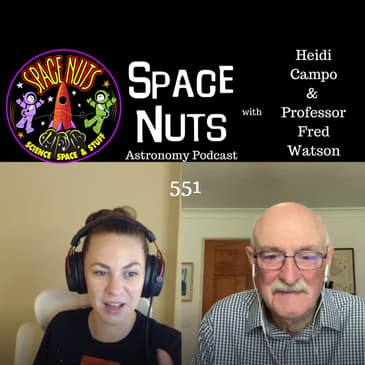


Cosmic Conversations: The Wow Seona Lee and New Discoveries in Astronomy
In this captivating episode of Space Nuts, hosts Heidi Campo and Professor Fred Watson take listeners on a journey through the latest astronomical discoveries and intriguing cosmic signals. With a mix of humor and scientific insight, they explore the enigmatic Wow Seona Lee, recent findings about Uranus, and the exciting advancements in SpaceX's Starship program.
Episode Highlights:
- The Wow Seona Lee Revisited: Fred shares the history behind the Wow Seona Lee, a mysterious radio signal detected in 1977 that has sparked debates about extraterrestrial life. Recent reanalysis of the data reveals that the signal was even stronger than previously thought, reigniting interest in its origins.
- New Moons Around Uranus: The discovery of a new moon orbiting Uranus captures the hosts' excitement. Fred discusses the significance of this finding and the role of the James Webb Space Telescope in uncovering celestial objects at great distances.
- SpaceX's Starship Success: The hosts provide an update on SpaceX's latest Starship launch, highlighting the successful test flight and its implications for future space exploration, including potential missions to Mars and the Moon.
- Advocating for Dark Skies: Heidi introduces the Australasian Dark Sky Alliance and their petition to combat light pollution in Australia, emphasizing the importance of preserving dark skies for both astronomy and wildlife.
For more Space Nuts, including our continuously updating newsfeed and to listen to all our episodes, visit our website. Follow us on social media at SpaceNutsPod on Facebook, X, YouTube Music Music, Tumblr, Instagram, and TikTok. We love engaging with our community, so be sure to drop us a message or comment on your favorite platform.
If you’d like to help support Space Nuts and join our growing family of insiders for commercial-free episodes and more, visit spacenutspodcast.com/about
Stay curious, keep looking up, and join us next time for more stellar insights and cosmic wonders. Until then, clear skies and happy stargazing.
Got a question for our Q&A episode? https://spacenutspodcast.com/ama
Become a supporter of this podcast: https://www.spreaker.com/podcast/space-nuts-astronomy-insights-cosmic-discoveries--2631155/support.
00:00:00 --> 00:00:03 Heidi Campo: Everybody, welcome back to what might
00:00:03 --> 00:00:06 very well be my last episode
00:00:06 --> 00:00:08 hosting this podcast, Space
00:00:08 --> 00:00:09 Nuts.
00:00:09 --> 00:00:11 Generic: 15 seconds. Guidance is internal.
00:00:12 --> 00:00:14 10, 9. Ignition
00:00:14 --> 00:00:17 sequence start. Space nuts. 5, 4, 3,
00:00:17 --> 00:00:20 2. 1, 2, 3, 4, 5, 5, 4,
00:00:20 --> 00:00:23 3, 2, 1. Space nuts. Astronauts
00:00:23 --> 00:00:24 report. It feels good.
00:00:25 --> 00:00:27 Heidi Campo: Uh, the podcast is not going anywhere. Don't
00:00:27 --> 00:00:30 you worry. Uh, we'll have our regular host,
00:00:30 --> 00:00:33 uh, Andrew Dunkley, return maybe next
00:00:33 --> 00:00:35 week. Um, or I might be back. So this could
00:00:35 --> 00:00:37 be a very dramatic goodbye and then I show up
00:00:37 --> 00:00:39 again. But we don't know. What we do know
00:00:40 --> 00:00:43 is that the beloved, um, Fred Watson is
00:00:43 --> 00:00:45 still here with us today. Fred, how are you
00:00:45 --> 00:00:45 doing?
00:00:46 --> 00:00:48 Professor Fred Watson: Oh, pretty good, thank you, Heidi. Um,
00:00:49 --> 00:00:51 feeling for you because you've done such a
00:00:51 --> 00:00:54 fabulous job over the last 13
00:00:54 --> 00:00:57 weeks. I think it is. Um, and,
00:00:57 --> 00:01:00 um, yeah, we've. We've had some
00:01:00 --> 00:01:02 hitches and glitches and all kinds of things
00:01:02 --> 00:01:05 like that, but you've come through it all
00:01:05 --> 00:01:07 wonderfully. And, um, I think the podcast is
00:01:07 --> 00:01:09 in better shape now than it was before.
00:01:09 --> 00:01:12 Heidi Campo: Oh, thank you. That's very kind. It's so
00:01:12 --> 00:01:15 crazy to think of, you know, just 13 weeks
00:01:15 --> 00:01:17 ago. You guys can think about where you were
00:01:17 --> 00:01:19 13 weeks ago and how much has changed over
00:01:19 --> 00:01:22 the summer. And for me, I was involved in
00:01:22 --> 00:01:24 a NASA proposal project where
00:01:24 --> 00:01:27 we wrote a whole proposal trying to get
00:01:27 --> 00:01:29 funding. We didn't get the funding, but it
00:01:29 --> 00:01:31 was a really fun project. Um, I wrote
00:01:31 --> 00:01:33 another proposal that's going to be submitted
00:01:33 --> 00:01:35 to the IRB soon. It's just like, wow, so
00:01:35 --> 00:01:38 much. So much has happened and changed in 13
00:01:38 --> 00:01:41 weeks. Um, what about you, Fred?
00:01:41 --> 00:01:43 How's your. Well, I guess, winter.
00:01:43 --> 00:01:45 Professor Fred Watson: Yes, it's been a winter. Yeah, it's been a
00:01:45 --> 00:01:47 very busy time, actually. We, we did a,
00:01:47 --> 00:01:49 um, tour at one point, and
00:01:50 --> 00:01:53 we've done a lot of things. Um,
00:01:53 --> 00:01:56 uh, good, uh, things, and mostly good
00:01:56 --> 00:01:58 things. One or two things that. Less good.
00:01:58 --> 00:02:00 But all things are going well and we're
00:02:01 --> 00:02:03 still going strong, and the podcast will
00:02:03 --> 00:02:05 continue to do so. And of course, in that 13
00:02:05 --> 00:02:07 weeks, we had that lovely news that we were
00:02:07 --> 00:02:10 seventh in the top 50 podcasts on
00:02:10 --> 00:02:13 astronomy and space science. So that's.
00:02:13 --> 00:02:14 Heidi Campo: Well, I have one word for that.
00:02:17 --> 00:02:18 Can you guess my word?
00:02:19 --> 00:02:21 Professor Fred Watson: Um, mine will be awesome.
00:02:22 --> 00:02:24 Heidi Campo: I'm going to say. Wow.
00:02:24 --> 00:02:27 Professor Fred Watson: Oh, good. Well, what a. What a lovely segue
00:02:27 --> 00:02:28 into.
00:02:28 --> 00:02:30 Heidi Campo: And that is a segue. You guys know me and
00:02:30 --> 00:02:32 love me for my segues.
00:02:32 --> 00:02:35 Wow is actually our first article
00:02:35 --> 00:02:38 of the day where we are talking about a radio
00:02:38 --> 00:02:40 signal. This is something I know nothing
00:02:40 --> 00:02:43 about. Fred knows everything about so let's
00:02:43 --> 00:02:44 hear this from Fred.
00:02:45 --> 00:02:47 Professor Fred Watson: Oh, yeah, um, I'm glad to hear
00:02:47 --> 00:02:50 that you, um, you were coming fresh to this
00:02:50 --> 00:02:52 story because it's one that keeps one
00:02:52 --> 00:02:55 returning and is, you
00:02:55 --> 00:02:57 know, one of the ones that intrigues us all
00:02:58 --> 00:03:01 in the quest for whether there is
00:03:01 --> 00:03:03 intelligent life beyond our
00:03:03 --> 00:03:06 planet. Um, so the story
00:03:06 --> 00:03:09 is, uh, it goes back to 1977
00:03:09 --> 00:03:12 when a telescope in your country, Heidi.
00:03:12 --> 00:03:14 Uh, radio telescope, uh, the Big Ear
00:03:14 --> 00:03:16 Observatory, Delaware. Delaware,
00:03:16 --> 00:03:19 Ohio. Uh, that
00:03:19 --> 00:03:22 telescope had. By 1977 it had
00:03:22 --> 00:03:24 completed a really excellent radio
00:03:25 --> 00:03:28 wavelength survey of the sky, the northern
00:03:28 --> 00:03:31 sky. Uh, and it was being sort
00:03:31 --> 00:03:34 of handed over to the SETI Project
00:03:34 --> 00:03:36 Search for Extraterrestrial Intelligence.
00:03:36 --> 00:03:39 Um, and that made, uh,
00:03:39 --> 00:03:42 it the, you know, the biggest ear, if I can
00:03:42 --> 00:03:44 put it that way, because it's called the Big
00:03:44 --> 00:03:46 Ear. Uh, uh, it was
00:03:46 --> 00:03:48 effectively the biggest ear in the world
00:03:48 --> 00:03:50 listening for radio signals that might have
00:03:50 --> 00:03:52 had an intelligent origin, uh,
00:03:52 --> 00:03:55 somewhere deep in space. So, uh, the job it
00:03:55 --> 00:03:57 was doing was actually looking for
00:03:57 --> 00:04:00 extraterrestrial intelligence signals. Uh,
00:04:00 --> 00:04:02 the telescope's no longer there, actually. I
00:04:02 --> 00:04:04 believe the site is now a golf course. So.
00:04:04 --> 00:04:04 Heidi Campo: Oh, wow.
00:04:06 --> 00:04:09 Professor Fred Watson: There you go. Wow. Um,
00:04:10 --> 00:04:13 uh, so what, what happened? Well, uh, the.
00:04:14 --> 00:04:16 Back in 1977, your
00:04:17 --> 00:04:19 information came out on a. What was called a
00:04:19 --> 00:04:22 line printer. The, basically a printer with
00:04:22 --> 00:04:25 a lot of numbers on, um, was nothing like
00:04:25 --> 00:04:28 the elegant, uh, hardware that we've got
00:04:28 --> 00:04:30 these days where we just immediately plot
00:04:30 --> 00:04:32 graphs and things of that sort on our lovely
00:04:32 --> 00:04:34 color screens. Everything was in black and
00:04:34 --> 00:04:37 white. Uh, and your information came out
00:04:37 --> 00:04:40 as uh, I said, on a printer. Uh, and
00:04:40 --> 00:04:42 so, uh, an astronomer, sadly, I can't
00:04:42 --> 00:04:44 remember his name. Jerry, I think, was his
00:04:44 --> 00:04:47 first name. Um, he was
00:04:47 --> 00:04:49 looking through this, this output,
00:04:50 --> 00:04:52 uh, as I think he probably did every
00:04:52 --> 00:04:55 day, uh, and came upon
00:04:56 --> 00:04:58 a, ah, set of numbers and letters actually,
00:04:58 --> 00:05:00 because it's in, um, you know, the
00:05:00 --> 00:05:03 numbers aren't enough for this. It's in. I
00:05:03 --> 00:05:04 don't think it's hexadecimal, but it's some
00:05:04 --> 00:05:06 code a bit like that. So you get numbers and
00:05:06 --> 00:05:09 letters. Uh, and he came across this string
00:05:09 --> 00:05:12 of letters that indicated a very,
00:05:12 --> 00:05:14 very strong signal, uh, for
00:05:14 --> 00:05:17 a very short time. And uh,
00:05:17 --> 00:05:20 with, uh, his red biro
00:05:20 --> 00:05:23 pen, he wrote wow in the margin of
00:05:23 --> 00:05:25 the print hour. And that's why it's called
00:05:25 --> 00:05:27 the wow. Signal. And it's been called that
00:05:27 --> 00:05:30 ever since. Sadly, what it hasn't had ever
00:05:30 --> 00:05:32 since is any real understanding of what
00:05:32 --> 00:05:34 caused it, uh, because, um, it
00:05:34 --> 00:05:37 was never repeated. Um,
00:05:37 --> 00:05:40 and ah, a lot of analysis
00:05:40 --> 00:05:43 Was done as to whether it was a signal that
00:05:43 --> 00:05:46 had come from some terrestrial source, you
00:05:46 --> 00:05:48 know, TV station or something of that sort,
00:05:48 --> 00:05:51 or satellites. Uh, because there were
00:05:51 --> 00:05:53 of course satellites there. We had satellites
00:05:53 --> 00:05:55 in place for uh, 20 years by then.
00:05:56 --> 00:05:59 Um. And um. People have looked at things
00:05:59 --> 00:06:01 like well, uh. Could it have been reflection
00:06:01 --> 00:06:04 of a radio signal from the moon? Uh, because
00:06:04 --> 00:06:06 radio telescopes can pick up reflections from
00:06:06 --> 00:06:09 the moon. Um, but no, it wasn't. The moon was
00:06:09 --> 00:06:10 on the other side of the Earth at the time.
00:06:10 --> 00:06:13 So that wasn't going to be what it was.
00:06:13 --> 00:06:16 Um, and so it's been a focus of interest.
00:06:16 --> 00:06:18 You know, was it really a burst of
00:06:19 --> 00:06:21 radiation at the particular
00:06:22 --> 00:06:24 frequency, uh, which um.
00:06:24 --> 00:06:27 We have always kind of thought maybe
00:06:27 --> 00:06:30 any uh, intelligent aliens out uh, there
00:06:30 --> 00:06:33 might use. Um. This. Um. It's
00:06:33 --> 00:06:36 a frequency that actually
00:06:36 --> 00:06:39 hydrogen, uh called hydrogen radiates on.
00:06:40 --> 00:06:42 So uh. It's perhaps the best known
00:06:42 --> 00:06:45 frequency in the whole of radio astronomy.
00:06:45 --> 00:06:47 Um because cold hydrogen
00:06:47 --> 00:06:50 radiates signals at that frequency. And
00:06:50 --> 00:06:53 that's um. Cold hydrogen lets you map
00:06:53 --> 00:06:55 the, you know, the distribution of hydrogen
00:06:55 --> 00:06:58 in space and gives us insights into
00:06:58 --> 00:07:00 the universe that we wouldn't have had
00:07:00 --> 00:07:02 otherwise. It's at a frequency of 14, 20
00:07:02 --> 00:07:05 megahertz. Um, we usually ah, often
00:07:05 --> 00:07:07 talk about the 21 centimeter line because
00:07:07 --> 00:07:09 that's the wavelength of this. Of this
00:07:09 --> 00:07:12 radiation. So that frequency was what was
00:07:12 --> 00:07:15 chosen and um, for the. The.
00:07:15 --> 00:07:18 You know, for the. For the SETI search.
00:07:18 --> 00:07:21 Uh, and getting this massive signal at that
00:07:21 --> 00:07:23 frequency, of course is very, very
00:07:24 --> 00:07:27 intriguing and remains so to this
00:07:27 --> 00:07:29 day. So why is it in the news again?
00:07:29 --> 00:07:32 Well, because, um. Things have moved
00:07:32 --> 00:07:35 on a little bit in terms of computation and
00:07:35 --> 00:07:37 data analysis since 1977,
00:07:39 --> 00:07:41 as Joe has. That's right. So,
00:07:41 --> 00:07:44 um, quite a large group of um,
00:07:44 --> 00:07:47 interested scientists have got together, uh,
00:07:47 --> 00:07:49 and basically reanalyzed the
00:07:50 --> 00:07:52 data. Um, uh,
00:07:52 --> 00:07:55 they've actually um, put um.
00:07:55 --> 00:07:58 I think the original uh,
00:07:58 --> 00:08:01 printouts through optical character
00:08:01 --> 00:08:04 recognition software, um, so that
00:08:04 --> 00:08:07 they can actually digitize
00:08:07 --> 00:08:10 what was just numbers on a piece
00:08:10 --> 00:08:12 of paper. And that of course lets you then do
00:08:12 --> 00:08:15 a much more um, sophisticated
00:08:15 --> 00:08:17 analysis. Uh, and so what they've done is
00:08:17 --> 00:08:19 looked again at the signal and it turns out
00:08:19 --> 00:08:22 that uh, things are slightly different from
00:08:22 --> 00:08:24 what we thought they were. And in particular,
00:08:26 --> 00:08:28 uh, the um. Um.
00:08:28 --> 00:08:31 Intensity of the signal is
00:08:31 --> 00:08:34 about uh. It's probably about um.
00:08:34 --> 00:08:37 20% higher than what
00:08:37 --> 00:08:39 was originally estimated. So it was even
00:08:39 --> 00:08:42 stronger than people thought at the time.
00:08:43 --> 00:08:46 Uh, and it's. Yeah, it's got, you
00:08:46 --> 00:08:48 know, a few other little things that have
00:08:48 --> 00:08:51 changed uh, but at the end of the day,
00:08:51 --> 00:08:53 it doesn't really give us any more
00:08:53 --> 00:08:55 information about what caused this. Uh,
00:08:55 --> 00:08:58 and I just to, uh, kind
00:08:58 --> 00:09:01 of recap a little bit. I remember writing a
00:09:01 --> 00:09:03 little article, it's probably a couple of
00:09:03 --> 00:09:06 years ago now, about again about the wow
00:09:06 --> 00:09:08 Signal. But, uh, about new research
00:09:09 --> 00:09:12 that had speculated on what might have caused
00:09:12 --> 00:09:14 it. And I think that is still the most likely
00:09:15 --> 00:09:17 cause. Um, and it comes about
00:09:17 --> 00:09:20 because of a phenomenon that we didn't know
00:09:20 --> 00:09:22 about in 1977, but we do now.
00:09:22 --> 00:09:25 And that is, uh, these flares on
00:09:25 --> 00:09:28 highly magnitude. M sorry. Highly
00:09:28 --> 00:09:31 magnetized neutron stars. So neutron
00:09:31 --> 00:09:34 stars are, as we know, we often
00:09:34 --> 00:09:36 talk about them. They're the size of a city,
00:09:36 --> 00:09:38 but with the mass of a star in them.
00:09:38 --> 00:09:40 So they're highly compressed material.
00:09:41 --> 00:09:43 They've got intense magnetic fields. Some of
00:09:43 --> 00:09:45 them beam out radiation like a lighthouse.
00:09:45 --> 00:09:48 And we call them pulsars because we see that
00:09:48 --> 00:09:51 lighthouse being pulsating. Um,
00:09:51 --> 00:09:54 but these events that we call fast radio
00:09:54 --> 00:09:56 bursts, which have been known about for the
00:09:56 --> 00:09:59 last 10, 15 years or so, we think
00:09:59 --> 00:10:01 come from flares on really
00:10:01 --> 00:10:04 highly magnetized neutron stars. Uh,
00:10:04 --> 00:10:07 some objects that we call magnetars.
00:10:07 --> 00:10:09 So these flares,
00:10:10 --> 00:10:12 um, they don't come out at the frequency that
00:10:12 --> 00:10:14 I'm talking about, though. What's interesting
00:10:15 --> 00:10:17 is that, um, the suggestion is
00:10:18 --> 00:10:20 that what you've got is a cloud of hydrogen.
00:10:21 --> 00:10:23 And, uh, behind it, perhaps a long, long way
00:10:23 --> 00:10:26 behind it, is one of these magnetars, perhaps
00:10:26 --> 00:10:28 in an even more distant galaxy, that suddenly
00:10:28 --> 00:10:31 flares and, um, beam radio waves, which we
00:10:31 --> 00:10:34 would see as a fast radio burst.
00:10:34 --> 00:10:37 But the effect of that on
00:10:37 --> 00:10:40 the cloud of hydrogen that's between us
00:10:40 --> 00:10:43 and the magnetar is to excite it and turn it
00:10:43 --> 00:10:45 into a kind of laser. It basically
00:10:45 --> 00:10:48 excites the radio radiation within the cloud
00:10:48 --> 00:10:50 of hydrogen. And then you get that, uh,
00:10:50 --> 00:10:52 hydrogen signal until that.
00:10:52 --> 00:10:54 Heidi Campo: So they work kind of like, uh, light waves
00:10:54 --> 00:10:57 going through a prism or rain creating a
00:10:57 --> 00:10:58 rainbow. Does it work? Kind of like that.
00:10:59 --> 00:11:01 Refracting. Refracting the signal.
00:11:01 --> 00:11:04 Professor Fred Watson: It's. And, uh, that's part of the story. I
00:11:04 --> 00:11:06 think maybe a better way to think of it might
00:11:06 --> 00:11:09 be like, um. If you,
00:11:10 --> 00:11:12 uh. If you've got a. Well, you know,
00:11:12 --> 00:11:14 something like, um. We used to talk about
00:11:14 --> 00:11:17 organ pipes because that's how sound waves
00:11:17 --> 00:11:19 were. You know, if you've, if you've got a
00:11:19 --> 00:11:21 cavity and you yell into
00:11:21 --> 00:11:24 it and. And it's, uh. And it's the right
00:11:24 --> 00:11:27 size, that will set up a resonance, uh,
00:11:27 --> 00:11:29 with your voice. And it will amplify your
00:11:29 --> 00:11:32 VOICE and that's more or less the process
00:11:32 --> 00:11:34 that's taking place within these clouds of
00:11:34 --> 00:11:36 hydrogen. But uh, um,
00:11:37 --> 00:11:40 it's on a much more gigantic scale.
00:11:40 --> 00:11:42 And so you get this almost laser like effect
00:11:43 --> 00:11:45 on the radiation that magnifies it. And
00:11:46 --> 00:11:47 that's perhaps the best
00:11:48 --> 00:11:50 explanation so far. We have seen similar
00:11:50 --> 00:11:53 phenomena to this, uh, but they're not
00:11:53 --> 00:11:55 as intense as the wow signal. The wow signal
00:11:55 --> 00:11:58 is still the most intense unexplained signal.
00:11:59 --> 00:12:02 So, um, make of that what you will, Heidi.
00:12:02 --> 00:12:05 Um, is it from aliens beaming radiation
00:12:05 --> 00:12:06 somewhere? Is it from a natural
00:12:07 --> 00:12:10 alignment of two objects that
00:12:10 --> 00:12:12 uh, give the give rise to this kind of laser
00:12:12 --> 00:12:15 like radiation beam? I don't know. But,
00:12:15 --> 00:12:18 um, I think the wow signal will continue to
00:12:19 --> 00:12:21 uh, intrigue astronomers and space scientists
00:12:21 --> 00:12:22 for a long time to come.
00:12:23 --> 00:12:25 Heidi Campo: Absolutely. Absolutely. It is, you know, it's
00:12:25 --> 00:12:28 tough because, you know, and folks at seti,
00:12:28 --> 00:12:30 there's probably so much confirmation bias
00:12:30 --> 00:12:32 they have to overcome because you're going to
00:12:32 --> 00:12:34 look, you're going, if you're a hammer,
00:12:34 --> 00:12:35 everything's a nail. And so many times we
00:12:35 --> 00:12:38 want to look at something and go, that's got
00:12:38 --> 00:12:40 to be what I want it to be. And then we get
00:12:40 --> 00:12:42 more pieces of the puzzle and we're like, oh,
00:12:42 --> 00:12:44 shoot, that's definitely
00:12:45 --> 00:12:45 hoping it was.
00:12:48 --> 00:12:49 Generic: Okay.
00:12:49 --> 00:12:51 Professor Fred Watson: We checked all four systems and being with a
00:12:51 --> 00:12:52 go space nets.
00:12:53 --> 00:12:55 Heidi Campo: But, um, with our next story,
00:12:55 --> 00:12:58 we are getting more pieces of the puzzle that
00:12:58 --> 00:13:01 are very clear. And this is
00:13:01 --> 00:13:03 actually about my favorite planet,
00:13:03 --> 00:13:05 Uranus. I think it is
00:13:05 --> 00:13:08 beautiful, I think it is underrated. And
00:13:08 --> 00:13:11 we are now discovering some new
00:13:11 --> 00:13:13 moons orbiting around this
00:13:14 --> 00:13:17 fantastic sideways blue marble
00:13:17 --> 00:13:17 planet.
00:13:19 --> 00:13:21 Professor Fred Watson: Yeah, I mean, I always think, um,
00:13:23 --> 00:13:25 a discovery of something like a new moon is
00:13:26 --> 00:13:28 really big news, even if it's only 10
00:13:28 --> 00:13:31 kilometers or six miles across as this one
00:13:31 --> 00:13:34 is. Um, ah, I
00:13:34 --> 00:13:37 do remember when I was a youngster
00:13:38 --> 00:13:40 getting, uh, interested in astronomy. M. We
00:13:40 --> 00:13:42 thought Saturn had nine moons.
00:13:43 --> 00:13:46 Um, um, and I don't know whether you're
00:13:46 --> 00:13:48 familiar with the total that we know now, but
00:13:48 --> 00:13:50 the membrane, not sure.
00:13:50 --> 00:13:52 Heidi Campo: With what it's at from the last time I heard
00:13:52 --> 00:13:53 it, but it keeps growing.
00:13:53 --> 00:13:55 Professor Fred Watson: It does. It's 274.
00:13:55 --> 00:13:58 Heidi Campo: Heidi 74. I think the last time
00:13:58 --> 00:14:00 I heard it was in the 250s, so.
00:14:00 --> 00:14:02 Professor Fred Watson: Yeah, yeah, that's right. Continuing to grow.
00:14:02 --> 00:14:04 So it keeps. And, and a lot of that is, um,
00:14:05 --> 00:14:07 these are really small objects that lurk in
00:14:07 --> 00:14:10 the rings of Saturn. Um, and
00:14:10 --> 00:14:13 of course, uh, Uranus has rings as well. And
00:14:13 --> 00:14:15 what we found in this new discovery, uh,
00:14:16 --> 00:14:18 is a Moon that is
00:14:18 --> 00:14:21 just on the edge of uh, the rings, the ring
00:14:21 --> 00:14:24 system of Uranus. Um, what I
00:14:24 --> 00:14:27 think impresses me about this story most
00:14:27 --> 00:14:30 is the achievement that it represents when
00:14:30 --> 00:14:33 it's once again highlighting just
00:14:33 --> 00:14:35 how effective and efficient the James Webb
00:14:35 --> 00:14:38 telescope is. Uh, because that
00:14:38 --> 00:14:40 telescope has been used uh, to discover this
00:14:40 --> 00:14:43 moon. The moon as I've already said, is
00:14:43 --> 00:14:45 about, thought to be about ah, 10
00:14:45 --> 00:14:48 kilometers across, 6 miles or
00:14:48 --> 00:14:51 so, something like that, maybe 7 miles. Um,
00:14:52 --> 00:14:54 it is at a distance
00:14:55 --> 00:14:58 of um, 30 times
00:14:58 --> 00:15:01 the distance from the Earth, uh,
00:15:01 --> 00:15:04 to the sun, uh, which is um,
00:15:04 --> 00:15:07 it's something like three if I remember
00:15:07 --> 00:15:09 rightly. It's about 3 billion kilometers.
00:15:10 --> 00:15:12 Heidi Campo: So if you were on the surface of Uranus,
00:15:12 --> 00:15:15 you'd notice, be able to see it. It'd
00:15:15 --> 00:15:18 be too small and too far away probably.
00:15:18 --> 00:15:20 Professor Fred Watson: That's right. Um, I mean
00:15:20 --> 00:15:23 Uranus is a gas giant. So you, you'd be,
00:15:23 --> 00:15:25 you'd be floating I guess or something like
00:15:25 --> 00:15:28 that. But yes, kind of a station.
00:15:28 --> 00:15:30 Yeah, it would almost certainly be, it would
00:15:30 --> 00:15:33 be too small to see uh, with the unaided
00:15:33 --> 00:15:36 eye. Um, but yes, ah,
00:15:36 --> 00:15:38 you know that the, the, the
00:15:38 --> 00:15:40 triumph is being able to see it from the
00:15:40 --> 00:15:43 distance that we are here on our uh,
00:15:44 --> 00:15:46 uh, extraordinary
00:15:46 --> 00:15:49 discovery of a tiny object at such an
00:15:49 --> 00:15:52 amazing distance away. So uh,
00:15:52 --> 00:15:54 it's a good story. What does it mean? It
00:15:54 --> 00:15:56 means we've got a new object which
00:15:57 --> 00:15:58 currently has the name of
00:15:58 --> 00:16:01 S2025U1
00:16:02 --> 00:16:05 which tells you that it's the first um,
00:16:05 --> 00:16:07 Uranus moon discovered in
00:16:07 --> 00:16:10 2025. The
00:16:10 --> 00:16:13 S meaning satellite. Uh, so uh, that's
00:16:13 --> 00:16:16 an International Astronomical Union code, uh,
00:16:16 --> 00:16:19 which is commonly used for new discoveries.
00:16:19 --> 00:16:21 But it will end up with a name, uh, that
00:16:22 --> 00:16:25 um, ah, either comes from the
00:16:25 --> 00:16:27 writings of Shakespeare
00:16:27 --> 00:16:30 or from uh, Pope, um, ah,
00:16:30 --> 00:16:33 Alexander Pope because they're the
00:16:33 --> 00:16:36 two authors, uh, whose characters
00:16:36 --> 00:16:39 are actually um, the names of the
00:16:39 --> 00:16:42 characters have been adopted, uh, for the
00:16:42 --> 00:16:44 moons of Uranus, um, with
00:16:45 --> 00:16:48 the most famous ones like Titania, ah, Oberon
00:16:48 --> 00:16:51 and Ophelia. These are all big name
00:16:51 --> 00:16:53 moons of that planet, uh, who knows
00:16:53 --> 00:16:54 what.
00:16:54 --> 00:16:55 Heidi Campo: Cupid.
00:16:55 --> 00:16:57 Professor Fred Watson: Yeah, all of that, all of those. Who knows
00:16:57 --> 00:17:00 what s 2025 new one will wind
00:17:00 --> 00:17:03 up with. But uh, uh, it'll be
00:17:03 --> 00:17:04 something pretty cool I think.
00:17:05 --> 00:17:08 Heidi Campo: So to be a moon, does it have to be
00:17:08 --> 00:17:09 a certain size?
00:17:10 --> 00:17:13 Professor Fred Watson: That's a great question. Um, and uh,
00:17:13 --> 00:17:16 uh, where that blurring
00:17:16 --> 00:17:19 occurs is in the rings of
00:17:19 --> 00:17:22 objects like Saturn, uh, and
00:17:22 --> 00:17:25 Uranus. So those rings are made of many,
00:17:25 --> 00:17:28 many particles, some uh, of
00:17:28 --> 00:17:30 which are just pieces of dust, but some are
00:17:30 --> 00:17:32 Quite large. You know, you've probably got
00:17:32 --> 00:17:35 things 10 meters across which are orbiting
00:17:35 --> 00:17:38 and forming the ring systems. Uh, are they
00:17:38 --> 00:17:40 moons? That's the question. Uh,
00:17:41 --> 00:17:43 what's the boundary between a large ring
00:17:43 --> 00:17:46 particle and a moon? And
00:17:47 --> 00:17:49 so the size is probably a critical thing. I
00:17:49 --> 00:17:52 don't think there is a size limit. I think
00:17:52 --> 00:17:55 it's more about, uh, for
00:17:55 --> 00:17:57 example, with this newly discovered moon.
00:17:57 --> 00:18:00 Yes, it's perhaps 10 kilometers across,
00:18:01 --> 00:18:04 uh, but it's not in the ring system of
00:18:04 --> 00:18:06 Uranus. It's clearly not a ring particle. It
00:18:06 --> 00:18:09 is an independent moon. So I guess that's
00:18:09 --> 00:18:11 actually what qualifies it for the, for the
00:18:11 --> 00:18:12 title.
00:18:13 --> 00:18:15 Heidi Campo: Excellent. I don't know why I thought of the
00:18:15 --> 00:18:18 classic Star wars line. That's no moon.
00:18:19 --> 00:18:20 Space station.
00:18:21 --> 00:18:22 Professor Fred Watson: That's right.
00:18:23 --> 00:18:24 Heidi Campo: I'm a nerd. I can't help it.
00:18:27 --> 00:18:28 Generic: Roger, your labs are here.
00:18:28 --> 00:18:30 Professor Fred Watson: Also space nuts.
00:18:30 --> 00:18:33 Heidi Campo: Um, I have uh, an Amazon
00:18:33 --> 00:18:34 Alex Zaharov-Reutt that I use to get my
00:18:34 --> 00:18:37 morning news and all over the news today,
00:18:38 --> 00:18:40 while we're recording this was all the news
00:18:40 --> 00:18:42 of the starship launch and the success. And
00:18:42 --> 00:18:44 we were talking about that on our last
00:18:44 --> 00:18:47 episode. We had our fingers crossed. We
00:18:47 --> 00:18:49 were hopeful for the success of the
00:18:50 --> 00:18:53 um, SpaceX Starship launch. And it looks
00:18:53 --> 00:18:55 like it did. Great. Do you want to tell us
00:18:55 --> 00:18:56 more about this?
00:18:57 --> 00:18:59 Professor Fred Watson: Yeah, um, it is, it's really
00:19:00 --> 00:19:03 basically a good news, good news story in the
00:19:03 --> 00:19:05 sense that uh, um, once again,
00:19:05 --> 00:19:08 um, the technology has worked. Uh,
00:19:09 --> 00:19:12 so just a recap of
00:19:12 --> 00:19:13 what we're talking about. Um,
00:19:14 --> 00:19:17 SpaceX, their biggest rocket is the
00:19:17 --> 00:19:20 Starship, which is in two parts, the super
00:19:20 --> 00:19:22 heavy launch vehicle and what is called ship,
00:19:22 --> 00:19:25 which is the top stage, uh, of the vehicle.
00:19:26 --> 00:19:28 And that pairing, uh, has
00:19:28 --> 00:19:31 had 10 test launches so far.
00:19:32 --> 00:19:34 Um, some of them were less than
00:19:34 --> 00:19:37 successful, some of them resulted in
00:19:37 --> 00:19:39 what, um, SpaceX terms,
00:19:40 --> 00:19:43 uh, a rapid unscheduled disassembly.
00:19:43 --> 00:19:46 Uh, we would call it an explosion, but they
00:19:46 --> 00:19:48 call it a rapid unscheduled disassembly.
00:19:49 --> 00:19:51 And um, so it's um, uh, great
00:19:51 --> 00:19:53 to report that the 10th flight, uh,
00:19:54 --> 00:19:56 everything went absolutely according to plan.
00:19:57 --> 00:19:59 And the plans were a little bit different
00:19:59 --> 00:20:01 from some of the earlier missions. Um, you
00:20:01 --> 00:20:04 probably remember, Heidi, that the way that
00:20:04 --> 00:20:07 the booster itself, the super heavy part of
00:20:07 --> 00:20:10 the spacecraft returns, uh, to Earth, it
00:20:10 --> 00:20:13 returns to its launch pad and is
00:20:13 --> 00:20:15 captured by what are being called the
00:20:15 --> 00:20:18 chopsticks, a pair of arms that grab
00:20:18 --> 00:20:21 hold of it as it comes down and basically
00:20:21 --> 00:20:23 puts it back on the launch pad so it can be
00:20:23 --> 00:20:25 reused almost immediately, which is
00:20:26 --> 00:20:28 extraordinary technology, um, that has been
00:20:28 --> 00:20:30 successfully tested in some of the earlier
00:20:30 --> 00:20:32 missions. That wasn't the plan for this
00:20:32 --> 00:20:35 mission. The super heavy booster was
00:20:35 --> 00:20:38 purposely uh, dropped into the ocean. Um,
00:20:38 --> 00:20:41 but the ship itself uh, made
00:20:41 --> 00:20:44 a soft landing. Now it was a soft landing on
00:20:44 --> 00:20:47 water, uh, and that was intended as well. And
00:20:47 --> 00:20:50 in fact it virtually hit its target because
00:20:50 --> 00:20:52 there was a boy, uh, with cameras on it
00:20:53 --> 00:20:55 ready in the vicinity to watch this thing
00:20:55 --> 00:20:58 land. And indeed it did. Uh, and um,
00:20:58 --> 00:21:01 its breaking rockets slowed it down so that
00:21:01 --> 00:21:03 it basically just kissed the water and then
00:21:05 --> 00:21:07 sank down into water. There's a lot of steam
00:21:07 --> 00:21:10 about as you'd expect from rocket jets,
00:21:10 --> 00:21:12 um, playing on the, um, on the water surface.
00:21:12 --> 00:21:14 And that was intended as well. That was in
00:21:14 --> 00:21:16 the Indian Ocean. So I think it was something
00:21:16 --> 00:21:19 like a 45 minute flight that the ship itself
00:21:19 --> 00:21:21 made. Um, so that was all
00:21:21 --> 00:21:24 exactly what was planned. And that's great
00:21:24 --> 00:21:26 news because it means that things are on
00:21:26 --> 00:21:29 track. Um, it's critical uh,
00:21:29 --> 00:21:32 uh, that we should have a working system
00:21:32 --> 00:21:35 because as you know, the ship itself
00:21:36 --> 00:21:38 is going to be the vehicle that will land
00:21:39 --> 00:21:41 Artemis astronauts on the moon, hopefully
00:21:41 --> 00:21:44 in 2027. Maybe it will slip a little bit. But
00:21:45 --> 00:21:48 uh, Chip is going to be Starship itself. The
00:21:48 --> 00:21:50 ship part of it is going to be the landing
00:21:50 --> 00:21:53 vehicle, uh, that will take Artemis
00:21:53 --> 00:21:55 astronauts down to the surface. So it's got
00:21:55 --> 00:21:58 to work and it's got to work well and that's
00:21:58 --> 00:22:01 why it's great to see these tests uh,
00:22:01 --> 00:22:03 coming. Good. Of course, um,
00:22:03 --> 00:22:06 Elon's um, whole
00:22:06 --> 00:22:09 motivation for building this gigantic
00:22:09 --> 00:22:11 rocket, 400ft tall,
00:22:11 --> 00:22:14 123 meters. Uh, his motivation is
00:22:14 --> 00:22:17 to take people to Mars. And um, I think
00:22:17 --> 00:22:19 that's a little bit further down the track.
00:22:19 --> 00:22:21 He might have the vehicle to do it, but I
00:22:21 --> 00:22:23 think there are a lot of problems to solve
00:22:23 --> 00:22:26 before we send people to Mars on Starship.
00:22:27 --> 00:22:29 Heidi Campo: I've heard him say that he wants to be the
00:22:29 --> 00:22:32 first person to be born on Earth and die on
00:22:32 --> 00:22:32 Mars.
00:22:33 --> 00:22:33 Professor Fred Watson: Yes.
00:22:33 --> 00:22:36 Heidi Campo: And uh, there's kind of the joke. It's like,
00:22:36 --> 00:22:38 well you need to specify if it's going to be
00:22:38 --> 00:22:41 in the landing or if you've walked on Mars.
00:22:42 --> 00:22:44 So that would be a very important
00:22:45 --> 00:22:46 specification. Yeah.
00:22:48 --> 00:22:50 Either way we are making crazy
00:22:50 --> 00:22:53 progress rapidly towards, towards these
00:22:53 --> 00:22:56 visions. I mean is there there been a point
00:22:56 --> 00:22:59 in your career, your space career, where you
00:22:59 --> 00:23:02 saw advances happening this rapidly
00:23:02 --> 00:23:03 at any point?
00:23:03 --> 00:23:06 Professor Fred Watson: No. And um, I um, mean that. But there was
00:23:06 --> 00:23:09 a critical moment which was back in 2015
00:23:10 --> 00:23:12 and that's when SpaceX managed to
00:23:12 --> 00:23:15 successfully land a booster and
00:23:16 --> 00:23:19 reuse it, because that's the game changer,
00:23:19 --> 00:23:20 that technology that allows you to bring a
00:23:20 --> 00:23:22 booster back rather than just dumping it into
00:23:22 --> 00:23:24 the ocean, which is what happened, um,
00:23:25 --> 00:23:27 for, you know, all the decades before that,
00:23:27 --> 00:23:30 um, costing millions of dollars.
00:23:30 --> 00:23:32 Uh, but if you can reuse the booster, then
00:23:32 --> 00:23:35 suddenly you've, you've made an economy. That
00:23:35 --> 00:23:37 is a game changer. And, and that's actually
00:23:37 --> 00:23:40 what's happened. So. Yes, I've never seen
00:23:40 --> 00:23:41 things happening as rapidly as they are now.
00:23:42 --> 00:23:45 Heidi Campo: Yeah. Uh, has this
00:23:45 --> 00:23:48 impacted astronomy? Are we able to get more
00:23:48 --> 00:23:50 satellites and, um, tools out there for
00:23:50 --> 00:23:51 you?
00:23:51 --> 00:23:54 Professor Fred Watson: Because it's. Yes, that's right. Because it's
00:23:54 --> 00:23:56 now cheaper, uh, to launch,
00:23:57 --> 00:23:59 uh, things into orbit, then
00:24:00 --> 00:24:02 telescopes, uh, can be
00:24:02 --> 00:24:05 launched on a much lower budget, ah,
00:24:05 --> 00:24:07 astronomical telescopes into orbit, uh, than
00:24:07 --> 00:24:09 they were before. Um,
00:24:12 --> 00:24:15 it used to be this cost that people used
00:24:15 --> 00:24:17 to talk about to get something into orbit was
00:24:17 --> 00:24:20 about $20 per kilogram, and that's
00:24:20 --> 00:24:23 come down to $2 per
00:24:23 --> 00:24:26 kilogram. Um, and, you know, that's
00:24:26 --> 00:24:28 just a game changer. In fact,
00:24:29 --> 00:24:31 with Starship, it's forecast that it might
00:24:31 --> 00:24:34 come down to $200 a kilogram, uh,
00:24:34 --> 00:24:37 which, you know, is just unheard of.
00:24:37 --> 00:24:40 So if you've got a cheap way of getting stuff
00:24:40 --> 00:24:43 into space, then it costs you less to have an
00:24:43 --> 00:24:45 astronomy mission. So, yes, it will impact
00:24:45 --> 00:24:46 our, uh, science.
00:24:47 --> 00:24:50 Heidi Campo: Well, that's amazing. And you know,
00:24:50 --> 00:24:52 for all you space nuts listening, maybe we'll
00:24:52 --> 00:24:55 all one day be able to afford a ticket to
00:24:55 --> 00:24:58 space. But until then, I
00:24:58 --> 00:25:01 know of something that you can do that will
00:25:01 --> 00:25:04 impact, uh, space in a positive way.
00:25:04 --> 00:25:07 That's absolutely free. And I'm
00:25:07 --> 00:25:09 specifically talking to you people living
00:25:09 --> 00:25:12 in Australia, if you're a resident, if you're
00:25:12 --> 00:25:15 a citizen, this is something that you can
00:25:15 --> 00:25:17 and should get involved with that can
00:25:17 --> 00:25:19 absolutely, positively impact
00:25:20 --> 00:25:20 space.
00:25:21 --> 00:25:23 So I'm going to let Fred tell you guys all
00:25:23 --> 00:25:26 about the Australian. The Australian,
00:25:26 --> 00:25:28 uh, Dark Sky Alliance.
00:25:30 --> 00:25:31 I'm not saying that word right.
00:25:31 --> 00:25:33 Professor Fred Watson: No, it's quite, quite all right. It's
00:25:33 --> 00:25:36 actually Australasian and, uh. Australasian,
00:25:36 --> 00:25:39 yeah. So it includes, uh, Australasia,
00:25:39 --> 00:25:41 includes New Zealand and some of the other
00:25:41 --> 00:25:44 neighboring countries around Australia. Uh,
00:25:44 --> 00:25:46 and it's the Australasian Dark sky alliance,
00:25:46 --> 00:25:48 uh, an advocacy body that was
00:25:48 --> 00:25:51 founded, um, back in 2019, um,
00:25:51 --> 00:25:54 actually by my partner Marnie,
00:25:54 --> 00:25:57 uh, and other colleagues of hers came, uh,
00:25:57 --> 00:26:00 together to set up this advocacy body
00:26:00 --> 00:26:03 to basically, um, tell people
00:26:03 --> 00:26:06 about dark skies and, um, what you can do
00:26:06 --> 00:26:09 with them. The fact that you can see
00:26:09 --> 00:26:11 the stars for a start, from A dark sky park.
00:26:12 --> 00:26:14 But, um, since then it's
00:26:14 --> 00:26:17 basically, uh, uh, changed quite a lot
00:26:17 --> 00:26:18 because we've now recognized just how
00:26:18 --> 00:26:21 damaging light pollution is, not just for
00:26:21 --> 00:26:24 astronomers and stargazers and perhaps people
00:26:24 --> 00:26:27 who watch the sky for cultural reasons. Uh,
00:26:27 --> 00:26:29 wildlife is severely impacted by
00:26:30 --> 00:26:32 light pollution and human health is as well.
00:26:33 --> 00:26:36 We know much more about now about the way our
00:26:36 --> 00:26:39 circadian rhythms require us to have this
00:26:39 --> 00:26:42 night and day, um, succession. So
00:26:42 --> 00:26:45 the Australasian Dark sky alliance, uh, is
00:26:45 --> 00:26:48 always calling for good lighting. Uh,
00:26:48 --> 00:26:50 it's got an approval program for light
00:26:50 --> 00:26:53 fittings, uh, a little bit like, uh, what is
00:26:53 --> 00:26:55 now called Dark Sky International. Used to be
00:26:55 --> 00:26:58 the International Dark Sky Association. Dark
00:26:58 --> 00:27:01 Sky International, uh, based in the usa,
00:27:01 --> 00:27:04 but here in Australia, uh, the
00:27:04 --> 00:27:06 alliance is currently
00:27:07 --> 00:27:09 wanting to follow a number of countries in
00:27:09 --> 00:27:12 Europe, uh, such as France, Germany,
00:27:12 --> 00:27:15 Croatia and in fact the European Union as a
00:27:15 --> 00:27:18 whole is looking at this to have legislation,
00:27:18 --> 00:27:21 uh, at a national level
00:27:22 --> 00:27:25 that protects dark skies, that effectively
00:27:25 --> 00:27:26 controls light pollution. Because at the
00:27:26 --> 00:27:29 moment there are no national controls here in
00:27:29 --> 00:27:31 Australia for light pollution. So they've set
00:27:31 --> 00:27:34 up a petition, uh, to uh,
00:27:34 --> 00:27:37 send to Parliament. It's open until the
00:27:37 --> 00:27:39 19th of September. They need 10
00:27:39 --> 00:27:41 signatures for it to go ahead. You can only
00:27:41 --> 00:27:44 sign if you are resident, uh, in Australia
00:27:44 --> 00:27:47 or a citizen of Australia. Uh,
00:27:47 --> 00:27:50 so I'm sorry for people beyond our
00:27:50 --> 00:27:53 uh, borders, but I hope you will, um, applaud
00:27:53 --> 00:27:56 us for doing this. Uh, so, uh, anybody
00:27:56 --> 00:27:58 within Australia who's interested, uh, if you
00:27:58 --> 00:28:01 go to um, the site, the website which
00:28:01 --> 00:28:02 is uh,
00:28:02 --> 00:28:05 australasiandarkskyalliance.org it's all
00:28:05 --> 00:28:08 one word, australasiandarkskyAlliance.org
00:28:08 --> 00:28:10 and you'll find a petition there and you can
00:28:10 --> 00:28:11 sign it if you're in Australia.
00:28:12 --> 00:28:14 Heidi Campo: And we'll make sure we have Huw, our
00:28:14 --> 00:28:16 producer, put it in the description, uh, so
00:28:16 --> 00:28:19 you can easily click on it too. And I know we
00:28:19 --> 00:28:20 try, you know, we try not to get political,
00:28:20 --> 00:28:23 but this is an important cause and you know,
00:28:23 --> 00:28:25 with being the, what are we, seventh,
00:28:26 --> 00:28:28 uh, most listened to astronomy
00:28:28 --> 00:28:30 podcast in the world. We're hoping this
00:28:30 --> 00:28:32 platform can help us get to the signatures.
00:28:32 --> 00:28:35 And if you're not in Australia and you
00:28:35 --> 00:28:38 feel compelled to help, uh, just share it on
00:28:38 --> 00:28:40 your social media platforms and then maybe
00:28:40 --> 00:28:43 your um, reach can help us expand this,
00:28:44 --> 00:28:46 this mission and just help us keep our
00:28:47 --> 00:28:49 skies dark and the stars shining and
00:28:49 --> 00:28:52 the vision of space and the
00:28:52 --> 00:28:55 space nuts, uh, being able to look up at
00:28:55 --> 00:28:57 the stars with our naked eye for
00:28:58 --> 00:28:59 the future.
00:29:01 --> 00:29:03 Professor Fred Watson: Sounds great. You're a good advocate for Dark
00:29:03 --> 00:29:05 skies. Heidi, thank you for those words.
00:29:05 --> 00:29:08 Heidi Campo: Well, you know, that's why I'm a space
00:29:08 --> 00:29:11 nut. I think every single one
00:29:11 --> 00:29:13 of us who's in this industry, you know, you
00:29:13 --> 00:29:15 grow up and maybe you're with a
00:29:16 --> 00:29:18 beloved relative, uh, or a friend, and you're
00:29:18 --> 00:29:20 looking up at the sky. And then your first
00:29:20 --> 00:29:23 camping trip where you really get out there
00:29:23 --> 00:29:26 and you're looking up and you see the Milky
00:29:26 --> 00:29:28 Way for the first time, it's burned in
00:29:28 --> 00:29:30 everyone's memory. I mean, all of you
00:29:30 --> 00:29:33 listening to this, you guys know how awe
00:29:33 --> 00:29:36 inspiring that feeling is, and we really do
00:29:36 --> 00:29:38 want to protect that. It's.
00:29:39 --> 00:29:42 I think it's something that it's almost
00:29:42 --> 00:29:45 part of being a human, because there's no
00:29:45 --> 00:29:47 other animal that looks up and admires the
00:29:47 --> 00:29:50 sky like we do. I mean,
00:29:50 --> 00:29:53 we really are meant for the stars, I think.
00:29:54 --> 00:29:57 Professor Fred Watson: Came from the stars and meant for the stars.
00:29:57 --> 00:29:57 Absolutely.
00:29:59 --> 00:30:01 Heidi Campo: And that's it for me, being an absolute
00:30:01 --> 00:30:04 cheeseball. Um, you guys,
00:30:04 --> 00:30:07 we'll see if we get Andrew back next week,
00:30:07 --> 00:30:09 because we'll go from just me being a cheese
00:30:09 --> 00:30:12 ball to Andrew with his dad jokes.
00:30:12 --> 00:30:15 But, um, if you guys don't have me back on
00:30:15 --> 00:30:18 next week, I have really enjoyed being,
00:30:18 --> 00:30:20 um, your host. Host for this summer.
00:30:21 --> 00:30:22 Um, you know, I always joke it's summer for
00:30:22 --> 00:30:24 me. I'm in Houston, Texas, Space City. And
00:30:24 --> 00:30:27 Fred's in Australia, so it's winter for him.
00:30:27 --> 00:30:30 It's nighttime for me right now and daytime
00:30:30 --> 00:30:32 for you. So it's a fun little global
00:30:32 --> 00:30:34 adventure. So I just want to say thank you to
00:30:34 --> 00:30:36 all of our listeners for having me on, and
00:30:36 --> 00:30:39 Fred has been a pleasure, and I will see
00:30:39 --> 00:30:42 you again very soon for our Q
00:30:42 --> 00:30:44 and A episode.
00:30:44 --> 00:30:45 Professor Fred Watson: Can't wait.
00:30:45 --> 00:30:46 Heidi.
00:30:47 --> 00:30:49 Andrew Dunkley: Hello, Huw. Thought I'd say your name first
00:30:49 --> 00:30:52 today. Heidi. Fred, it's Andrew here
00:30:52 --> 00:30:54 reporting from New York City,
00:30:55 --> 00:30:57 just near Times Square. Since I spoke to you
00:30:57 --> 00:31:00 last, we visited Halifax in Canada,
00:31:00 --> 00:31:03 and we did a trip out to
00:31:03 --> 00:31:06 Peggy's Cove, which is a lovely little
00:31:06 --> 00:31:08 village out on the granite outcrop there with
00:31:08 --> 00:31:11 probably one of the most famous lighthouses
00:31:11 --> 00:31:14 in the world, which, uh, uh, was
00:31:14 --> 00:31:16 just adorable. And, uh, then we had a look
00:31:16 --> 00:31:18 around Halifax itself before getting back on
00:31:18 --> 00:31:21 board and traveling to New York City. We got
00:31:21 --> 00:31:23 off and have spent the last two days
00:31:23 --> 00:31:26 in New York looking around. We, uh, went to
00:31:26 --> 00:31:29 the 9, uh, 11
00:31:29 --> 00:31:31 memorial. We wanted to do that in 2012, but
00:31:31 --> 00:31:33 we couldn't, uh, get in because the security
00:31:33 --> 00:31:35 was too tight and we didn't have our
00:31:35 --> 00:31:38 passports. But this time we did. And, uh,
00:31:38 --> 00:31:41 wow. Yeah, very sobering, I think would
00:31:41 --> 00:31:42 be the best way to describe it. And the
00:31:42 --> 00:31:45 museum is incredible. Built on the
00:31:45 --> 00:31:47 foundations of the old Twin towers. You can
00:31:47 --> 00:31:50 still actually see the footings and the
00:31:50 --> 00:31:53 slurry wall that keeps the Hudson river out,
00:31:53 --> 00:31:56 uh, which didn't actually fail when that, uh,
00:31:56 --> 00:31:59 building collapsed. Just, um.
00:31:59 --> 00:32:02 Yeah, um, very,
00:32:02 --> 00:32:04 very sobering is all I can say. We
00:32:05 --> 00:32:08 felt very sad
00:32:08 --> 00:32:10 most of the time walking through there. Uh, I
00:32:10 --> 00:32:13 think the most, um, telling moment was when
00:32:13 --> 00:32:16 the, um, you
00:32:16 --> 00:32:17 went through a part of the museum and they
00:32:17 --> 00:32:20 played 911 calls and messages
00:32:20 --> 00:32:22 that people were sending to their loved ones.
00:32:22 --> 00:32:24 And yeah, that just hits you in the face. And
00:32:24 --> 00:32:27 then we did a walking tour. Uh, and did.
00:32:27 --> 00:32:30 We did everything. We went out to Liberty
00:32:30 --> 00:32:32 Ellis island, we, um, went,
00:32:33 --> 00:32:35 uh, uh, over the Brooklyn Bridge, we walked
00:32:35 --> 00:32:37 across it, we went to Chelsea Market, we went
00:32:37 --> 00:32:40 to the Rockefeller center, and we finished
00:32:40 --> 00:32:42 the day off with a, um,
00:32:43 --> 00:32:45 trip, ah, out to Yankee Stadium. And we're
00:32:45 --> 00:32:48 watch the baseball where the Boston Red Sox
00:32:48 --> 00:32:51 beat the Yankees 6 3. So there was a hell of
00:32:51 --> 00:32:53 a lot of booing. And I got to tell you this,
00:32:53 --> 00:32:55 on the train coming back, there was a street
00:32:55 --> 00:32:57 performer who wanted to do a backflip and no
00:32:57 --> 00:32:59 one was interested. We were all too tired.
00:32:59 --> 00:33:02 Anyway, he did his backflip and then he
00:33:02 --> 00:33:04 abused us because no one had tip him.
00:33:05 --> 00:33:07 Oh, it was funny. So funny. Oh, and they were
00:33:07 --> 00:33:10 giving away, um, bobblehead dolls at the
00:33:10 --> 00:33:12 base the of ball because it was Seinfeld
00:33:12 --> 00:33:15 night and they were George Costanza
00:33:15 --> 00:33:17 bobbleheads. And we, we were handed these as
00:33:17 --> 00:33:19 we walked in. We didn't know what to do with
00:33:19 --> 00:33:21 them. So we're walking along and people came
00:33:21 --> 00:33:23 up and offered us money. We walked away with
00:33:23 --> 00:33:26 80 bucks. So I love
00:33:26 --> 00:33:29 New York. It's such a weird and
00:33:29 --> 00:33:31 wonderful place. Anyway, that's where we are.
00:33:31 --> 00:33:33 Uh, today. We're heading off for Washington
00:33:33 --> 00:33:36 D.C. and then up to Niagara Falls and then
00:33:37 --> 00:33:40 to Boston. Uh, but I'll be home by the time
00:33:40 --> 00:33:43 the next report's due, so this would probably
00:33:43 --> 00:33:46 be my last. And once we get
00:33:46 --> 00:33:47 settled in our new home and we get the
00:33:47 --> 00:33:50 Internet on, uh, I might make a comeback on
00:33:50 --> 00:33:52 the show. Unless Heidi's done such a great
00:33:52 --> 00:33:54 job, they're going to kick me to the curb.
00:33:55 --> 00:33:57 Either way, we'll see you real soon.
00:33:57 --> 00:34:00 That's it from me. Hope you've enjoyed my
00:34:00 --> 00:34:02 holiday as much as I have, but bye. Bye.
00:34:03 --> 00:34:03 Uh,
00:34:03 --> 00:34:06 Generic: You've been listening to the Space Nuts
00:34:06 --> 00:34:09 podcast, available at
00:34:09 --> 00:34:11 Apple Podcasts, Spotify,
00:34:11 --> 00:34:14 iHeartRadio or your favorite podcast
00:34:14 --> 00:34:15 player. You can also stream on
00:34:15 --> 00:34:18 demand at bitesz.com This has been
00:34:18 --> 00:34:20 another quality podcast production from
00:34:20 --> 00:34:22 bitesz.com