
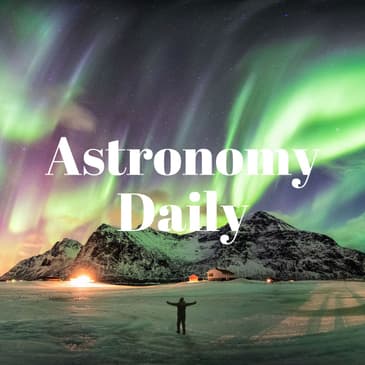

- Stunning Aurora Display: Mark your calendars for November 5th to 8th, 2025, as a powerful geomagnetic storm is set to light up the night sky with breathtaking auroras. Classified as a G3 storm, this display will be triggered by a significant coronal mass ejection from the Sun, resulting in vibrant colors visible farther south than usual.
- The Fate of Earth: NASA's Transiting Exoplanet Survey Satellite (TESS) reveals alarming insights into the fate of planets orbiting sun-like stars. As these stars enter their red giant phase, they often engulf their inner planets. New data suggests that Earth's future may be more precarious than previously thought, as the Sun's expansion could ultimately consume our planet.
- Interstellar Object Risks: Recent research sheds light on the potential impact risks from interstellar objects (ISOs). As our solar system travels through the galaxy, it encounters a stream of these cosmic nomads. While the chances of a significant impact remain low, understanding their trajectories is crucial for planetary defense.
- Enceladus: A Hotbed for Life: Exciting new findings from the Cassini mission suggest that Saturn's moon Enceladus could be more promising for extraterrestrial life than previously thought. A newly discovered heat signature at the North Pole indicates a sustained global ocean, providing a stable environment for potential life.
- Blue Origin's Mars Mission: On November 9, 2025, Blue Origin will launch its first interplanetary mission, Escapade, using its new Glenn rocket. This NASA-funded mission aims to explore how Mars lost its atmosphere, providing critical insights into planetary habitability.
- For more cosmic updates, visit our website at astronomydaily.io. Join our community on social media by searching for #AstroDailyPod on Facebook, X, YouTubeMusic, TikTok, and our new Instagram account! Don’t forget to subscribe to the podcast on Apple Podcasts, Spotify, iHeartRadio, or wherever you get your podcasts.
- Thank you for tuning in. This is Anna and Avery signing off. Until next time, keep looking up and exploring the wonders of our universe.
Aurora Forecast
[NOAA](https://www.noaa.gov/)
TESS Findings on Planetary Fates
[NASA](https://www.nasa.gov/)
Interstellar Objects Research
[arXiv](https://arxiv.org/)
Enceladus Heat Signature Study
[NASA](https://www.nasa.gov/)
Blue Origin Escapade Mission
[Blue Origin](https://www.blueorigin.com/)
Become a supporter of this podcast: https://www.spreaker.com/podcast/astronomy-daily-space-news-updates--5648921/support.
Sponsor Details:
Ensure your online privacy by using NordVPN. To get our special listener deal and save a lot of money, visit www.bitesz.com/nordvpn. You'll be glad you did!
Sponsor Details:
Ensure your online privacy by using NordVPN. To get our special listener deal and save a lot of money, visit www.astronomydaily.io/nordvpn. You'll be glad you did!
Get the best secure and private email on the planet. Stop your Government, google and who knows who else spying on every email you write. Do what we did and use ProtonMail. They beleive in privacy and there are no ads in their business model...yet they still provide a free forever service. Check them out and get out special deal at www.astronomydaily.io/protonmail
Become a supporter of Astronomy Daily by joining our Supporters Club. Commercial free episodes daily are only a click way... Click Here
This episode includes AI-generated content.
00:00:00 --> 00:00:02 Avery: Welcome to Astronomy Daily, the podcast that
00:00:02 --> 00:00:05 brings you the universe one story at a time.
00:00:05 --> 00:00:06 I'm your host, Avery.
00:00:06 --> 00:00:09 Anna: And I'm your co host, Anna. It's great
00:00:09 --> 00:00:12 to be with you all again, Avery.
00:00:12 --> 00:00:15 Here in the northern hemisphere, it feels
00:00:15 --> 00:00:17 like the nights are really drawing in.
00:00:18 --> 00:00:20 Getting colder, darker.
00:00:20 --> 00:00:23 Avery: They certainly are. But that darkness
00:00:23 --> 00:00:25 isn't always a bad thing, especially when it
00:00:25 --> 00:00:28 becomes a canvas for some of the universe's
00:00:28 --> 00:00:30 most incredible art. And we're starting
00:00:30 --> 00:00:31 today's show with just that.
00:00:32 --> 00:00:35 Anna: That's right. We have a packed episode
00:00:35 --> 00:00:38 from spectacular atmospheric light shows
00:00:38 --> 00:00:40 right here at home to the ultimate
00:00:40 --> 00:00:42 fate of Earth itself.
00:00:42 --> 00:00:44 Avery: And we'll also look at potential threats from
00:00:44 --> 00:00:47 outside our solar system, find a beacon of
00:00:47 --> 00:00:50 hope on an icy moon, and preview an exciting
00:00:50 --> 00:00:52 new mission to Mars. So let's get right to
00:00:52 --> 00:00:53 it.
00:00:53 --> 00:00:54 Anna: I'm ready if you are.
00:00:54 --> 00:00:57 Avery: Alrighty. Our first story is a visual
00:00:57 --> 00:01:00 feast for anyone lucky enough to be in the
00:01:00 --> 00:01:02 right place at the right time. Between
00:01:02 --> 00:01:05 November 5th and 8th, 2025, the night
00:01:05 --> 00:01:07 sky put on a show for the ages. A
00:01:07 --> 00:01:10 powerful geomagnetic storm triggered stunning
00:01:10 --> 00:01:11 auroras.
00:01:11 --> 00:01:14 Anna: It really was something special. This was
00:01:14 --> 00:01:17 classified as a G3 class storm on the
00:01:17 --> 00:01:19 five point scale, which is considered strong.
00:01:20 --> 00:01:23 It was all thanks to a significant coronal
00:01:23 --> 00:01:26 mass ejection, or cme, that
00:01:26 --> 00:01:28 erupted from the Sun a few days prior.
00:01:28 --> 00:01:31 Avery: Right. A, uh, cme. Um, so basically the sun
00:01:31 --> 00:01:34 threw a massive blob of plasma and
00:01:34 --> 00:01:35 magnetic field our way.
00:01:35 --> 00:01:38 Anna: Exactly. When that wave of charged
00:01:38 --> 00:01:40 particles hits our magnetosphere, it
00:01:40 --> 00:01:43 channels them towards the poles. They rain
00:01:43 --> 00:01:46 down into our upper atmosphere, collide with
00:01:46 --> 00:01:49 air molecules, and energize them, causing
00:01:49 --> 00:01:51 them to glow. The. The beautiful greens are
00:01:51 --> 00:01:54 from oxygen, while rarer pinks and
00:01:54 --> 00:01:55 reds come from nitrogen.
00:01:56 --> 00:01:58 Avery: And this storm was powerful enough that the
00:01:58 --> 00:02:00 lights were seen much farther south than
00:02:00 --> 00:02:02 usual. We saw incredible photos and time
00:02:02 --> 00:02:05 lapses from the northern United States, the
00:02:05 --> 00:02:08 UK, and all across Scandinavia. It must
00:02:08 --> 00:02:10 have been just breathtaking to see in person.
00:02:10 --> 00:02:13 Anna: It truly is an experience that connects you
00:02:13 --> 00:02:16 to the cosmos. It's a vivid, dynamic
00:02:16 --> 00:02:18 reminder that we live inside the atmosphere
00:02:18 --> 00:02:19 of a star.
00:02:19 --> 00:02:19 Avery: It's.
00:02:19 --> 00:02:22 Anna: And that our sun is an active, powerful
00:02:22 --> 00:02:25 force. We're currently in an active period
00:02:25 --> 00:02:28 of the solar cycle, so we might get a few
00:02:28 --> 00:02:29 more shows like this in the coming years.
00:02:30 --> 00:02:32 Avery: I certainly hope so. A, uh, beautiful event
00:02:32 --> 00:02:35 and a great way to start our cosmic journey
00:02:35 --> 00:02:35 today.
00:02:36 --> 00:02:38 Anna: From the beautiful effects of our star's
00:02:38 --> 00:02:41 activity to a more sobering look at its
00:02:41 --> 00:02:42 eventual demise.
00:02:43 --> 00:02:46 Our next story comes from NASA's Transiting
00:02:46 --> 00:02:48 Exoplanet Survey Satellite, which or TESS.
00:02:49 --> 00:02:51 And it paints a stark picture of the fate of
00:02:51 --> 00:02:54 planets orbiting sun like stars.
00:02:54 --> 00:02:57 Avery: Ah, uh, tess. Its main job is hunting for
00:02:57 --> 00:02:59 exoplanets. But it's great at just watching
00:02:59 --> 00:03:01 stars. What did it see this time?
00:03:02 --> 00:03:05 Anna: It was watching older stars, those beginning
00:03:05 --> 00:03:08 to enter their red giant phase. And the new
00:03:08 --> 00:03:11 study confirms that these swelling stars are
00:03:11 --> 00:03:13 engulfing their inner planets far more often
00:03:13 --> 00:03:16 than some models predicted. They the evidence
00:03:16 --> 00:03:19 is in the starlight itself. They can detect
00:03:19 --> 00:03:22 the chemical signatures of planetary material
00:03:22 --> 00:03:23 being consumed by the star.
00:03:24 --> 00:03:27 Avery: Consumed? That's a gentle word for it.
00:03:27 --> 00:03:29 It's more like being vaporized and
00:03:29 --> 00:03:30 eaten.
00:03:30 --> 00:03:33 Anna: A very accurate description. As a star
00:03:33 --> 00:03:36 like our sun exhausts hydrogen fuel in its
00:03:36 --> 00:03:39 core, it starts burning it in a shell, which
00:03:39 --> 00:03:42 causes its outer layers to expand enormously
00:03:42 --> 00:03:44 and it can swell to hundreds of times its
00:03:44 --> 00:03:45 original size.
00:03:46 --> 00:03:48 Avery: And um, any planets in the way.
00:03:48 --> 00:03:51 Anna: Any planets in the way are first subjected to
00:03:51 --> 00:03:53 immense tidal forces that can tear them
00:03:53 --> 00:03:56 apart. And then they are swallowed by the
00:03:56 --> 00:03:58 star's expanding atmosphere, the
00:03:58 --> 00:03:59 photosphere.
00:03:59 --> 00:04:01 Avery: Which brings us to the big scary.
00:04:02 --> 00:04:05 What does this mean for Mercury, Venus and
00:04:05 --> 00:04:06 us, uh, here on Earth?
00:04:06 --> 00:04:09 Anna: Well, Mercury and Venus are almost
00:04:09 --> 00:04:12 certainly doomed. As for Earth, the
00:04:12 --> 00:04:15 picture is now looking grimmer. While some
00:04:15 --> 00:04:18 models suggested Earth's orbit might widen
00:04:18 --> 00:04:20 and save us, this new data suggests
00:04:20 --> 00:04:23 the Sun's expansion will be too aggressive to
00:04:23 --> 00:04:24 overcome that shift.
00:04:25 --> 00:04:27 Avery: It does. But let's not forget this is about
00:04:27 --> 00:04:30 5 billion years in the future. So there's no
00:04:30 --> 00:04:32 need to sell your stocks just yet.
00:04:32 --> 00:04:34 Anna: Exactly. But it's a profound look into the
00:04:34 --> 00:04:37 celestial mechanics that govern the birth and
00:04:37 --> 00:04:39 death of worlds. It gives us a real sense of
00:04:39 --> 00:04:42 cosmic perspective. Our planet has an
00:04:42 --> 00:04:43 expiration date written in the stars.
00:04:44 --> 00:04:46 Avery: Okay. From a threat 5 billion years
00:04:46 --> 00:04:49 away to one that is, well, less
00:04:49 --> 00:04:52 predictable. A fascinating new piece of
00:04:52 --> 00:04:54 research is helping us understand the risk of
00:04:54 --> 00:04:57 impacts from interstellar objects
00:04:57 --> 00:04:58 or ISOs.
00:04:59 --> 00:05:01 Anna: These are the cosmic nomads. Objects like
00:05:01 --> 00:05:03 asteroids and comets that have been ejected
00:05:03 --> 00:05:06 from their own star systems and are now
00:05:06 --> 00:05:07 wandering the Milky Way.
00:05:07 --> 00:05:09 Avery: That's them. Um, we've had three famous
00:05:09 --> 00:05:11 visitors so far that we know of. The strange
00:05:11 --> 00:05:14 cigar shaped Oumuamua in 2017
00:05:14 --> 00:05:17 and the more comet like Borisov in
00:05:17 --> 00:05:20 2019. Then there's the current one
00:05:20 --> 00:05:22 everyone's talking about. 3i
00:05:23 --> 00:05:26 Atlas those three flybys prove that these
00:05:26 --> 00:05:27 objects are out there.
00:05:27 --> 00:05:29 Anna: Right. And now we want to know how many more
00:05:29 --> 00:05:32 there are and what the chances are that one
00:05:32 --> 00:05:32 might hit us.
00:05:33 --> 00:05:35 Avery: Precisely. This new study tells us where
00:05:35 --> 00:05:38 we're most likely to see them coming from the
00:05:38 --> 00:05:41 solar apex. That's the direction our
00:05:41 --> 00:05:44 solar system is traveling as we orbit the
00:05:44 --> 00:05:46 galaxy. It's what's in front of our cosmic
00:05:46 --> 00:05:48 windshield, so to speak.
00:05:48 --> 00:05:50 Anna: So we're essentially running into a stream of
00:05:50 --> 00:05:52 these objects as we travel through the
00:05:52 --> 00:05:53 galaxy.
00:05:53 --> 00:05:56 Avery: It does. The study also pointed to the
00:05:56 --> 00:05:58 galactic plane as another likely source.
00:05:58 --> 00:06:01 Now, to be clear, the researchers stress that
00:06:01 --> 00:06:03 the probability of an impact on from a large
00:06:03 --> 00:06:06 ISO remains extremely low.
00:06:06 --> 00:06:08 There's just a lot of empty space out there.
00:06:08 --> 00:06:11 But for planetary defense experts, this is
00:06:11 --> 00:06:13 crucial information. It tells them where to
00:06:13 --> 00:06:16 prioritize their search efforts. It's about
00:06:16 --> 00:06:17 being smart and looking in the right
00:06:17 --> 00:06:20 direction for these very faint, very fast
00:06:20 --> 00:06:21 moving objects.
00:06:21 --> 00:06:23 Anna: So it's another step towards creating a
00:06:23 --> 00:06:26 comprehensive map of potential hazards both
00:06:26 --> 00:06:29 from within and without our solar system.
00:06:29 --> 00:06:30 Fascinating stuff.
00:06:30 --> 00:06:33 Avery: Alright, let's leave the threats behind and
00:06:33 --> 00:06:35 travel to Saturn's icy moon
00:06:35 --> 00:06:37 Enceladus. It's getting more promising in the
00:06:37 --> 00:06:40 search for extraterrestrial life, thanks to
00:06:40 --> 00:06:43 a fresh look at old data from the
00:06:43 --> 00:06:44 Cassini mission.
00:06:44 --> 00:06:47 Anna: It absolutely is. Cassini orbited
00:06:47 --> 00:06:49 Saturn from 2004 to 2017,
00:06:50 --> 00:06:52 and scientists are still making incredible
00:06:52 --> 00:06:55 discoveries from its data archives. The big
00:06:55 --> 00:06:58 news we've known for years is the South Pole
00:06:58 --> 00:07:01 with its Deimos tiger stripe fissures that
00:07:01 --> 00:07:03 blast plumes of water from a subsurface ocean
00:07:03 --> 00:07:04 into space.
00:07:04 --> 00:07:07 Avery: Yeah, an underground ocean of
00:07:07 --> 00:07:09 liquid water. That m alone is amazing.
00:07:09 --> 00:07:12 Anna: It is. But the North Pole was always
00:07:12 --> 00:07:14 considered the boring one. Frozen,
00:07:14 --> 00:07:17 ancient and inactive. Well, by
00:07:17 --> 00:07:20 reanalyzing thermal data from Cassini's
00:07:20 --> 00:07:22 flybys, scientists have now discovered a
00:07:22 --> 00:07:25 significant heat signature coming from the
00:07:25 --> 00:07:27 North Pole as well. The ice is much thicker
00:07:27 --> 00:07:29 there, so it was trapping the heat, but it's
00:07:29 --> 00:07:31 definitely there.
00:07:31 --> 00:07:34 Avery: Wow. So the moon's internal engine is
00:07:34 --> 00:07:36 heating it at both poles. What does that
00:07:36 --> 00:07:37 imply for the ocean?
00:07:37 --> 00:07:40 Anna: It implies the ocean is truly global
00:07:40 --> 00:07:43 and that the geological activity isn't just a
00:07:43 --> 00:07:46 recent or temporary phenomenon. At one pole,
00:07:46 --> 00:07:49 a sustained global heat source means this
00:07:49 --> 00:07:52 ocean has likely been stable and warm from
00:07:52 --> 00:07:53 for billions of years.
00:07:53 --> 00:07:56 Avery: And that is the magic ingredient, a stable
00:07:56 --> 00:07:59 environment. It gives life, if it were to
00:07:59 --> 00:08:01 start, a real chance to take hold and evolve.
00:08:01 --> 00:08:04 Anna: Precisely. We're talking about a world with
00:08:04 --> 00:08:06 liquid water, organic molecules, which
00:08:06 --> 00:08:09 Cassini also found, and now a long
00:08:09 --> 00:08:12 lasting source of energy. That's a perfect
00:08:12 --> 00:08:14 trifecta for habitability. It makes
00:08:14 --> 00:08:17 Enceladus arguably the most compelling target
00:08:17 --> 00:08:18 for future astrobiology missions.
00:08:19 --> 00:08:21 Avery: We just have to go back, we have to sample
00:08:21 --> 00:08:24 those plumes and see what's really in that
00:08:24 --> 00:08:24 water.
00:08:25 --> 00:08:28 And while a mission to Enceladus is still on
00:08:28 --> 00:08:31 the drawing board, our final story is about a
00:08:31 --> 00:08:33 mission that is very much on the launchpad.
00:08:33 --> 00:08:36 On November 9, 2025, which is
00:08:36 --> 00:08:39 this Sunday, Blue Origin is set to launch
00:08:39 --> 00:08:42 its first ever interplanetary mission
00:08:42 --> 00:08:45 using its heavy lift new Glenn rocket.
00:08:45 --> 00:08:47 Anna: This is a big step for the commercial space
00:08:47 --> 00:08:50 industry and it's a NASA funded mission
00:08:50 --> 00:08:52 they're carrying. Right. A great example of
00:08:52 --> 00:08:54 public private partnership it is.
00:08:55 --> 00:08:57 Avery: The payload is a mission called Escapade,
00:08:57 --> 00:09:00 which consists of two identical probes
00:09:00 --> 00:09:01 destined for Mars.
00:09:02 --> 00:09:04 Anna: Escapade. I like the name. What's their
00:09:04 --> 00:09:05 purpose?
00:09:05 --> 00:09:08 Avery: They are designed to solve one of Mars
00:09:08 --> 00:09:11 biggest how it lost its
00:09:11 --> 00:09:13 atmosphere. We know Mars was once
00:09:13 --> 00:09:16 warmer and wetter with a thicker atmosphere,
00:09:16 --> 00:09:18 but over billions of years it was stripped
00:09:18 --> 00:09:20 away by the solar wind.
00:09:20 --> 00:09:22 Anna: Right. And that happened because Mars lost
00:09:22 --> 00:09:25 its global magnetic field, which acts as a
00:09:25 --> 00:09:27 protective shield for a planet's atmosphere.
00:09:28 --> 00:09:30 Earth's magnetic field protects us from the
00:09:30 --> 00:09:31 same fate.
00:09:31 --> 00:09:34 Avery: Exactly. Mars now only has
00:09:34 --> 00:09:37 these localized remnant pockets of magnetism
00:09:37 --> 00:09:40 in its crust. The two Escapade spacecraft
00:09:40 --> 00:09:43 will orbit in formation, allowing one
00:09:43 --> 00:09:45 to measure the incoming solar wind while the
00:09:45 --> 00:09:48 other measures the atmospheric effects at
00:09:48 --> 00:09:49 that exact moment.
00:09:50 --> 00:09:52 Anna: This will give us the first ever 3D picture
00:09:52 --> 00:09:55 of how the solar wind is siphoning off what's
00:09:55 --> 00:09:58 left of the Martian air. It's fundamental
00:09:58 --> 00:10:00 science for understanding how a habitable
00:10:00 --> 00:10:03 planet can become an inhospitable one.
00:10:03 --> 00:10:06 A cautionary tale, perhaps a very important
00:10:06 --> 00:10:06 one.
00:10:06 --> 00:10:09 Avery: It's a fantastic mission and a huge milestone
00:10:09 --> 00:10:11 for Blue Origin. We'll be watching that
00:10:11 --> 00:10:12 launch closely.
00:10:12 --> 00:10:14 Anna: And with that, we're out of time for today's
00:10:14 --> 00:10:17 episode. What a journey across the cosmos.
00:10:18 --> 00:10:20 Avery: The universe never fails to deliver. A
00:10:20 --> 00:10:22 huge thank you to all of you for listening to
00:10:22 --> 00:10:25 Astronomy Daily. Join us next time for
00:10:25 --> 00:10:27 another journey through the cosmos. Until
00:10:27 --> 00:10:30 then, stay curious and keep looking up.
00:10:30 --> 00:10:31 Astronomy Daily
00:10:33 --> 00:10:34 stories we told
00:10:36 --> 00:10:36 Love
00:10:41 --> 00:10:42 story HM Soul.