Join host Andrew Dunkley and astronomer Fred Watson as they explore some of the most fascinating topics in space science, from innovative nuclear power tests in space to the expanding boundaries of our galaxy. Whether you're an astrophotography enthusiast or a space policy advocate, this episode delivers insights that broaden your cosmic perspective.
In this episode:
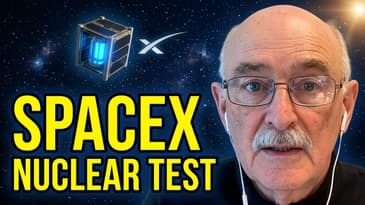
SpaceX's recent CubeSat launch featuring a tritium-based nuclear power source for space applications
The potential and safety considerations of nuclear energy in space missions
The possibility of nuclear weapons detection in space using neutron sensors and passive radiation monitoring
The intriguing hypothesis of dark matter stars and their potential signatures
The mystery surrounding Earth's dust origins—cosmic spherules and their unknown sources
New research indicating our galaxy's spiral arms are about 10% longer than previous estimates, based on light echoes from gamma ray bursts
The rise of smart telescopes and their role in making astrophotography more accessible for amateurs
Timestamps:
(00:00) Introduction and overview of today's headlines
(02:00) SpaceX's CubeSat with tritium power source—what's happening?
(04:33) Nuclear power in space: Safety and future applications
(11:03) Detecting nuclear weapons in space: Challenges and innovations
(22:45) Earth's dust origins: Micro-meteorites and cosmic spherules explained
(31:14) Rethinking the Milky Way: Spiral arms extend further than we thought