
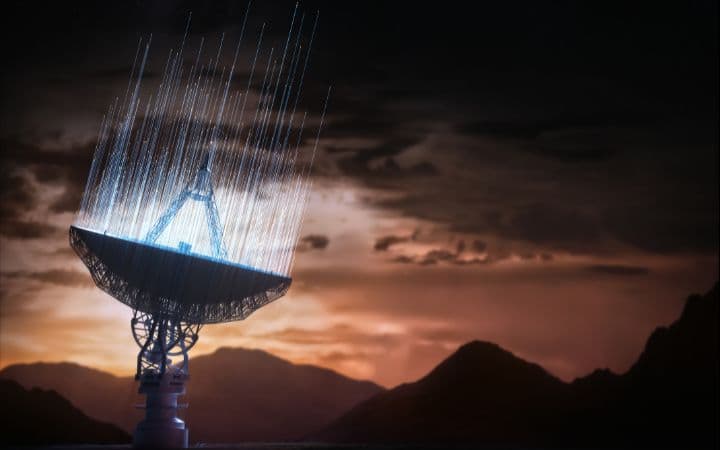
When you think of navigation, you probably think of GPS — little beacons on Earth guiding cars, phones, hikers. But once spacecraft head far beyond Earth orbit — to the Moon, Mars, asteroids, or even into interstellar space — GPS is useless. Enter NASA’s Deep Space Network (DSN): a giant, global telecommunications system that steers, tracks, and keeps in touch with robotic explorers far beyond GPS’s reach.
In this post, we'll cover:
What exactly the DSN is
What it does (communications, navigation, tracking, etc.)
Some of the spacecraft it currently supports
How it works (antennas, signals, techniques)
Challenges & future improvements
Interesting trivia
What is the Deep Space Network (DSN)?
The DSN is NASA’s network of large radio antennas around the world, designed to communicate with spacecraft that are far from Earth — deeper than “near-Earth orbit” — plus support radar and radio astronomy. It’s part of NASA’s Jet Propulsion Laboratory (JPL). (Wikipedia)
There are three DSN complexes:
Goldstone, California, USA (near Barstow) (Wikipedia)
Madrid, Spain (Robledo de Chavela) (Wikipedia)
Canberra, Australia (Tidbinbilla) (Wikipedia)
They are spaced out roughly 120° in longitude so that as the Earth rotates, one station is always in view of a given distant spacecraft. That enables continuous or nearly continuous communication. (NASA)
What Does the DSN Actually Do?
The DSN supports many functions vital for deep space missions. Here's a breakdown:
Telemetry / Data Reception: It receives scientific data, images, measurements from spacecraft. These might be pictures from Mars, measurements around Jupiter, data from interstellar probes. (NASA)
Commands and Uplink: Mission control sends commands to spacecraft (e.g. “turn this way,” “take this photo,” “adjust your orbit”). This requires powerful transmitters and precise pointing. (Wikipedia)
Tracking and Navigation: Not only sending and receiving data — DSN also figures out where the spacecraft is and how fast it’s moving. Techniques include measuring the time delay of signals (so you know the distance), Doppler shifts (how fast it’s receding or approaching), and angle measurements. These are crucial for steering spacecraft, planning mid‐course corrections, flybys, orbital insertions. (NASA)
Radio Science & Radar Astronomy: The DSN is used not just for communications but for science experiments. For example, when spacecraft signals pass behind planets or through atmospheres ("occultations"), or to map gravity fields, or to study solar wind, or to bounce radar off asteroids. (Wikipedia)
Supporting Lunar, Mars, and other missions: DSN supports missions not just in deep space but also at the Moon, at Earth-Moon Lagrange points, orbiters around Mars, etc. Also supports relay operations (e.g. Mars orbiters relay from Mars landers), and missions in highly elliptical orbits. (NASA)
Emergency / Backup Support: In spacecraft emergencies (e.g. when power is low, antenna orientation is compromised), the largest DSN dishes are sometimes used to pull in the weakest signals and to recover as much telemetry as possible. (Wikipedia)
Some Spacecraft and Missions using the DSN
The DSN supports dozens of active missions. Examples:
The Voyager 1 and Voyager 2 probes (now in interstellar space) still communicate with Earth using DSN stations. (Wikipedia)
Lunar missions like Artemis series, orbiters around the Moon. (NASA)
Missions at Mars — rovers, landers, orbiters (e.g. Perseverance, Mars Reconnaissance Orbiter) use DSN for telemetry and command, plus relaying. (SciTechDaily)
More recent or future missions experimenting with optical communications. For instance, Psyche has the DSOC (Deep Space Optical Communications) experiment, which uses lasers (optical) rather than radio waves to send higher rates of data. (Wikipedia)
There are also many missions in development. And many past missions benefited from DSN (e.g. Apollo lunar missions, Viking, Voyager, etc.) (Wikipedia)
How It Works: Antennas, Signals, Techniques
The DSN’s ability to work so far away depends on very large, very sensitive, very precise systems. Here's what makes it tick:
Antennas & Complexes
Each DSN complex (Goldstone, Madrid, Canberra) has multiple large dish antennas:
One 70-meter (≈ 230 feet) dish per complex — very large, very capable. (NASA)
Several 34-meter (≈ 112 ft) beam-waveguide antennas. These are more modern and easier to maintain, with good sensitivity. (Wikipedia)
Some smaller ones (26 m etc.) but the main workhorses are the 34m and 70m dishes. (Wikipedia)
The DSN sites are placed in locations relatively free of radio interference, often in semi-mountainous, shielded terrain. This reduces noise. (Wikipedia)
Frequencies / Bands
DSN uses radio frequencies in several bands, mainly S-band (~2 GHz), X-band (~8 GHz), and Ka-band (~32 GHz). Higher frequency bands allow higher data rates (if everything else — antennas, pointing, atmosphere — are good enough). (Wikipedia)
There is also work to receive signals in still higher “near space” bands for missions nearer than deep space (e.g. at Earth-Moon distances or Lagrange points). (Wikipedia)
Optical communications (i.e. lasers) are being developed and tested: these promise far higher data rates, though with more challenges (weather, pointing, etc.). The DSOC experiment on Psyche is a key example. (Wikipedia)
Signal Processing, Tracking & Navigation
Time delay: When you send a signal and it’s received, the time it takes reveals distance (speed of light × time).
Doppler shift: If the spacecraft is moving relative to Earth, the frequency of received signals shifts slightly. Measuring that gives velocity (towards or away).
Angle (direction) pointing: The large antennas must be precisely pointed at spacecraft. Small errors can mean losing the signal, especially at high frequencies or for optical links.
Beam width & Gain: Large antennas have narrow beamwidths and high gain (they focus energy/signal strongly), which helps both transmitting and receiving weak signals.
Arraying / combining antennas: For very weak signals (e.g. far away probes), sometimes multiple antennas are “arrayed” (i.e. combined) to improve sensitivity. (Wikipedia)
Multiple Spacecraft Per Aperture (MSPA): A capability by which one DSN antenna can receive signals from more than one spacecraft at once (up to about 4) on the receiving side. Uplinks (commands) are more limited (usually one at a time) because of potential interference and transmitter constraints. (Wikipedia)
Operational Features
DSN operates 24/7, 365 days a year. There is always active scheduling, antenna maintenance, and real-time tracking. (NASA)
DSN Now: NASA provides an online tool that shows, in near-real-time, which antennas are in use, which spacecraft are talking, how much data is being transferred, what signal delays are, etc. It’s a visualization of the network’s current activity. (eyes.jpl.nasa.gov)
Limitations & Challenges
Even with all its power, the DSN faces significant challenges. Some of them:
Capacity / Over‐subscription: Many missions (NASA and international) need time on DSN antennas. As more missions go out (Mars rovers, orbiters, lunar missions, deep space probes), there’s competition. Scheduling antenna time is a bottleneck. (Wikipedia)
Antenna aging: The large 70-meter antennas are older, harder to maintain. NASA has refurbished some, but they’ll eventually need replacement or continual upkeep. (Wikipedia)
Data rate limits: As spacecraft instruments become more capable (higher resolution cameras, more sensors), they generate more data. The farther away, the weaker the signals, and the longer time delays. Radio frequencies have limits.
Pointing and alignment demands: Especially for optical communications (lasers) the pointing must be extremely precise; atmosphere can interfere; weather and clouds can block optical paths.
Geographical constraints: All stations are on Earth; Earth’s rotation, weather, atmospheric absorption, etc. pose constraints.
Scheduling and redundancy: When an antenna is down for maintenance or refurbishment, capability is reduced. Also need to support legacy missions that may have older equipment or different frequency needs. (Wikipedia)
The Future: Upgrades & Innovations
To meet growing demand and push boundaries, DSN is evolving. Some of the key future/upcoming developments:
More and better antennas:
New dishes are being built (e.g. more 34-m “Beam Waveguide (BWG)” antennas) at the DSN sites. (SciTechDaily)
Upgrades to existing large antennas, such as refurbishing the 70m dishes, improving transmitters & reliability. (SciTechDaily)
Enhanced RF (radio frequency) capability:
Improving the uplink and downlink electronics, receivers, higher modulation schemes, better coding to squeeze more data through the same RF spectrum. (NASA Technical Reports Server)
Increasing beam sharing (antenna sharing) and efficiency, e.g. MSPA, using smaller dishes or supplemental antennas to take load off the big ones. (SciTechDaily)
Optical (laser) communications:
DSN is moving toward integrating laser comms for higher data rates. The Psyche mission’s DSOC experiment is demonstrating this. (Wikipedia)
Future DSN antennas might be designed or adapted to support both radio frequency and laser links. (SciTechDaily)
Lunar & Mars capacity upgrades:
Because of renewed interest in lunar missions (Artemis etc.) and Mars exploration, DSN is planning upgrades (sometimes called DSN Lunar Exploration Upgrades, DLEU) to improve uplink/downlink rates, simultaneous operations, etc. (NASA Science)
Better global operations, automation & scheduling:
“Follow the Sun” operations: handing off control between DSN sites as Earth rotates to manage network more efficiently. (SciTechDaily)
More automation of scheduling, tracking passes, etc. to improve usage. (SciTechDaily)
Navigation Without GPS: How DSN Guides Spacecraft
Because GPS only covers Earth orbit (medium orbit, etc.), deep space missions need alternative navigation methods. DSN plays a central role in these:
Ranging: Exactly measuring the time it takes for a signal to travel from Earth to spacecraft and back tells you distance. Combined with direction pointing, this gives location.
Doppler measurements: The shift in frequency of returned signals tells you how fast the spacecraft’s distance is changing (velocity component toward or away from Earth).
Angle measurements / VLBI (Very Long Baseline Interferometry): Using multiple antennas (or combining DSN‐antennas with other radio telescopes) to compare signal arrival times from spacecraft or radio sources, to pin down direction extremely precisely. Used also in “radio science” experiments. (Wikipedia)
Trajectory corrections: Based on tracking and navigation data, mission control can send commands (via DSN) for course corrections, attitude adjustments, etc.
Predictive modeling: Using physics (gravity of planets, solar pressure, etc.) combined with DSN tracking data to predict where the spacecraft will be, to plan maneuvers, or to aim antennas.
Why Is DSN So Important?
Without it, we couldn’t reliably command or receive data from distant missions.
It enables high‐value science: mapping planets, understanding atmospheres, exploring outer solar system objects and beyond.
It serves as a backbone for interplanetary “traffic” — as more missions go beyond Earth, the need for communication, navigation, and relay increases.
It’s essential for mission safety — especially for human missions or high‐risk robotic missions.
Interesting Trivia & Facts
The DSN predates NASA itself in some sense: its predecessor tracking stations were deployed in early 1958 (before NASA was officially founded in October 1958) to help track early satellites. (Wikipedia)
The famous “That’s one small step…” TV/radio transmissions from Apollo 11 were received via DSN antennas around the world. (NASA)
The Canberra 70-meter antenna (DSS-43) is currently the only antenna in the Southern Hemisphere that can transmit commands to Voyager 2, which is now in interstellar space. (SciTechDaily)
The newer 34-meter BWG antennas are more flexible and require less maintenance; part of the reason to build more of them is to eventually have redundancy and to relieve strain on the older large dishes. (Wikipedia)
The DSN “Now” tool (real-time dashboard) updates every 5 seconds with live data showing which antennas are in use, what spacecraft are in contact, signal strengths, etc. (NASA)
Where DSN is Headed & Big Questions Ahead
To wrap up, what are the key directions ahead, and what are the big challenges still to solve?
Handling ever greater data volumes: As instruments improve (higher resolution cameras, spectrometers, more sensors), and as missions like telescopes, Earth-monitoring, or human exploration demand more data, DSN will need to scale up capacity. Optical communications are a promising route.
Making antennas more interchangeable: One issue is that some spacecraft can only use certain antennas (because of frequency or transmitter constraints). If more antennas are upgraded to support more frequency bands (and optical links), scheduling becomes more flexible. (arXiv)
Reducing “communication delays”: Even with fast signals, at large distances (e.g. past Mars, to outer planets), one‐way communication delays can be minutes to hours. Navigation must be proactive; autonomy on spacecraft becomes more important.
Integrating networks and relays: Sometimes there are proposals for communications relays or networks in space (e.g. satellites around Mars, at Lagrange points, or lunar orbit) to reduce dependence on Earth-line DSN, reduce delay, improve robustness.
Supporting human missions: With Artemis returning humans to the Moon, and talk of Mars missions, demands on DSN will include higher reliability, more simultaneous high-bandwidth links, perhaps new infrastructure / redundancy.
Optical / Laser Communications: Developing reliable, weather-tolerant optical links. Improving ground-station optical receivers, transmitter power, pointing, making dual-mode (RF + optical) spacecraft & ground antennas.
Network scheduling & priority: As missions increase, how to allocate DSN time fairly, especially in emergencies or human exploration contexts. There are already tensions (some missions requested more tracking hours than they get). (NASA Office of the Inspector General)
Conclusion
The Deep Space Network is the unsung hero behind much of what we know about the solar system and beyond. It’s the system that allows us to guide robotic explorers, receive their data, understand their status, correct their paths, even when they are billions of kilometers away.
So “navigation beyond GPS” isn’t science fiction — it’s very real, and DSN is one of the main ways we do it. From steerable parabolic dishes, Doppler signals, ranging, to cutting-edge laser communications, DSN contains many of the “secret” pieces that allow us to explore deep space.
If you’re interested in following this more, you might look into the technical details of:
How optical ground stations work
How error correction and modulation schemes are selected for weak signals
Deep space navigation algorithms (orbit determination, gravity assists, etc.)
Happy exploring