
In the S04E291 of our astronomy podcast, we delve into some of the most exciting developments in space exploration and research. Hosted by Avery and Anna, this episode takes listeners on a journey through the cosmos, highlighting groundbreaking discoveries and the challenges that come with them.
The episode kicks off with the news that NASA has successfully assembled the Nancy Chris Roman Space Telescope, a powerful new tool set to launch by May 2027. This telescope promises to revolutionize our understanding of the universe, with its 288-megapixel wide field camera expected to gather data up to hundreds of times faster than the Hubble Space Telescope. Imagine uncovering over 100,000 new exoplanets and billions of galaxies in just five years! The anticipation builds as listeners learn about the innovative coronagraph instrument designed to directly image faint planets orbiting stars.
However, not all news is bright.
The episode brings attention to a recent incident at the Baikonur Cosmodrome, where damage was reported following a successful Soyuz rocket launch. While the damage is manageable, it serves as a reminder of the complexities and risks involved in space travel. Experts suggest that repairs could take up to three months, but there is no cause for alarm—future missions remain on schedule.
As the conversation shifts to light pollution, Avery and Anna discuss the growing threat posed by satellite mega constellations. With projections suggesting that a third of Hubble's observations could be compromised by satellite trails by the 2030s, the future of astronomical research is at stake. The episode outlines potential solutions, including better tracking and international standards for satellite brightness, as astronomers work to protect the integrity of their observations.
The podcast also explores the geological differences between Earth and Venus, emphasizing the importance of plate tectonics for habitability. New research indicates that Venus operates under a "squishy lid" regime, leading to regional volcanism instead of the active tectonics we see on Earth. This revelation provides a greater understanding of Venus's geological history and its active volcanoes.
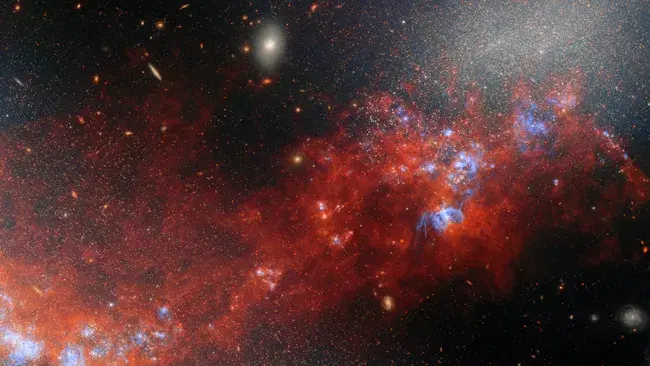
Finally, listeners are treated to stunning visuals from the James Webb Space Telescope, showcasing a cosmic dance between two dwarf galaxies. The breathtaking images not only highlight the beauty of the universe but also provide insights into star formation processes.
In conclusion, this episode of our astronomy podcast is a treasure trove of information for space enthusiasts and curious minds alike. From groundbreaking telescopes to the challenges posed by an increasingly populated orbit, the discussions are both enlightening and thought-provoking. Join us as we continue to explore the wonders of the universe, and remember to keep looking up!